
Article February 12, 2026
What is self-directed learning and why is it right for your child?
Autonomy, critical thinking, and a thirst for knowledge are all skills that have gained increased attention in the modern workplace. Luckily, these are also three of the core benefits of self-directed learning (SDL), an approach that is gaining popularity across the globe.
More than an educational buzzword, this methodology has become increasingly popular among educators in recent years, especially in flexible and online learning environments. It empowers students to take control of their learning and allows them to move at their own pace and in a way they understand.
Below, we unpack everything you need to know about this respected approach, its benefits, and why self-directed learning is important in the modern educational environment.
What does self-directed learning mean?
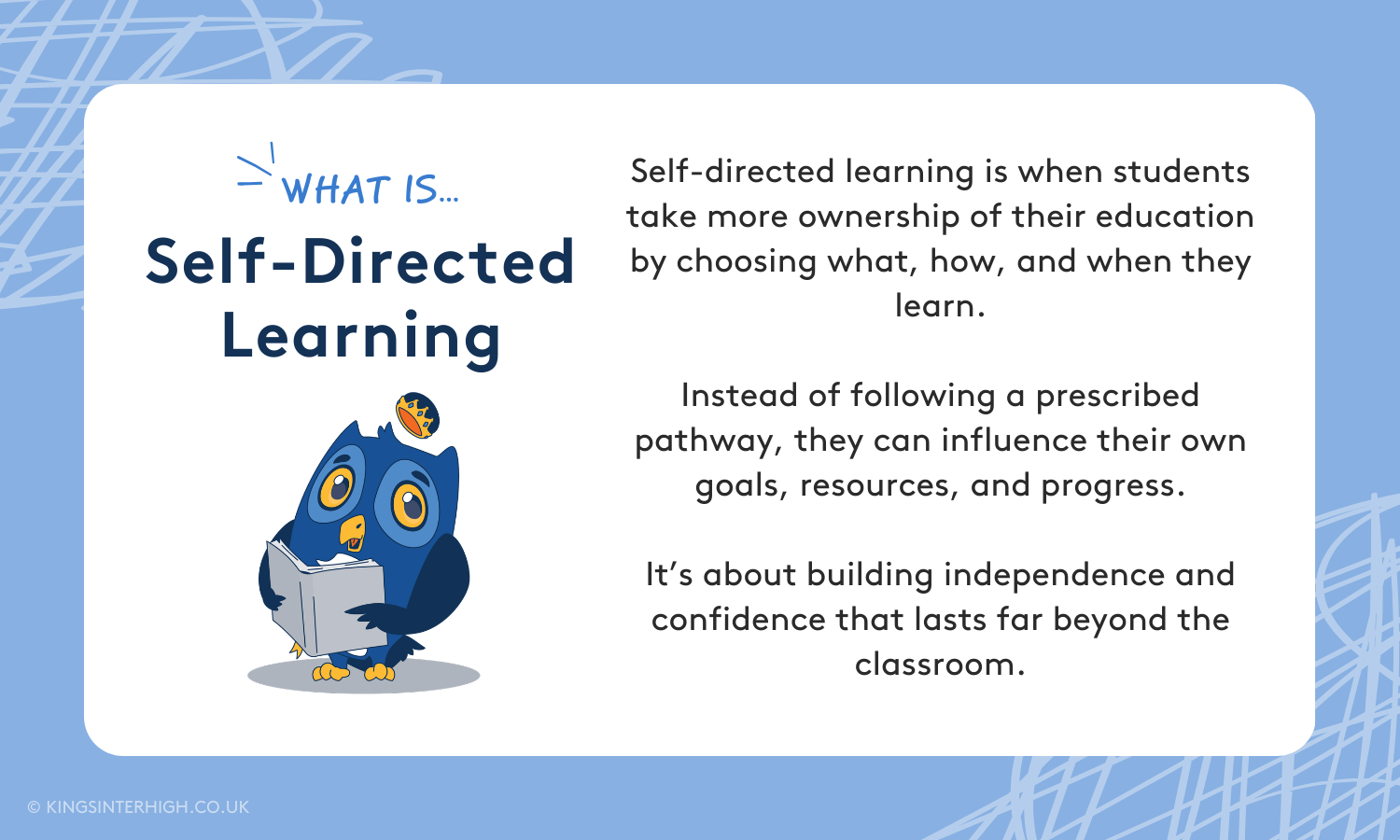
In self-directed learning, students take more responsibility for setting their goals, choosing the resources that support their progress, and developing strategies that best suit their individual strengths. This fosters confidence, independence, and a deeper engagement with learning, qualities that prepare students not just for exams, but for future study and life beyond school.
Self-directed learning is an approach that puts learners at the heart of their education. It gives students greater autonomy to shape how, when, and where they engage with their studies, while still working within a structured curriculum and receiving expert guidance from qualified teachers.
Like traditional school models, the core curriculum and learning objectives are provided by educators. However, unlike conventional classrooms where every pupil follows a set pace, SDL allows students to move through material according to their own rhythm. Learners who grasp concepts quickly can extend their understanding further, while those who need extra time can revisit material and reinforce their knowledge without pressure.
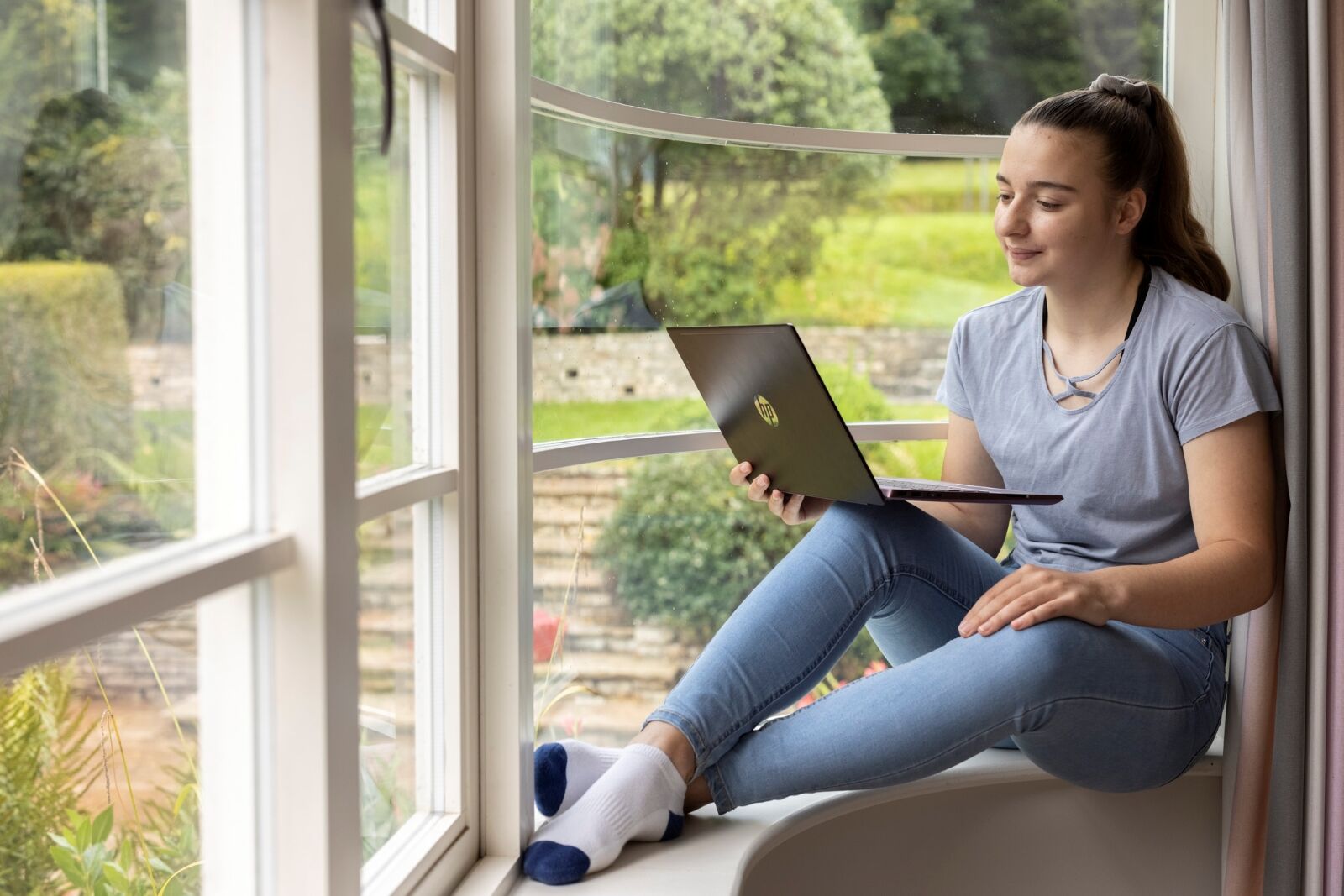
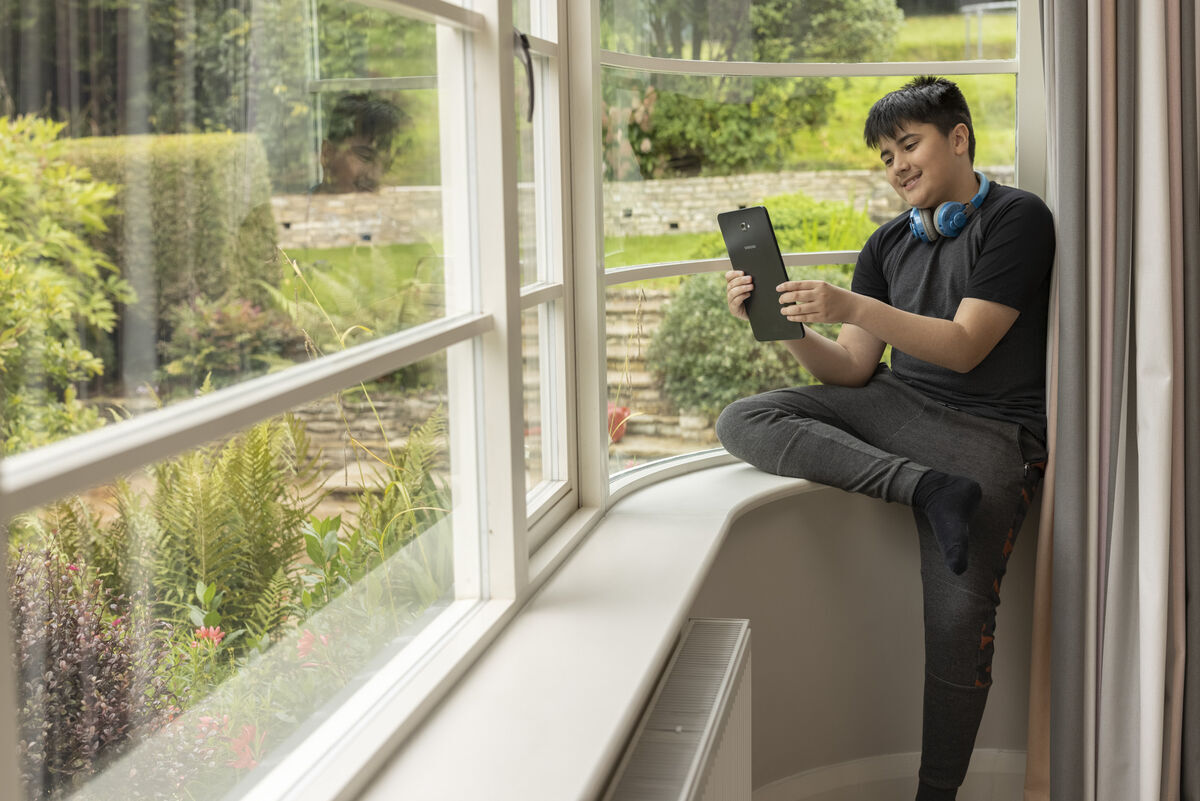
Students are also able create their ideal learning space. Rather than having to deal with disruptive peers, rigid schedules, or overstimulating classrooms, pupils can find their focus in a safe, flexible environment, helping them make the most of their talents.
What are the benefits of self-directed learning?
When students take meaningful ownership of their education, the impact extends far beyond academic results. They develop capabilities that reshape their entire approach to learning, challenges, and personal growth.
While the benefits of self-directed learning often overlap with other methodologies like personalised learning and flexible education, there are some areas where SDL stands out.
Academic growth
Self-directed learning allows students to study in a way that suits their individual learning style, in an environment that encourages focus rather than distraction. This flexibility helps pupils thrive academically and develop a true curiosity for learning.
In turn, this can lead to better retention and understanding, which can help students achieve higher grades and make stronger progress. It also helps learners strengthen academic skills like critical thinking, research, and analysis.
Personal growth
Self-directed learning can also reigniting a student’s passion for education and their confidence in their abilities without the pressure of keeping pace with others. When young people develop the skills to organise their workload or discover new ways to understand a concept, they often realise they’re capable of much more than they thought.
Plus, self-directed learning builds skills for future success, like time management, goal setting, resilience, and independence.
Long term impact
Perhaps the most powerful benefit of self-directed learning is its long-term impact, naturally developing the skills that employers and universities often find missing in school leavers: critical thinking, problem-solving, time management, and adaptability.
When a student takes responsibility for planning their study, they decide which topics need more focus, how to structure their time, and how to monitor and adjust their approach as they progress. In doing so, they are not only preparing for exams; they are practising the same project-management and problem-solving skills that will support them throughout their education and beyond.
How great schools deliver self-directed learning
While self-directed learning does have many benefits, it needs to be implemented carefully to ensure students get the right experience. Without enough expert teacher guidance, for example, young people can easily find themselves directing effort and energy to the wrong content, tasks, or goals.
Here are King’s InterHigh, we know that some of the most meaningful learning happens when students have both the freedom to explore and the structure to succeed. As students approach their later years, we gradually begin to support more self-directed learning to prepare them for success in exams, university, and their future lives.
In our experience, here are some of the most impactful ways schools can deliver self-directed learning as part of their approach.

The power of flexible lessons
Flexibility is crucial in self-directed learning. Traditionally, once a class ends, there’s no way of going back if you need more time to get to grips with the topic. When schools make lessons available more flexibly, every students gets the opportunity to determine their own pace.
At King’s InterHigh, for example, every live lesson is recorded and available for students to revisit whenever needed. This transforms how students engage with their education beyond simply catching up on missed classes.
Consider a sixth form student tackling IBDP Chemistry. During the live organic compounds lesson, they follow along but recognise that this challenging topic needs more attention. That evening, with a fresh mind, they return to the recording, pausing at complex molecular structures, replaying explanations, and taking detailed notes at their own pace until the concept truly clicks.
This flexibility proves invaluable for students across all years, ensuring primary learners have a good foundation and helping older students grasp difficult concepts or revise for tests and exams. Students consistently tell us that rewatching their actual teachers, rather than relying on generic revision videos, makes an enormous difference to their understanding and confidence.
Personalised pathways that respect individuality
This flexibility can also extend to a student’s overall school pathway. In order to self-direct their education, students need the freedom to study the subjects they like in a way that works for them.
As such, it’s no surprise that flexibility and personalisation consistently emerge as standout features in our family feedback at King’s InterHigh. We recognise that students have different peak learning times, processing speeds, learning preferences, interests, and life circumstances. To meet those needs, we give our learners the freedom to choose any combination subjects they’re passionate about, adjust their timetables as needed, and learn any time, anywhere with accessible expert teaching.
This creates particular value for:
- Homeschooling families accessing specialist, live-taught subjects
- International families balancing flexibility with rigorous British curriculum
- Students revisiting lessons during intensive revision periods
Structured support for independence
Self-directed learning is all about championing student autonomy, but effective SDL still needs a supportive framework to thrive. Teacher guidance and support are crucial components in keeping learners on the right track and making sure any knowledge gaps are bridged.
We offer a full school experience at King’s InterHigh, so students enjoy the benefit of live, interactive lessons with their expert teachers and global classmates every day. As students mature, our teachers guide them to set their own realistic and achievable goals, demonstrate effective study strategies they can tailor to their preferences, and help them build confidence in directing their learning journey.
At the same time, our teaching approach also incorporates tools and methods that allow students a greater steer over their education. For example, our IGCSE learning model includes student-led Discovery lessons. In these sessions, learners access bespoke video classes created by their teachers that cover the essential concepts and skills students need to know about each new topic, with quizzes built in. Students can watch their Discovery lessons and complete the quizzes at any time before their subsequent Explore lessons, where they dive deeper into learning with their classmates and teachers through discussions, activities, breakout rooms, and more.
This balance between freedom and structure, independence and support make SDL at King’s InterHigh uniquely effective.
5 ways to improve your child’s self-directed learning
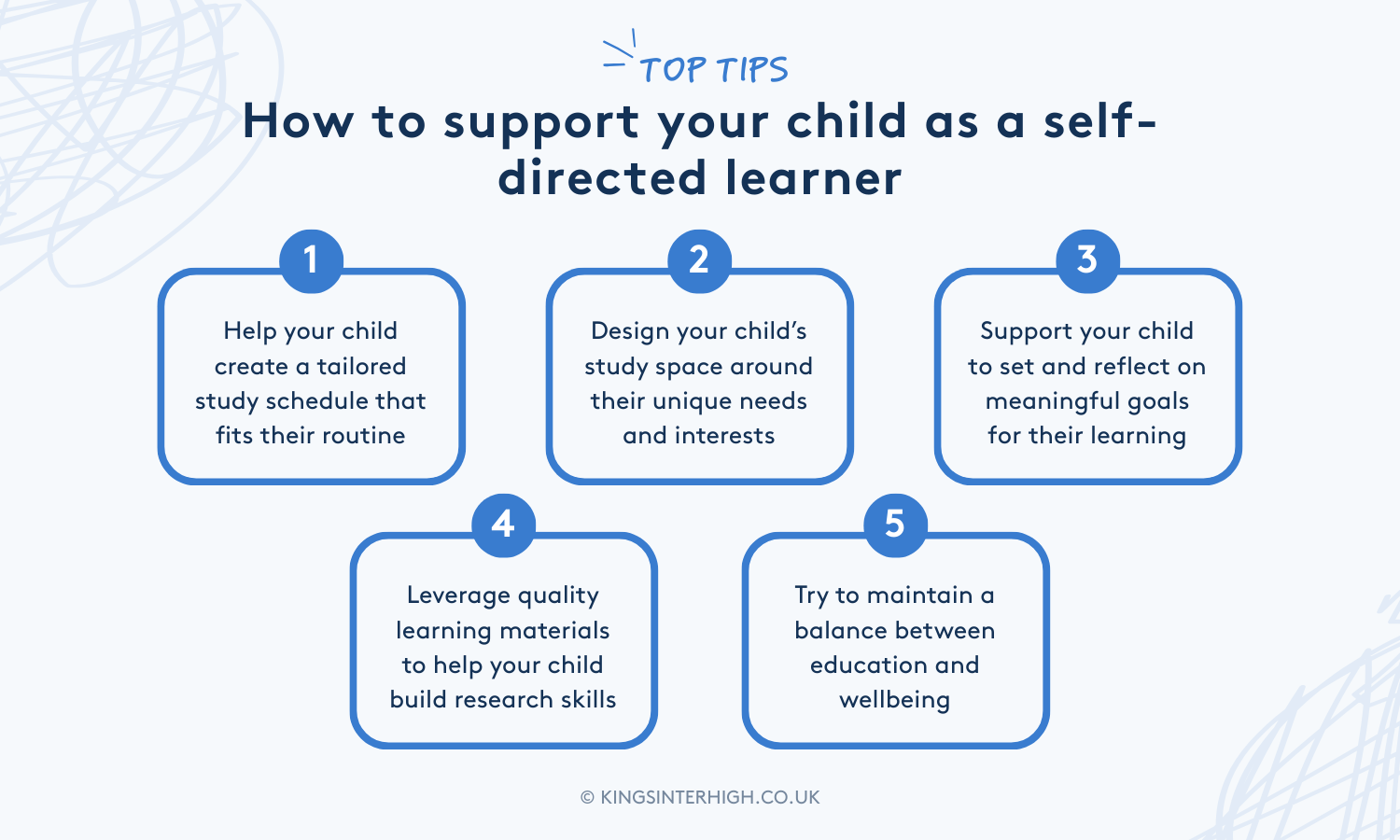
1. Create a personal learning schedule
Help your child set clear, achievable goals for each study session and build a realistic timetable that works with your lifestyle. Breaking larger projects into smaller milestones and using digital planners or apps to track progress can also be a big support. Effective time management prevents overwhelm and creates momentum in your child’s learning journey.
2. Design their ideal study space
Establish a dedicated learning environment for your child that enhances focus, whether that’s a quiet corner, organised desk, or comfortable reading nook. Personalise it with tools that support their learning style, from noise-cancelling headphones to visual aids or inspiring artwork.
3. Set meaningful goals and help them reflect
Support your child to set achievable learning objectives, both short and long term, that they can review regularly. Remember to celebrate their small wins as well as their big successes, and guide them to assess which strategies work best for them. This self-reflection builds confidence and ensures their education remains purposeful and engaging.
4. Leverage quality learning resources
Make the most of the materials your child’s school provides, alongside reputable external sources. At King’s InterHigh, for example, our teachers create and curate additional learning materials that students can refer to while studying. Cross-referencing information and thinking critically about content will help your child develop strong research skills.
5. Maintain balance and wellbeing
If your child’s school offers flexibility, use it wisely. Schedule regular breaks, physical activity, and time for interests outside academics. A balanced approach sustains motivation and supports both academic success and personal growth.
In our rapidly changing world, the ability to learn independently and adapt confidently isn’t just advantageous; it’s essential.
Self-directed learning develops the independence, critical thinking, and adaptability that define successful learners and future leaders. From Millie’s chart-topping IGCSE achievement to Kieran’s success as an astrophysicist and entrepreneur, our students demonstrate that when young people have the freedom to take more ownership of their education, extraordinary outcomes become possible.
Share: