
Article November 7, 2025
What does “flexible education” really mean?
In the past, schools sought to fit every child into one unified system. Today, of course, we know that doesn’t work. Every young person is different, and to truly thrive in their education, they need learning that suits their differences.
Flexible education flips the script by offering just that. With more pathways, approaches, and options than most traditional schools, flexible schools create an environment that can be tailored to each student. From students with special educational needs to families who want to travel, flexible learning is designed to work better for everyone.
But what does “flexible” really mean, what does it look like in practice, and could it work for your family? Here’s everything you need to know.
What is flexible education?
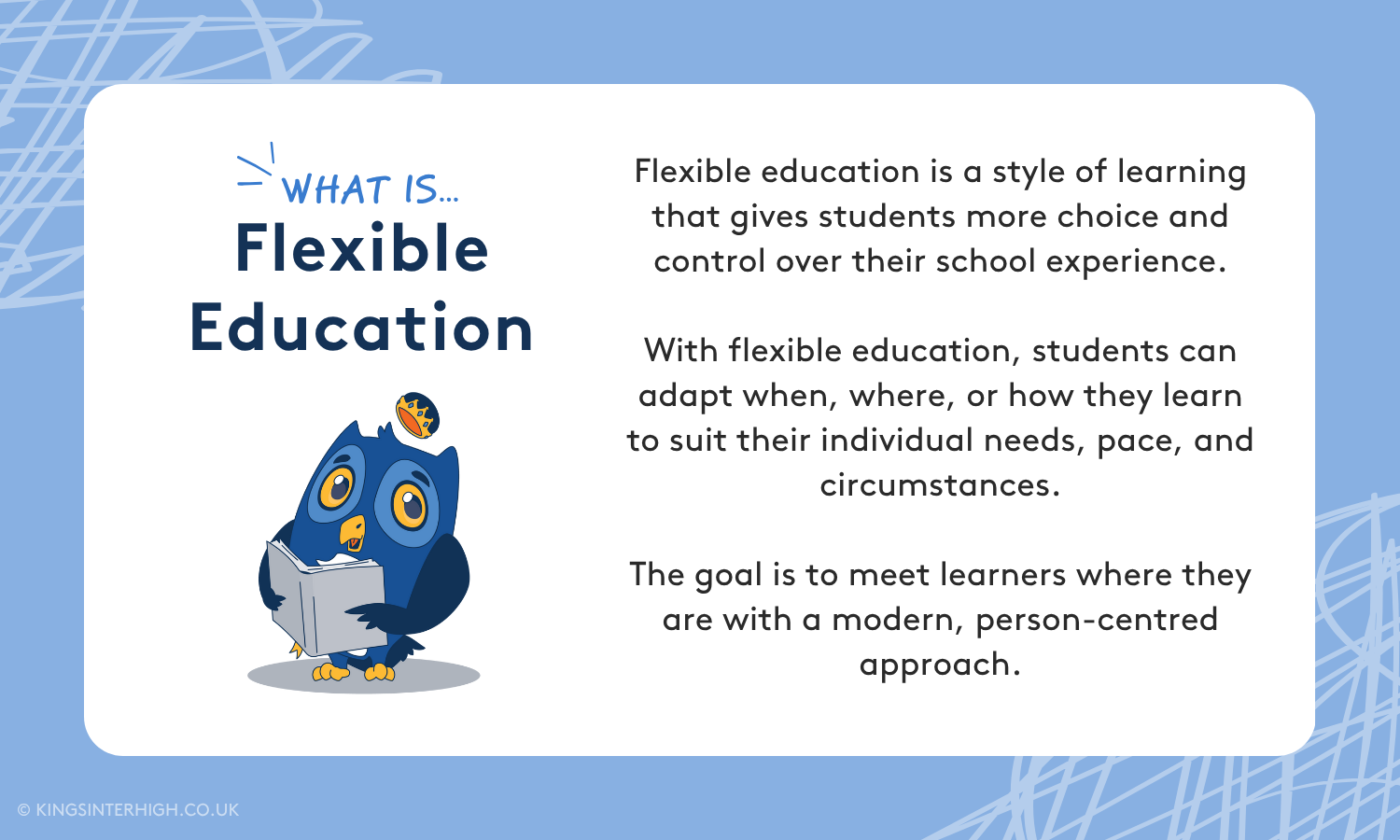
At its core, flexible education is an approach that gives learners choice and control over their learning experience.
Some of the key principles of flexible learning include:
- Autonomy – giving students agency in their own education
- Adaptability – adjusting content, pace, and methods to each student
- Inclusivity – minimising barriers to learning for everyone
- Personalisation – creating education that’s not one-size-fits-all
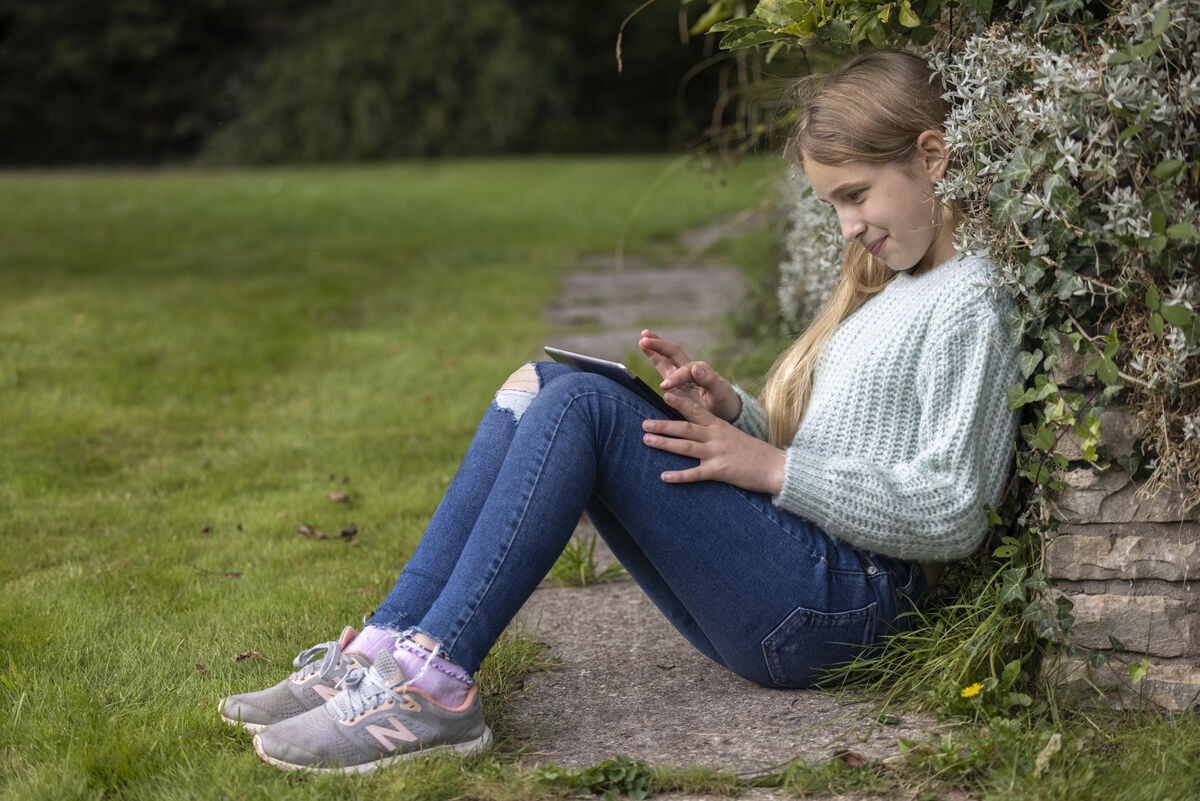
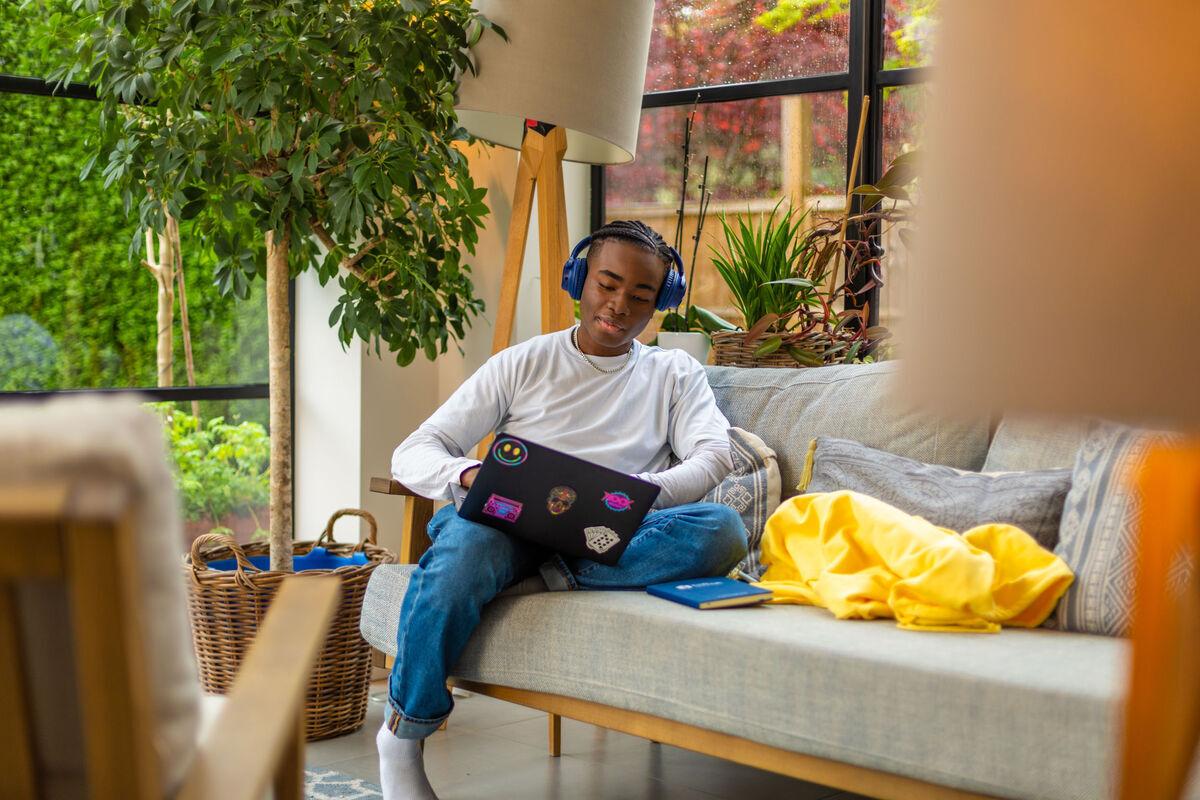
With flexible education, students can adapt when, where, or how they learn to suit their individual needs, pace, and circumstances. This could mean studying from home, adjusting class timings, or choosing between different lesson formats (for example, live classes versus recordings).
At King’s InterHigh, flexibility is one of the core pillars of our school, but flexible learning isn’t just about studying virtually. While online schools fall under the flexible umbrella, there are many ways traditional schools can become more responsive and adaptable too. Even online education can vary in its flexibility; some programmes may offer complete freedom with fully asynchronous content (such as our sister school, USPA), while others like King’s InterHigh provide flexibility within structure.
No matter how a school is personalised, the overarching goal is the same: to meet learners where they are with a modern, person-centred approach, rather than forcing them into rigid systems and moulds. Whether a student has a busy schedule, learning needs, or unique preferences and passions, this adaptability can make all the difference.
The benefits of flexible education
It’s easy to see why flexible education sounds great in theory, but what are its real and tangible advantages? Here are just a few of the top benefits.
Better inclusivity
Flexible education excels at supporting diverse needs. For children who’ve struggled in traditional settings (for example, due to special educational needs, anxiety, or bullying), the ability to learn at a different pace can be truly life-changing. When students get more flexibility around their learning pace, they never have to feel rushed through topics they haven’t grasped yet or held back when they’re ready to move ahead.
Better skills
Since flexible learning gives students more autonomy over their education, it also helps young people develop crucial life skills. Independent thinking, time management, and self-discipline all build naturally as learners take greater ownership of what, how, and when they learn. In flexible online settings, students also develop stronger digital literacy as a byproduct of their learning. Plus, when students aren’t forced into a mould that doesn’t fit them, they’re more likely to build a sense of confidence that will help them in their futures.
Better accessibility
For families around the world, one of the biggest benefits of flexible education is accessibility. With a school like King’s InterHigh, for example, students can join and learn from anywhere worldwide, which is perfect for learners in rural areas with limited options, families who move frequently, and those looking for an internationally reputable school programme. Alongside where they learn, flexible education can also allow students to decide when they learn, tailoring their schedule to their natural rhythm and commitments outside school.
Better opportunities
The benefits of flexible learning aren’t all about academics and skills. One of the great things about having more flexibility is that it allows for greater opportunities outside of school too. For example, at King’s InterHigh, many students use the flexibility of online education to pursue entrepreneurship, compete in sports, join the arts, volunteer, and more. It’s a unique chance for education to enrich students’ personal lives rather than compete with them.
What flexible education looks like
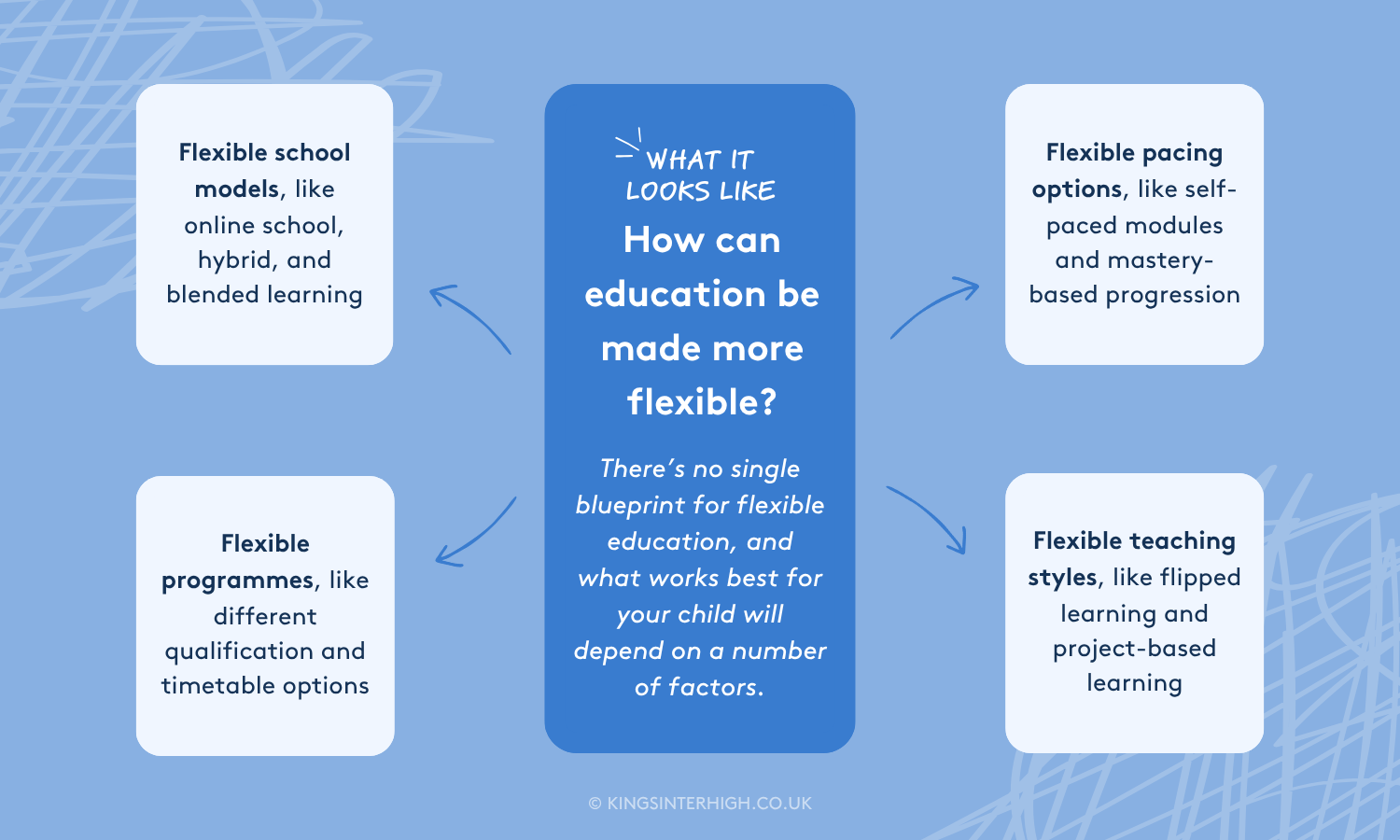
As the name suggests, there’s no single blueprint for flexible education. If you’re in search of a more flexible school for your child, there are lots of different forms of flexibility that you can look out for depending on your child’s needs, your family’s circumstances, and why traditional pacing isn’t working.
Flexible school models
Different types of schools offer varying degrees of flexibility. Some of the main models to consider include:
- Online school: At online schools like King’s InterHigh, students learn entirely remotely through virtual classes and digital resources. This gives you maximum flexibility over when and where your child learns.
- Distance learning: While online school offers flexibility within the structure of a school, distance learning providers offer asynchronous, unstructured study. As a result, distance learning is particularly popular with mature students who have busy work commitments.
- Hybrid learning: With hybrid learning, students split their time between in-person attendance and remote learning, typically on a set schedule. For example, a school may offer students the option to study specific subjects online.
- Blended learning: Similarly to hybrid learning, blended learning integrates online and in-person elements within the same course. One common form of blended learning involves taking lessons online but meeting in person for seminars and workshops.
- Flexi-schooling: In the UK, this arrangement allows children to stay registered at a traditional school but attend part-time. It’s a great option for home education families looking to give their child more social opportunities or specialist teaching in certain subjects.
- Traditional school: Some traditional schools also offer flexibility in their programmes to better accommodate students with special educational needs or allow students more freedom with the curriculum they study.
Flexible teaching approaches
Flexibility can also come from how teachers deliver content to students, for example:
- Flipped classrooms: With flipped learning, students explore new material independently first through videos, readings, or interactive modules at a time that works for them. Live class time is then used for discussion, exploration, and problem solving.
- Project-based learning: This approach sees students work on extended projects that integrate multiple subjects, giving young people greater flexibility in which topics they pursue.
- Microlearning: Some forms of flexible learning break teaching into small, focused chunks that can be fit into a timetable or schedule in any order. For example, instead of an hour-long lesson on photosynthesis, there may be four separate 15-minute classes on its factors, components, products, and processes.
Flexible pacing options
Pacing is a big part of flexible education. Every student has their own strengths, areas for improvement, and progress, so flexible pacing is a great way of tailoring learning to each individual’s needs.
- Self-paced modules: With self-paced learning, students work through materials at their own speed. They can spend extra time on challenging concepts while moving quickly through topics they grasp easily, with no pressure to keep up with peers.
- Mastery-based progression: Rather than moving forward based on calendar dates, this approach sees learners advance only when they’ve truly mastered a concept. An evolution of self-pacing, this ensures students never have learning gaps.
- Adjusted pathways: Many schools offer students the option to move ahead faster, potentially completing qualifications early or taking on additional subjects. Alternatively, schools may allow students to repeat certain classes or year groups to move at a slower pace.
Flexible curriculum choices
It’s also important for young people to have flexibility in what they study. When students can tailor their education to their passions, they’re more likely to achieve great grades and forge the right path to their unique goals.
- Multiple qualification options: At King’s InterHigh, we give sixth form students the flexibility of two curriculum choices: A Levels for a more specialised pathway, or the IB Diploma for broad and rigorous study.
- Personalised timetables: Often, schools group subjects based on timetable blocks and only allow students to choose one from each list for scheduling reasons. At a flexible school, learners may be allowed to choose any combination of subjects and study some asynchronously.
- Additional qualifications: Beyond IGCSEs, A Levels, and IBDP, additional qualifications like assured courses and the EPQ give King’s InterHigh students greater flexibility alongside the standard curriculum.
How schools make flexibility work
Since flexible education has so many moving parts, it needs to be implemented well to avoid compromising academic quality and student support. At King’s InterHigh, we’ve been delivering a flexible style of learning for 20 years; here’s what it looks like in practice.
We build in supportive structure
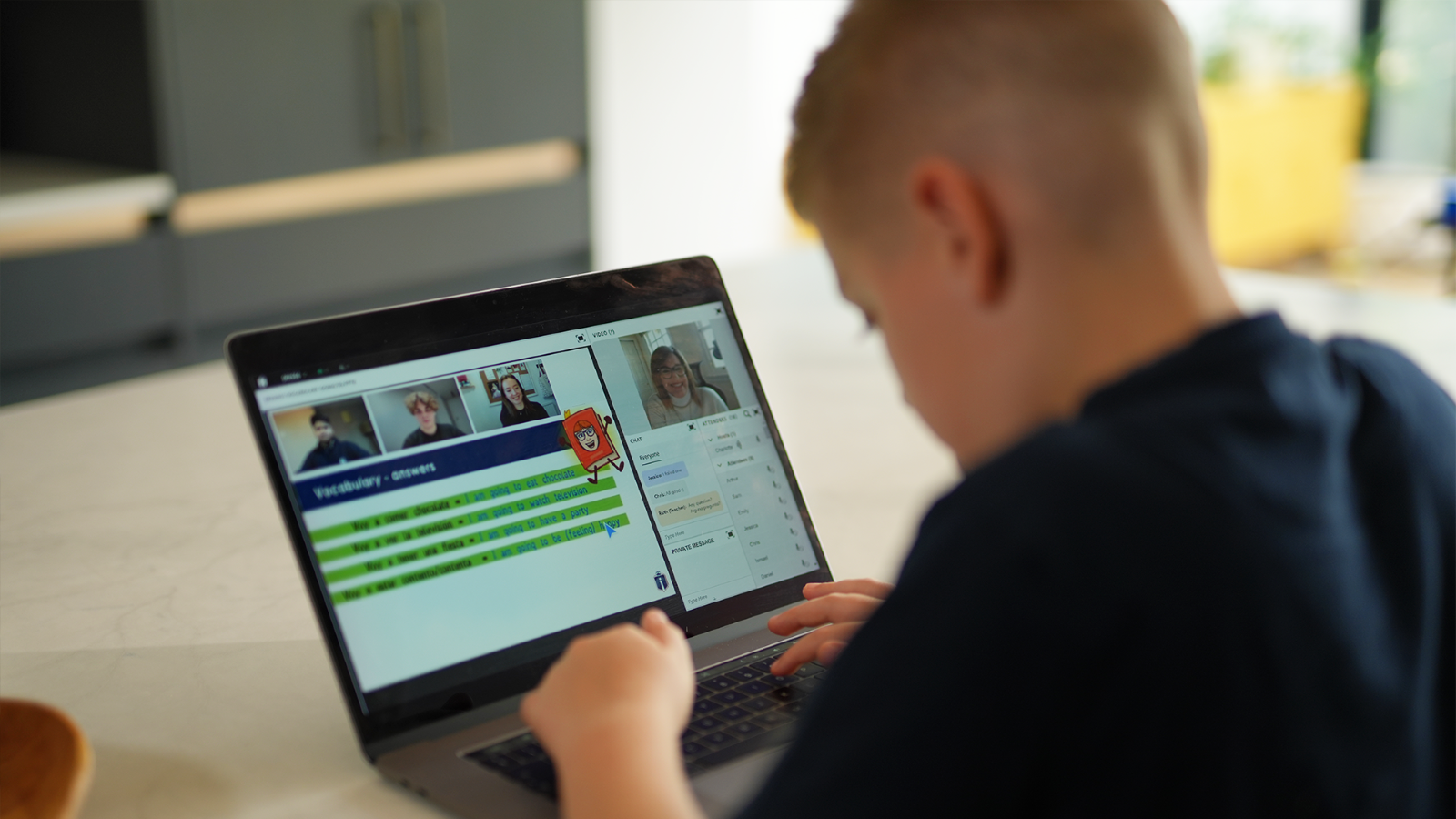
Without any structure at all, it’s difficult for schools to make sure that students are accessing their learning, making great progress, and getting the support they need. That’s why we’ve opted for a blend of structure and flexibility at King’s InterHigh. Students get all the benefits of live learning with expert teachers and global classmates in a choice of three time zones, with the freedom to study at any time thanks to lesson recordings.
We use engaging technology
Students are more motivated to keep up with flexible learning when the content is genuinely interesting and exciting. One of the ways we make that happen is with technology. For example, our students are always eager to log onto Inspired AI (our revolutionary platform which delivers content and activities tailored to each learner’s unique progress) for self-paced learning outside of classes.
We build a thriving community
In the case of asynchronous learning models, flexible education can sometimes feel isolating. King’s InterHigh is the opposite. Alongside interactive and collaborative lessons, we foster a vibrant community for every student outside of the classroom with dozens of online club options each term, community events like house competitions, and in-person meet-up opportunities.
We support the whole family
Flexible education doesn’t have to create extra work for busy parents. At King’s InterHigh, for example, students learn from home at their pace with experienced teachers, which means parents don’t have to stand over their children’s shoulders to help them learn. Plus, parents and caregivers get just as much flexibility as students thanks to our online Parent Hub and multiple communication channels.
We train teachers in flexible learning
Teaching online isn’t just about knowing your subject. It’s also about understanding the nuances of effective education in a virtual environment. Alongside their years of experience in education, all King’s InterHigh teachers are also trained in online learning, with regular professional development each term. This ensures that they can build rapport through the screen, spot when children need extra help, and more without ever needing to be present at a student’s desk.
Why choose flexible education?
When school adapts to your child rather than the other way around, everything shifts. If your child has ever felt lost in a traditional classroom, bored in lessons, or stressed at juggling everything in life, a more flexible approach could be the key to their academic success and their personal wellbeing.
Flexible learning isn’t about having fewer rules or lower standards. It’s about schools working to meet your child’s needs instead of making them another number on the register. Think your child could achieve more with options and opportunities beyond the mainstream? Flexible education is worth exploring.
Share: