


Article March 5, 2026
Five top tips for managing your time as a student

Time is one resource students never seem to have enough of. Between lessons, homework, extracurricular activities, social commitments, and family responsibilities, it’s easy to feel overwhelmed and underprepared.
Time management is an important part of meeting deadlines and managing your study schedule, but it’s also the key to creating a sustainable rhythm between learning, rest, and the activities that matter to you.
This important life skill is key throughout the school years, particularly as students begin to balance increasingly independent work, more challenging content, and blossoming social lives in Key Stage 3. By the time you reach your GCSE and sixth form years, time management becomes vital.
At King’s InterHigh, we have over 20 years of experience helping online learners become time management masters. Below, we break down how to get on top of your workload, why it is important, and how parents can help.
Why time management matters
Time management is a foundational life skill that goes beyond academic benefits. When you learn how to plan, monitor, and adjust your workload consistently, you’re more likely to achieve higher grades, improve your long-term retention, and keep your academic performance sustainable over time.
When you master time management, you’ll be able to:
- Set clear goals and follow through.
- Take ownership of deadlines.
- Communicate progress confidently.
- Build consistent momentum that strengthens independence.
Over time, these habits will help you take on challenges with confidence. Deadlines are anticipated, not feared. Pressure is manageable because preparation is embedded in routine, and confidence grows from consistent achievement. In a world that rewards initiative and adaptability, these skills are essential. Whether you’re pursuing university, competitive sports, creative pathways, or leadership roles, strong time management is a critical foundation.

Effective time management also directly supports wellbeing. Poor planning often leads to late nights, heightened anxiety, and burnout. By contrast, understanding how to prioritise and allocate your time will help you regain a sense of control and improve your focus, sleep quality, and overall health. Managing time as a student helps minimise procrastination, reduce the feeling of overload, and ensure that you spend your effort on meaningful work.
Beyond academics, these skills are essential for future readiness. Universities, apprenticeships, and workplaces expect individuals to balance multiple responsibilities, meet deadlines, and communicate progress clearly. Learning to manage time effectively as a student will help you build this discipline and organisation early, setting you up to thrive in any industry, even when schedules and demands get complex.
Ultimately, managing time is about maximising productivity while maintaining balance. It enables you to prioritise important tasks, produce higher-quality work, and free up space for hobbies, personal growth, or family time. In turn, your efforts will help you achieve greater success, build resilience, and develop independence well beyond the classroom.
How to manage time as a student
Thankfully, you don’t need any complex systems, expensive journals, or extra brainpower to learn how to manage your time. With clarity, intention, and repetition, you can build your organisational skills and reclaim your schedule without stress.
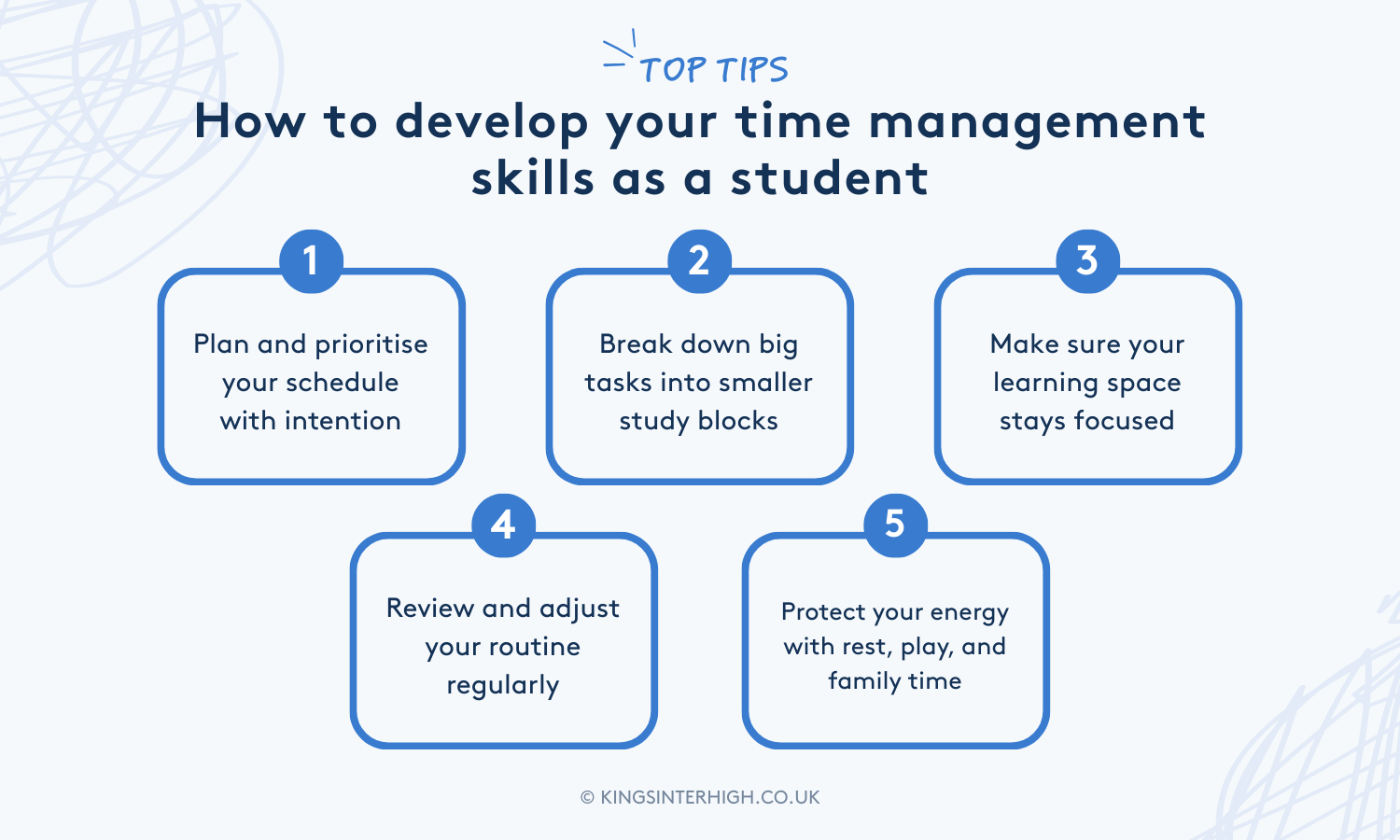
1. Plan and prioritise with intention
Not all tasks are equal. For instance, finishing a science project due tomorrow is more important than completing takes precedence over a reading assignment due in a week. By tackling high-impact work first, you can save your energy and keep a consistent pace.
How parents can help: Help your child keep track of their deadlines and differentiate urgent tasks from important tasks with daily planning. A cheap notebook, planner, or calendar can make a world of difference. For example, King’s InterHigh students have access to a built-in to-do list as part of their Student Hub to map deadlines, track assessments, and set clear daily and weekly priorities.
2. Use structured study blocks
Time blocking is useful for taking on time-consuming tasks. Breaking larger projects into smaller steps ensures you can make steady progress and helps you avoid leaving a huge task until the last minute. For example, a history essay could be divided into research, drafting, editing, and proofreading blocks, making completion achievable without stress.
Time blocking is also great for studying. Try revising in focused intervals of 25–50 minutes followed by short breaks. This will help you leverage your brain’s natural rhythm, keep you from getting tired or burnt out, and boost how much information you can remember. Research shows that consistent, shorter sessions outperform occasional marathon sessions.
How parents can help: Get your child a timer or help them download a productivity app to maintain their focus. Briefly checking in at the end of each session also helps keep your child accountable without micromanaging.

3. Create a focused learning environment
Having a dedicated space for learning can do wonders. It helps to signal to the brain that it’s time to focus. If it’s a study with a desk and a door that can close, even better. By closing a door, students can filter out distractions like background noise and pay attention to the task at hand. If possible, leave your smartphone and tablet in another room. If you’re using your device for schoolwork, then mute notifications from unnecessary apps; many phones now have their own ‘do not disturb’ functions that put notifications on silent during set times of the day.
How parents can help: Working with your child to build their study schedule will ensure that chores, meals, and family time are built in. In turn, this will ensure you don’t need to interrupt them while they’re focusing.
4. Review and adjust
Remember that time management is dynamic. It’s a good idea to reflect on your schedule weekly so you can assess what worked, see where time was lost, and adjust your strategies. This creates a feedback loop that will help you build more independence and resilience.
How parents can help: When you check in with your child, try to help them work out whether their goals are achievable and they’re directing their efforts in the right place, without taking over planning completely.
5. Protect energy, not just time
Sleep, movement, and nutrition are part of effective time management. If you attempt too many high-intensity study sessions without recovery in between, you may find that you remember less than you would with a less intense schedule. Students who prioritise wellbeing alongside study maintain a sharper focus, better mood, and improved retention.
How parents can help: Some young people find it difficult to remember their needs when they’re “in the zone” with their schoolwork, so don’t hesitate to prompt and remind your child to eat and sleep if needed.
Common time management challenges
Knowing how to manage your time will go a long way in helping you with your organisation. That being said, even motivated students struggle with time management, so don’t feel down if you’re struggling to get to grips with keeping to a schedule. Let’s take a look at some of the most common hurdles and how you can avoid them.
Procrastination and distractions
Leaving tasks until the last minute increases stress, making it harder to take in information. Likewise, while it’s easy to get sidetracked by smartphones, social media, and noisy environments, distractions like these only lead to more procrastination. You may be surprised to learn that even small distractions like checking notifications or sending a quick text can reduce your productivity by 40%. If you find your attention wandering frequently, removing distractions from your study space will go a long way in helping you stay on track.
Overcommitment
Balancing sports, arts, part-time work, or family obligations leaves little room for focused study. While being in a supportive, self-directed learning environment can help those pursuing careers outside of schooling, without a proper time management strategy, learners can burn out. During intense periods of study, such as summer exams, you may find it easiest to put your non-academic commitments on hold.
Rigid routines
Not everyone works best with a rigid timetable. If you find strict study schedules hard to stick to, they’re not the only option. Instead, you may find it easier to block your time more broadly. For example, instead of planning to revise history on Saturday mornings and science on Sunday mornings, consider making a list of all the subjects you need to study over the course of the week. Then, you can block out free study sessions and choose the subject you feel most ready for each time, ticking them off your list as you go.

How we support time management with flexible online learning
For students balancing sports, arts, health needs, travel, or family responsibilities, time management can often feel impossible. Rigid school schedules work for some students, but for others, inflexible timetables only cause stress.
At King’s InterHigh, our flexible online learning model combines structure with adaptability. Live lessons, for example, provide a schedule for students to follow, while recorded sessions allow them to revisit lessons or catch up when needed. This flexibility reduces stress and supports self-paced learning, helping students practise ownership of their time in a way that works for them.
Take King’s InterHigh alumna, Bella Ramsey, for example. Between a demanding acting career and the peer pressure to fit in at a traditional school, Bella found herself constantly distracted. Moving to King’s InterHigh, she was able to study in the peace of her own home. On top of improving her concentration, the flexibility of online school allowed her to better manage her time between education and stardom.
Current student Ayesha, meanwhile, was struggling with school attendance due to her sporting, business, and social work commitments at her traditional school. King’s InterHigh gave her the flexibility to balance her schoolwork and more, dedicating the right amount of focus to each of her commitments.

Learning to manage your time effectively is critical to life beyond school. When balancing all of life’s demands feels impossible, a more flexible, supportive, personalised way of learning can be the foundation a student needs to build this crucial skill. From school to university to the workplace, young people who truly learn how to keep on track, stay organised, and prioritise their wellbeing alongside their efforts will be at the greatest advantage.
Share: