
Article May 29, 2025
How to support your child through GCSE exams, online and offline

With over 30 years of experience in education, I have witnessed firsthand the transformative power of education and the pivotal role parents play in their child's academic journey.
Now, with the increasing shift towards digital exams, parents are presented with new opportunities and challenges.
Online exams at King’s InterHigh
For the third year running, students at King’s InterHigh have the option to take their International GCSE exams online as part of our pioneering programme with the renowned exam board Pearson Edexcel.
This has been a gamechanger for so many students, opening the door to qualifications that had previously been out of reach for a host of reasons. For some, taking tests in an exam hall can be overwhelming, generating an uncontrollable sense of anxiety that can greatly impact a student’s grades. Similar hurdles apply to young people with physical disabilities or illnesses, who again find that an exam hall is not an accessible place for them. In our international community, meanwhile, students are located all around the world; for our many learners living in remote areas, physical exam centres are not always easily available.
At King’s InterHigh, we have embraced the opportunity to offer IGCSE exams online so our community can access qualifications that facilitate their future opportunities, with half of our Year 11 cohort taking their examinations online this year. Onscreen exams have been a great way for us to support learners to perform at their best and reach their potential, a natural extension of our approach that aligns with the way our students already learn.
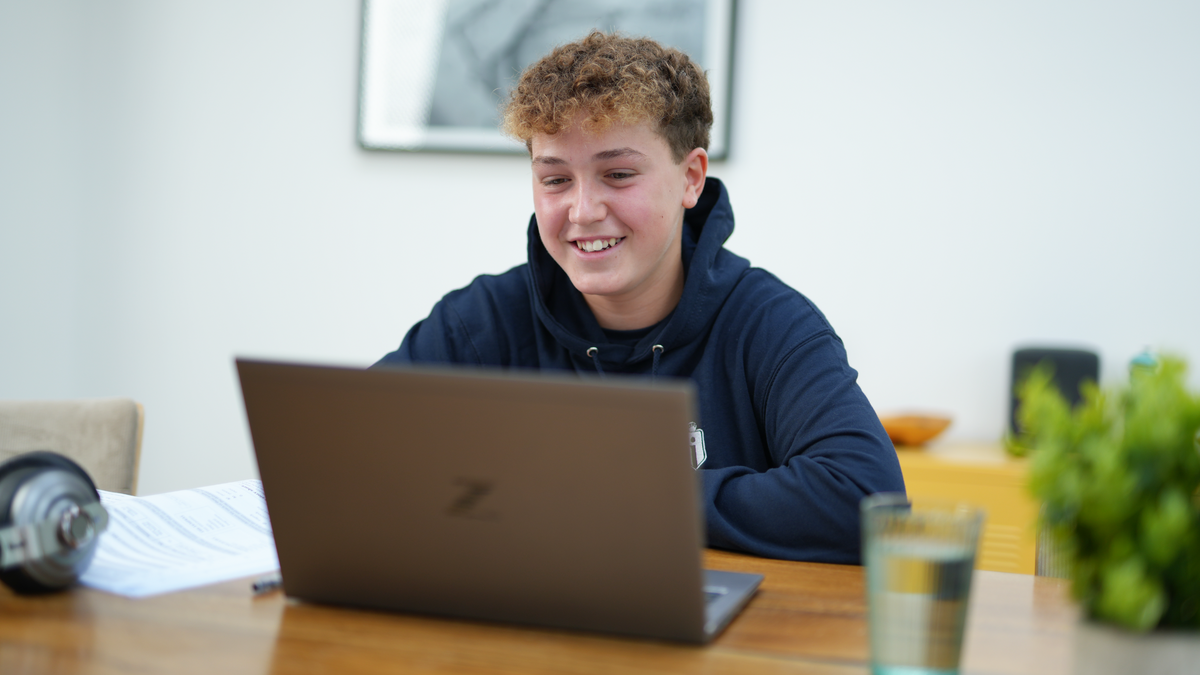
“The ability to take GCSEs online was absolute game-changer for me. I have ME/CFS (myalgic encephalomyelitis or chronic fatigue syndrome), and being too ill to travel far, especially early in the day, really threw into question how, or indeed if, I would be able to do my exams.
Online exams worked brilliantly for me. I could take my exams half a metre from my bed instead of travelling for half an hour. An added bonus was being able to lie down and sleep during breaks. The team at Pearson was fantastic — incredibly helpful, accommodating and communicative. There were some technical hiccups during my exams, but the invigilator and I were able to communicate really well through the chat box, and they made it as stress-free as possible for me.
Overall, I found the experience amazing. I’ve had a lot of disruption in my schooling my entire life due to my health, and it was so incredible to be able to do exams that gave me the best chance of success.”
How to support your child through GCSE exams
During the summer exam series, which spans approximately five weeks, a typical day-to-day will involve helping your child with any revision needs and ensuring they’re set up for each test. If your child is taking their exams online, for example, you’ll want to help them get set up with the remote invigilation system to ensure that everything goes to plan. For offline exams, preparation will involve getting pens and required materials together on exam mornings.
On top of this, during the examination period, students will naturally be experiencing higher levels of anxiety. As such, one of the most critical roles you can play as a parent or carer is remaining calm and collected — particularly in the face of worries like power cuts or missing calculators. At King’s InterHigh, help is also on hand from the remote invigilation team, so families can rest assured that any concerns will be promptly addressed.
Aside from acting as your child’s support person, one of the best ways to support them is by creating a conducive learning environment — whether they’ll be revising at home or taking their exams there too.
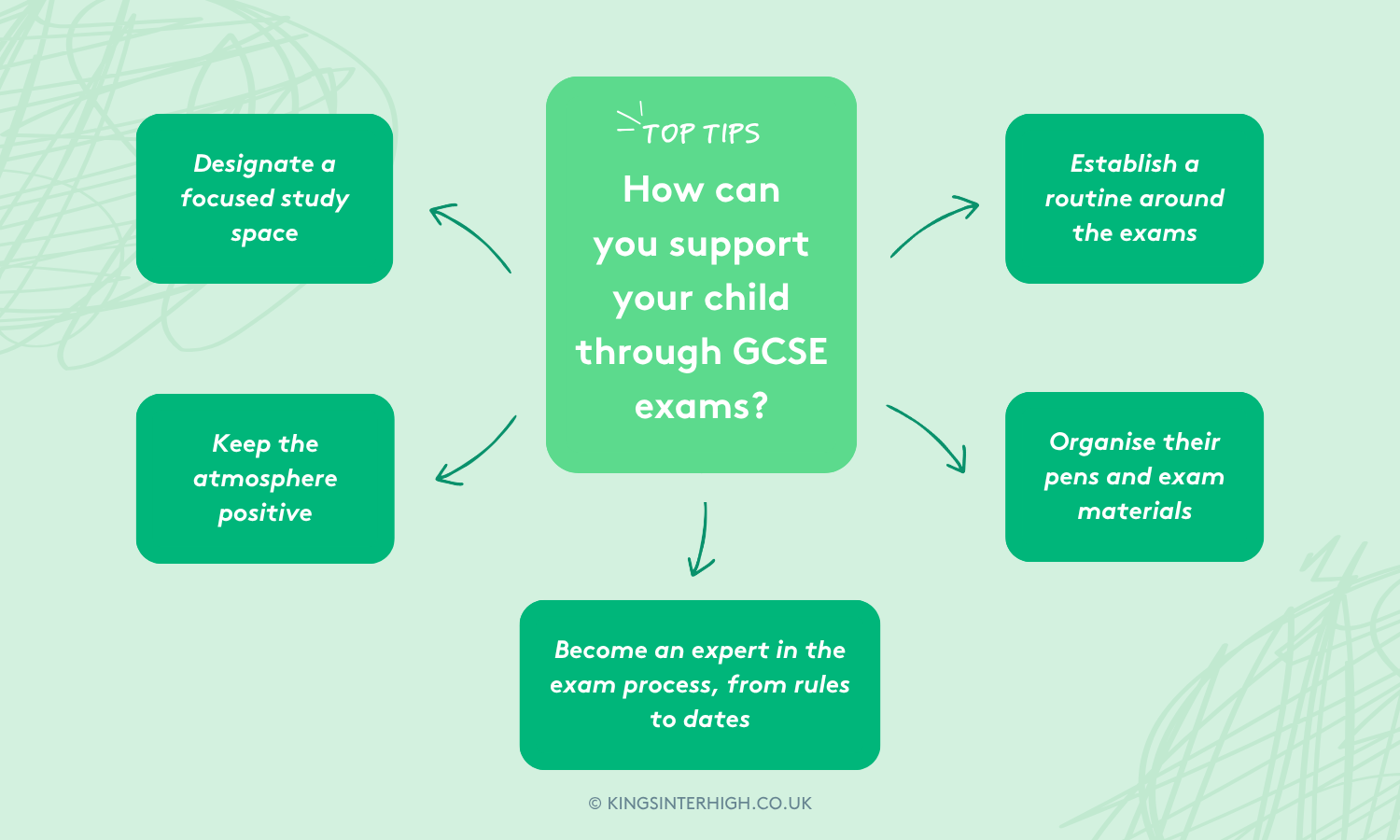
Here are some practical steps that I’ve found to be the most useful:
Designate a study space
Ensure your child has a quiet, comfortable, and well-lit area dedicated to studying and taking exams. This space should be free from distractions and equipped with all necessary materials, as well as a reliable internet connection.
For online exams, there are minimum device and internet requirements that families need to take heed of. You will need to provide a printer, for example, as some examinations are paper-based and an answer booklet must be printed.
Establish a routine
Help your child establish a consistent routine around their examination timetable. This includes setting specific times for studying, breaks, and leisure activities. A structured schedule can enhance focus and productivity.
Promote a positive atmosphere
If your child is feeling stressed or worried, try to encourage a positive attitude towards their exams. Celebrate small achievements and provide reassurance during challenging times. Your support and encouragement can significantly boost your child’s confidence and motivation.
Organise necessary materials
Stress can impact memory, so helping your child remember all the materials they’ll need for their exams will go a long way. This may include pens, pencils, calculators, and other specialist equipment.
For remote exams, one important practicality is ensuring your child has a valid photo ID to avoid last-minute dashes to the passport office! Some traditional schools may instead require exam takers to show their student ID on arrival.
Become an expert
I have found that the exam process goes the smoothest when students, with the support of their families, have fully engaged in the familiarisation process and become “experts” in what to expect.
Understanding online exams
With online exams, there are numerous opportunities for students to practise using the remote invigilation system. These are embedded into the school year at King’s InterHigh, running up to the examinations. Inevitably, initial forays into an unfamiliar system can present some roadblocks, so if parents and carers can support their children through the familiarisation process, then all members of the family will gain confidence in using the system.
One familiarisation process involves practising in a “sandbox”: this is a demonstration platform which has practice exams. Students can practise writing into the answer boxes and using the online tools, which include accessibility features for students with special educational needs. Students can make notes on the exam using the digital notepad and sticky notes tools (which can be minimised and moved around the screen), while the drawing tool allows students to highlight and annotate the text and questions. Font size of questions can be increased as needed, and different coloured overlays can be used.
One parent shared how they had practised the use of the graph-drawing tool with their child in preparation for their Economics exam, and so everything went more smoothly on the day for all involved.
Understanding in-person exams
If your child is taking their GCSE exams in person, meanwhile, you’ll want to become fully familiar with any rules they’ll need to follow in the exam hall as well as their exam timetable, particularly if you’ll be transporting them to each test.
No matter how your child is sitting their examinations, remember to thoroughly read any information provided. With our online exams, for example, we provide parents with a comprehensive handbook. Don’t forget to attend any information sessions (or catch up on those sessions by watching available recordings, when studying with King’s InterHigh).
I am always impressed by those parents who ask the probing questions showing they are fully aware of what is involved in the process — questions that have me reaching for my own handbook!
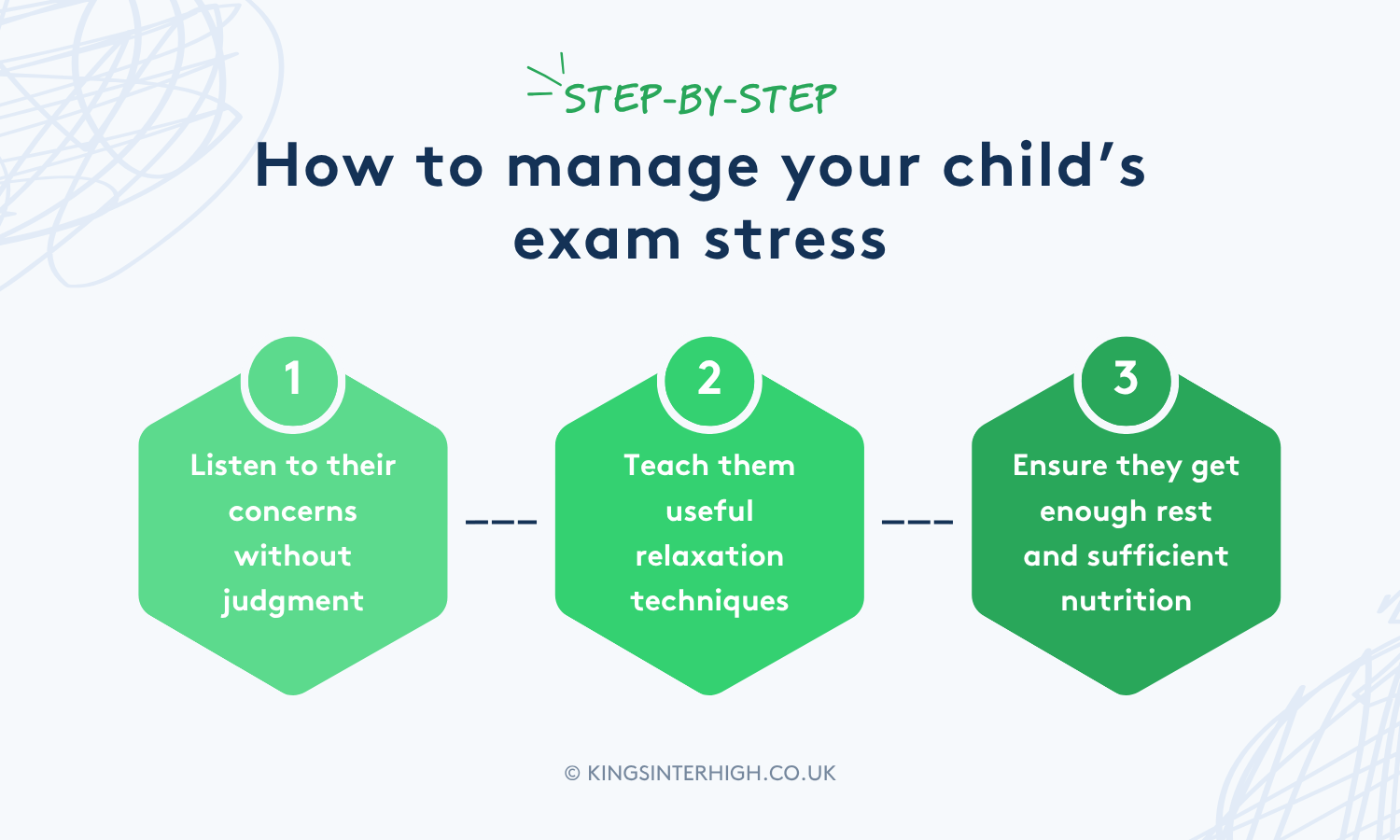
How to manage your child’s exam stress
Exams can be stressful in a multitude of ways. Some children will be worried about their grades, others will be anxious about the exam hall environment, and some may even be nervous about sitting an exam online for the first time.
Thankfully, there are several strategies you can use to help your child manage their stress during the exam season.
Encourage open communication
Foster an environment where your child feels comfortable discussing their concerns and anxieties. Listen actively and offer support without judgment. Be their advocate and ask for support from school.
Promote relaxation techniques
Introduce your child to relaxation techniques that can help them calm down before an exam. This may include breathing techniques, listening to music, taking a walk in nature, or playing with a pet. Mindfulness exercises like deep breathing can also be used during exams if needed.
Ensure adequate rest and nutrition
Emphasise the importance of a balanced diet and sufficient sleep. Your child may want to stay up studying all night or skip meals in favour of revision, but a healthy body contributes to a focused mind, which is crucial during exam periods.
Going forward as a parent
Parents and carers need to employ a number of skills and dispositions when supporting their child through exams, whether online or offline. In particular, when venturing into unfamiliar online IGCSE exam territory for the first time, I recommend that parents commit to familiarising themselves and not panicking during the process. The better you know the systems in place, the better you’ll be able to support your child — who also has the tough job of answering all their questions correctly.
A calm disposition and the attitude that all issues can be ironed out will help the whole family get through the process smoothly. We can best help our children when we convey calmness and reassurance that no problem is insurmountable. And, naturally, don’t forget your role as the endless snack provider with a significant amount of time and patience!
Remember, the journey of education is a partnership between schools, students, and parents. By working together, we can ensure that our children are well-prepared to face the challenges and opportunities of the digital age. Your role as a supportive and proactive parent is invaluable in helping your child navigate the GCSE exam landscape with confidence and resilience.
Share: