

Article November 14, 2024
20+ benefits of homeschooling for children and parents

If you’ve been researching homeschooling, you already know that traditional school isn’t the only way to educate your child — but what are the benefits of making the move to a different way of learning?
Every parent wants the best for their child, and sometimes, the typical path isn’t the right fit. Whether your child has been struggling with their grades, they’re unhappy at school, or you’re simply curious about the potential of learning beyond classroom walls, home education is a valuable option to explore.
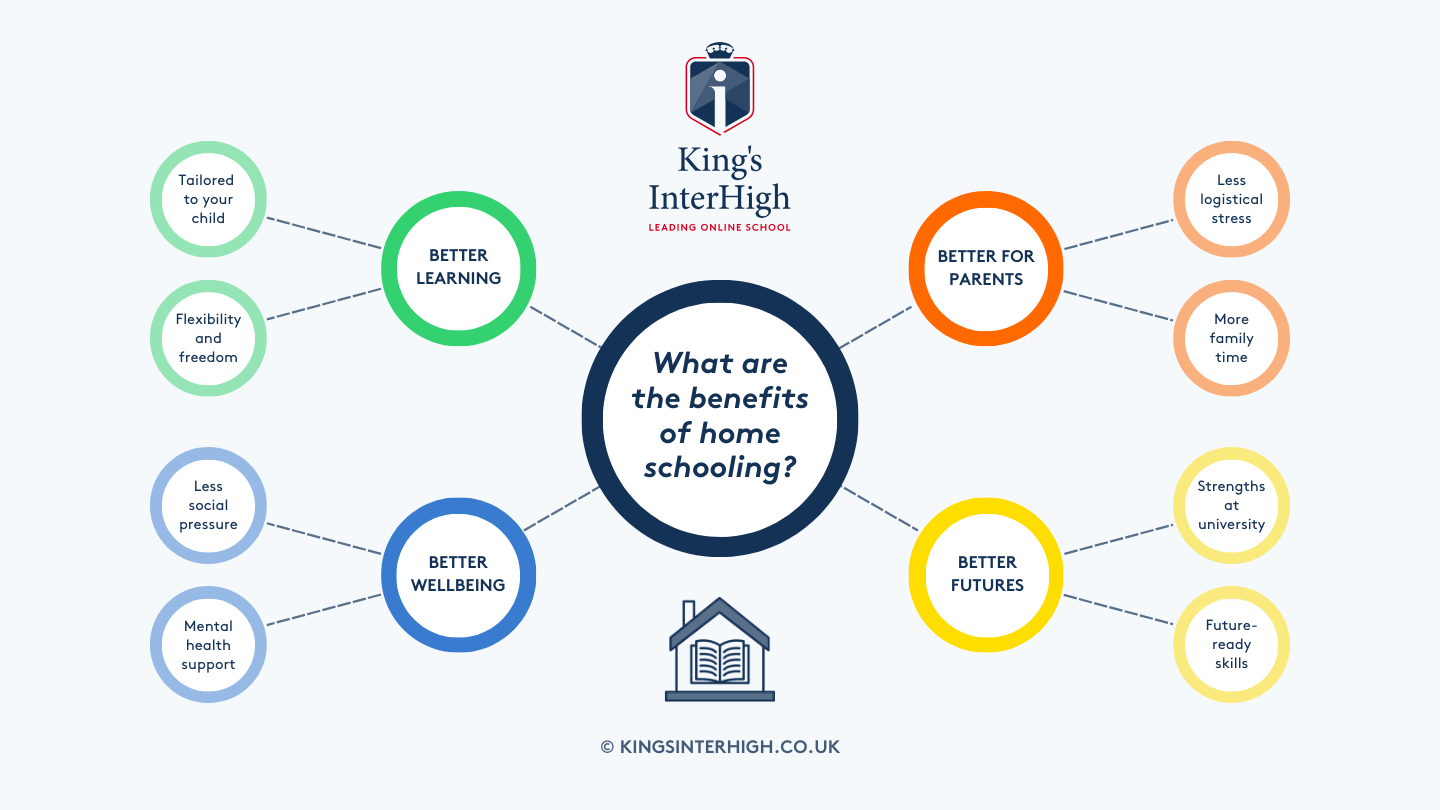
Each child is different, so the pros and cons of homeschooling vary for each family, but many are universal. From academic advantages to mental health strengths (and even positives for you as a parent or caregiver), let’s explore some of the biggest benefits of homeschooling.
What is homeschooling?
Homeschooling, or home education, is a form of education that encompasses learning at home, instead of in a traditional public or private school. Usually, parents take the role of teachers and follow the national curriculum. However, this isn’t a legal requirement – they can also take a child-led approach, as long as children receive a “suitable” education. Many families use online resources, tutors, and community groups for support, and children can still take formal exams like GCSEs and A Levels. Families may also choose the support of an online school, which offers live online lessons and a wide range of materials and learning tools. Learn more about how we teach at our online school.
Homeschooling benefits for learning
Academic advantages are one of the biggest and most obvious reasons why many families choose homeschooling. Home education opens up a world of possibilities for children to learn in unique ways that build both their knowledge and their love for learning.
1. A personalised learning experience
Traditional classrooms typically move through learning at a single speed, which can be too fast for some children to grasp and too slow for others to feel challenged. Homeschooling flips this way of learning on its head.
At home, your child can take as much time as they need with challenging topics or zoom ahead in areas where they excel. There’s no pressure to keep pace with peers or move on before they’re ready.
This more personalised way of learning is undoubtedly one of the core strengths of learning from home, and it’s one we’ve woven deeply into our own online school learning model at King’s InterHigh.
2. A better learning environment
Did you know that even something as seemingly insignificant as classroom lighting can have an impact on how your child learns? One of the great things about homeschooling is that you can tailor your child’s learning environment to their preferences — whether they prefer to sit at a desk or on floor pillows, have background noise or silence.
Similarly, home education eliminates many of the distractions you’d usually find in a busy classroom, like behavioural disruptions or time spent taking attendance. Without these, many students find that they can focus better on their learning and make the most of their time.
3. More curriculum flexibility
In the UK, you don’t necessarily have to follow the national curriculum when you homeschool, giving you the freedom to chart your child’s learning journey across any subjects, topics, and methods.
That being said, even families who do align their homeschool with the national curriculum to best prepare for GCSEs and A Levels tend to enjoy far more freedom and flexibility in what they choose to study. There are no limits like school subject offerings or timetabling restrictions; students can study any combination of subjects they like and give each one as much time as they need to.
4. Higher rates of achievement
Believe it or not, homeschooled students often achieve higher scores in standardised tests than their peers. In the US, for example, studies collated by the National Home Education Research Institute have shown that children who are home-educated typically score 15 to 25 percentile points higher than students in traditional schools. While students can achieve highly in any setting, the results highlight the strengths of a personalised approach.
5. More individual attention
In a typical in-person classroom, it’s difficult for teachers to give each student more than a few minutes of attention. At home, on the other hand, your child never has to wait with their hand raised or feel too shy to ask for help. Your support is there whenever they need it, and that instant feedback can be a huge confidence boost on their learning journey. This individual attention can be particularly beneficial for primary school students, who are in a crucial development phase.
6. More learning opportunities
Home education doesn’t have to stop at the kitchen table. In fact, the whole world can become your child’s classroom. The flexibility of homeschooling means you can broaden your child’s education with more learning opportunities than in a typical school. You can visit museums anytime, turn family holidays into rich experiences, or head outside to study local wildlife when the weather is nice. This helps bring lessons to life more than textbooks can, helping your child develop a deeper understanding and enthusiasm for learning.
7. Greater use of technology
As mastering technology becomes increasingly important for today’s young people, having access to a computer anytime can be a huge strength for home-educated children. Not just limited to computer science and ICT lessons, homeschooling families can incorporate educational apps, virtual classes, online research, and digital projects into any subject. Supporting your child’s studies also helps students learn crucial digital skills.
Homeschooling benefits for wellbeing
Alongside all the learning benefits, one of the most common reasons why families around the world choose to home educate their children is down to wellbeing. For some students, traditional school environments can be difficult to navigate. Homeschools, on the other hand, are able to create a nurturing environment where children can thrive mentally as well as academically.
8. Less pressure all around
Getting test results back in front of the class, holding your ground against your own friends — for many children, the school day can be filled with academic pressure and peer pressure. If that’s something that brings your child down, home learning is a great way to avoid the weight of constant comparison and competition. With homeschooling, students can focus on their own progress, celebrate their achievements, and forge their own paths without worrying about what others think, in turn building their sense of self-worth.
9. Room to focus on mental health
If your child has been struggling with depressive moods, anxious thoughts, and other mental health worries that lead them to avoid school, it can be difficult to find the time to support them around the school day. Some families in this position turn to home education to put emotional wellbeing first. When you homeschool, your child can take breaks when needed, talk through concerns, and gradually rebuild their confidence and resilience.
10. Broader social opportunities
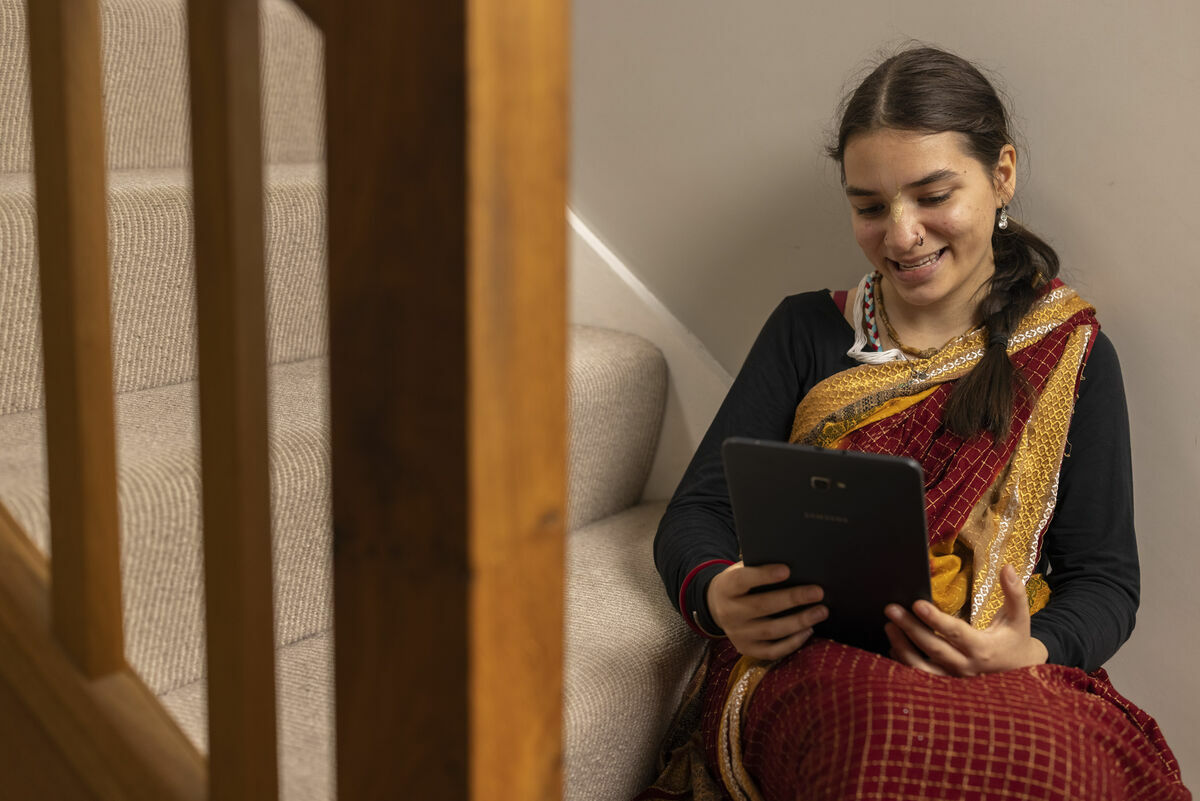
If you’ve been talking to family and friends about the possibility of homeschooling, you’ve probably heard, “But what about socialisation?” at least once. The reality, however, might surprise them. In many cases, homeschooled children enjoy a rich, diverse social life that they wouldn’t necessarily experience in another setting. This can be particularly true for students who are neurodivergent, experience anxiety, or otherwise have trouble making friends in the school playground. Homeschooled students, for example, get lots more time and opportunity to join local sports teams and clubs, take part in community events, attend home education meetups, and develop friendships across different age groups.
11. More time for hobbies
All work and no play can make any student feel burned out. Hobbies are an important part of childhood development and motivation, so it’s important to make time for them outside of studying. No matter your child’s interests — from reading to gaming to football — homeschooling typically offers a lot more usable downtime for hobbies. Instead of being limited to school grounds, students can practice piano between lessons, head to swimming training in the afternoons, or work on art projects whenever creativity strikes.
12. Better physical wellbeing
When you choose to home educate, you may also notice that your child’s physical wellbeing improves. You’re not alone if your teenager isn’t getting enough sleep at night, or if your little one hasn’t been eating their school lunch every day. With homeschooling, however, you can build your school day around healthy habits that fit your child’s needs. There’s no need to get up at the crack of dawn to make the commute, you can cook nutritious meals throughout the day, and your child can stop for rest breaks or movement breaks whenever they need them. In turn, better physical wellbeing will help your child learn better too.
The academic, emotional, and social benefits of homeschooling can also be particularly transformative for students with special educational needs. Without the pressure to conform to a one-size-fits-all approach, students can learn in ways that truly work for them — whether that's using movement to aid concentration, taking sensory breaks, or accessing specialised learning tools.
Plus, they can build their confidence and make friends in supportive environments like clubs and community groups, free from the anxiety and bullying faced by many students with autism, ADHD, dyslexia, and other learning needs.
Homeschooling benefits for parents
Interestingly, while children can benefit hugely from being home educated, the advantages aren’t just for the students. In many cases, parents and families find their lives transformed for the better too.
13. No more logistical stresses
With homeschooling, you can say goodbye to hectic morning rushes and dreaded school runs. Learning at home means you no longer have to battle traffic twice a day or coordinate co-curricular activities around school hours. Mornings become calm and purposeful when you choose your school start time, and flexible days mean you can plan lessons around activities without stress.
14. More family time together
As the years go by, many parents and caregivers find themselves struggling to fit family time into a regular week. Even after school and on weekends, many children are fatigued from the school day or have too much homework to spend time relaxing in the living room. If you choose to home educate, you may find that your family bonds grow closer. With homeschooling, for example, you can share more meaningful moments together — whether that’s learning about history over breakfast, solving maths problems as a team, or simply going to the park together during study breaks.
15. Flexibility around your lives
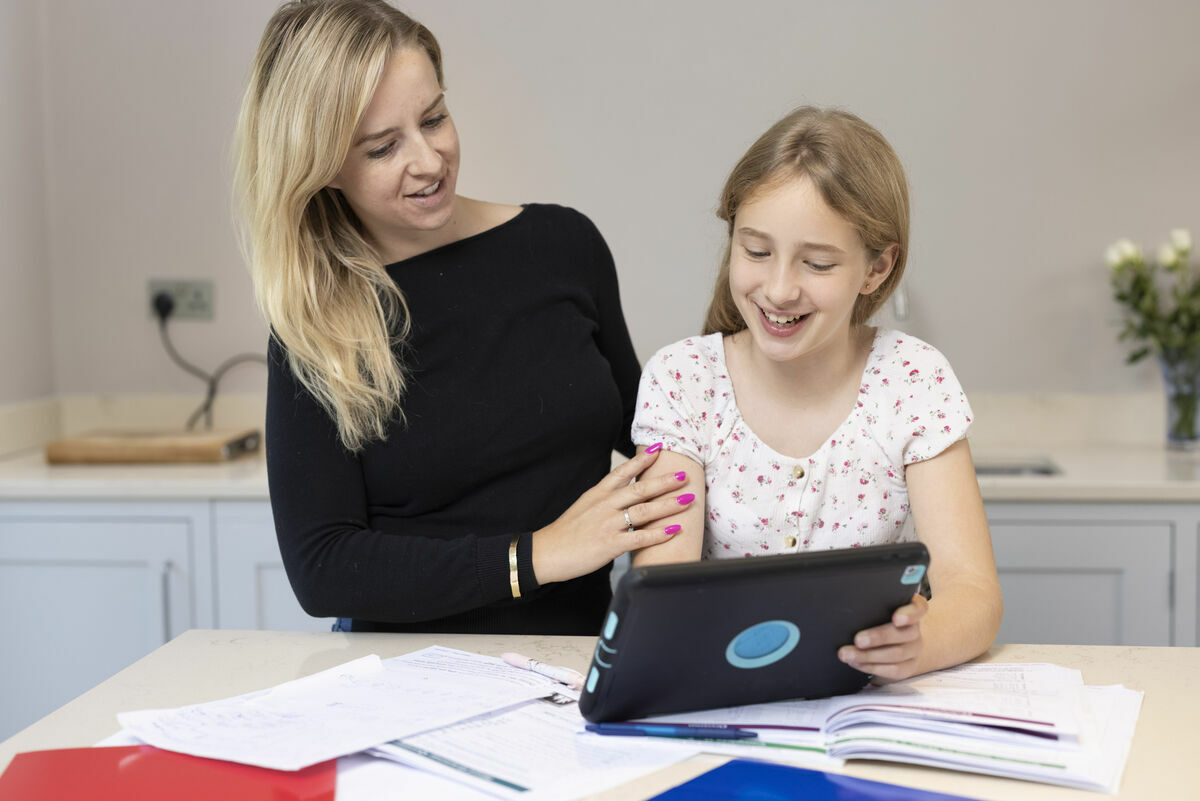
Life doesn’t always fit neatly into a traditional school calendar. With homeschooling, you’re free to schedule lessons around what matters to your family. Need to visit elderly relatives during term time? Want to spend more time on family pastimes like hiking? Whatever’s important to you, you can plan everything from life events to excursions to holidays around your child’s learning without ever worrying about unauthorised absences or missing crucial schoolwork.
16. Surprising lower costs
Similarly, while traditional state schooling is often seen as a ‘free’ education option, the hidden costs can quickly add up. Uniforms and PE kits, textbooks and school trips, packed lunches and transport costs, and those premium-priced holidays during school breaks — when you move to home education or online schooling, you may find your overall expenses actually reduce, even when you’re paying for curriculums and classes.
17. More involvement in your child’s learning
With homeschooling, you no longer have to piece together your child’s educational progress from brief parents’ evenings and the occasional school report. Instead, you’ll get to witness their progress — and those beautiful ‘lightbulb’ moments — firsthand. You’ll also get to see exactly where your child might need extra support before they start falling behind.
Online learning for homeschoolers
Want all the benefits of homeschooling without needing to be your child’s teacher?
With an online school like King’s InterHigh, your child gets a flexible, personalised learning experience with the freedom to follow their passions and fit school around their life — all with the advantages of live, online classes, expert teachers, vibrant social opportunities, and unwavering support. It’s the perfect blend of educational opportunities and ideal for preparing your child for GCSEs or A Levels.
Homeschooling benefits for the future
A key worry for parents who are new to homeschooling is that it might not prepare their child adequately for the future. In reality, this couldn’t be further from the truth. When done right, home education can even offer many advantages in preparing for university, careers, and beyond.
18. Future-ready skillsets
To succeed in the future, your child will need more than knowledge in their chosen path. They’ll also need the surrounding skills that will help them pick up new information, solve important problems, and stay driven. During the process of home education, children often develop numerous future-ready skills without even trying — from organisation and time management to independent research. These are skills that many top universities and employers look for, and they’re a huge help when it comes to higher education and work. You even have the freedom to teach new skills that you think will be important, like financial literacy or technical competency.
19. Time to build passions
Instead of focusing solely on a rigid syllabus, homeschool students typically have a lot more time and freedom to explore their interests in depth and take advantage of unique opportunities. For example, if your child is thinking about becoming a marine biologist, they’re not limited to studying an A Level in biology. They can visit the local aquarium at any time, pick up work shadowing opportunities or attend seminars that usually happen during school hours, and even do their own field research. The freedom to follow curiosity helps students discover the genuine passions that will guide their future study and career choices.

20. Advantages in university admissions
All of these developments can, in turn, be a huge strength when it comes to university applications. Homeschooled students are often able to use their deep interests, field experiences, strong study habits, and genuine intellectual curiosity to stand out in their applications. Rather than following a prescribed path, they’ve actively shaped their own education — something many universities find very appealing. The same goes for impressing employers, even if your child doesn’t plan to go to university.
21. A smoother transition to university
It might surprise you, but many homeschooled students also have an easier transition to university than their peers. Even when they haven’t been part of homeschool cooperatives or online classes that mimic a university classroom, they already have many of the foundations built. Students who’ve been home educated are typically already comfortable with independent study, they know how to manage their time effectively, and they enjoy taking ownership of their learning — all key skills needed to thrive in higher education.
22. Skills for entrepreneurship
If your child wants to forge their own path in the future instead of applying for careers, they’ll also find that homeschooling provides a great foundation for entrepreneurship. Numerous successful businesspeople and innovators in history were once homeschooled, from Tumblr founder David Karp to steel tycoon Andrew Carnegie. The self-direction and initiative many children acquire while homeschooled help to naturally develop an entrepreneurial mindset and the skills to succeed in business. In fact, your child might even have the time to start their first venture while they’re still studying, like tutoring fellow students or selling artwork online.
Making the move to homeschooling
Making the switch to home education is undoubtedly a big decision, but for many families, it’s the start of a true learning transformation. Every child is different, but the benefits of home education extend far beyond academic achievement, touching everything from wellbeing to family life to future prospects. Whether you choose to handle everything yourself or join an online school for the best of both worlds, homeschooling can be a great decision that helps your child thrive in ways you never imagined.
To find out whether online school could be the right fit for your home education journey, book your personalised discovery call with us or ask your questions through our online form.
Share: