

Article February 14, 2025
All about worldschooling: The what, how, why, and where of learning through travel

Wouldn’t it be amazing if your child could learn history by exploring ancient ruins, study biology by observing real ecosystems, or practice maths by using it in the real world? That’s exactly what more and more families are looking to achieve with worldschooling.
The growing worldschooling movement is a unique and exciting way to think about education, taking advantage of all the ways children can pick up new knowledge, skills, and understanding.
If you’ve been dreaming of combining your child’s education with travel around the world, here’s everything you need to know about worldschooling.
What is worldschooling?
Worldschooling is an alternative approach to education where families combine travel with learning, creating a rich experience that goes beyond the four walls of a classroom.
At its heart, it’s a movement that recognises learning can happen anywhere and everywhere. Rather than learning solely at a desk (though traditional or online learning is often part of the practice), students can learn about new topics and ideas by experiencing the world around them. A worldschooled child may discover history by exploring ancient ruins in Greece, practice maths by shopping at a market in Thailand, or learn new languages in each new place they visit.
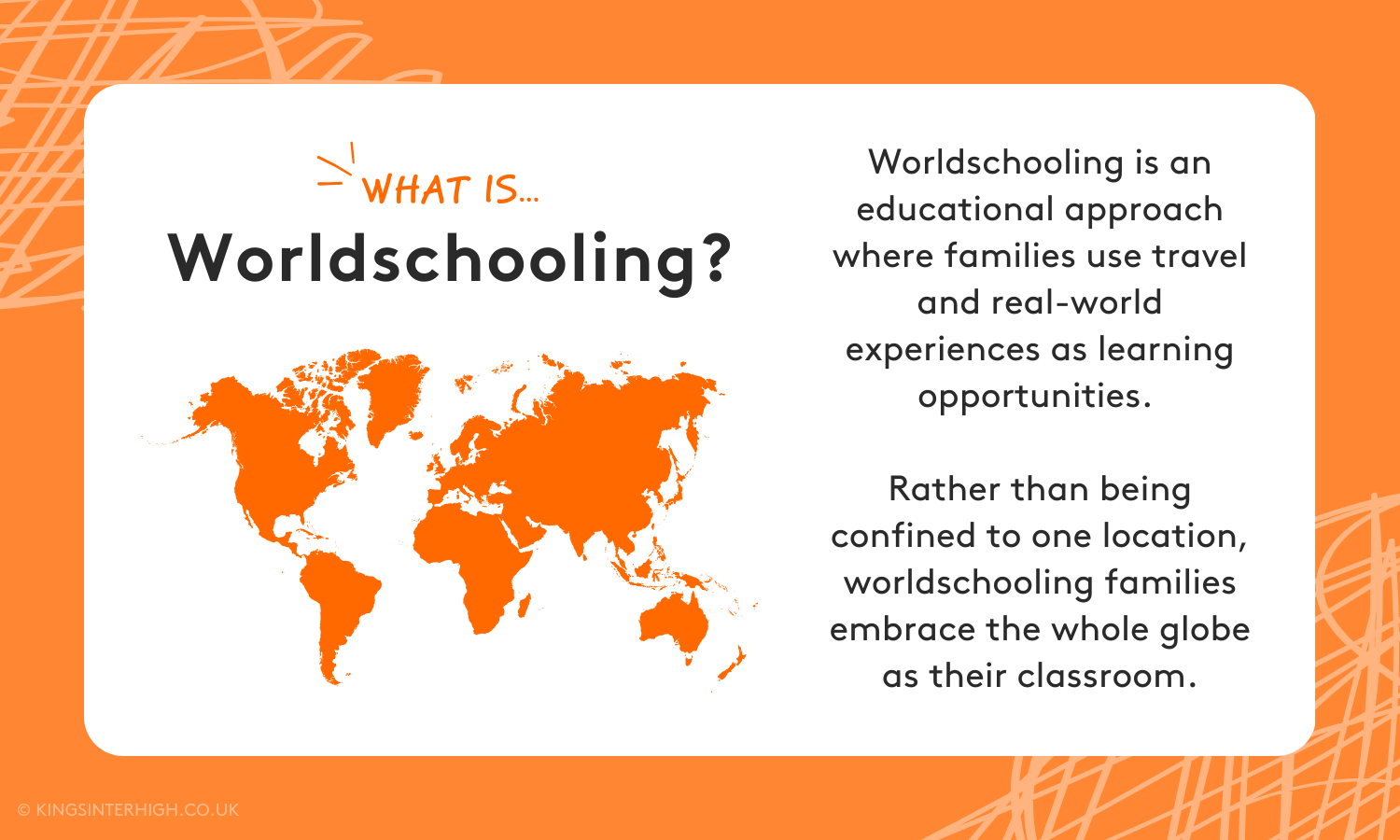
What’s great about worldschooling is that it can take many forms. Some families stay in each place for several months or even a year at a time, allowing time to settle into a new culture and way of life. Others travel frequently, hopping from place to place every few weeks.
Plus, while regular or constant travel is common, it’s not a requirement. You can spend most of the year in your home country, using it as a base to visit new locations. What makes worldschooling distinct from ordinary family holidays is the intentional focus on learning in each new environment.
How does worldschooling differ from homeschooling?
While worldschooling is typically considered elective home education, falling under the same legal umbrella as homeschooling, there are some key differences between the two.
Both homeschooling and worldschooling give families the freedom to influence their child’s education, with children studying outside of the typical classroom environment. However, home education typically happens from a fixed base, with families creating most learning opportunities close to where they live. Worldschooling, on the other hand, takes education on the road, using travel and cultural immersion as core parts of the learning experience.
Worldschooling can also be blended with other forms of education to ensure that students get a well-rounded experience.

Learning approaches for worldschoolers
As mentioned, worldschooling doesn’t need to mean your child never sits at a desk. After all, focused study time is also an incredibly useful part of the education journey. That’s why most worldschooling families choose to blend real-world experiences with the foundation of a comprehensive curriculum.
With this approach, worldschool learning happens on two levels. First, there’s the natural education that occurs through travel, from exploring to learning from locals. Then, there’s the structured education that covers core subjects like maths, English, and science — subjects that young people will need on their journeys through childhood and beyond. If your child is gearing up for their GCSE, A Level, or IB Diploma years, the formal side of learning ensures they’ll be fully prepared to ace their exams.
These two styles of learning complement each other perfectly, ensuring children develop all the skills and knowledge they need along with all the benefits of venturing around the world.
What’s great is that there are lots of ways to blend worldschooling with traditional learning based on your family’s needs, budget, and preferences. For example, some parents may choose to use private tutors, while others may act as teachers themselves using a homeschooling curriculum.
Online schooling and worldschooling
For many students, one of the best options is online schooling. At King’s InterHigh, we have numerous families in our community who choose online learning as a way to bring their child a consistent, high-quality education while travelling. Offering both structure and flexibility, our model allows students to attend live, interactive lessons with experienced teachers from anywhere in the world as long as they have an internet connection — with 24/7 access to lesson recordings so they can fit education around exciting local experiences.

What’s it like being a worldschooling parent?
Being a worldschooling parent means wearing multiple hats: you’re not just mum, dad, or guardian, but also a guide, facilitator, and teacher too. While you don't need to be an expert in every subject (that's where resources like online schools can help!), you'll play a crucial role in making the most of learning opportunities as they arise.
Finding the right work-life balance is essential, and many families succeed by taking on flexible or remote work arrangements to fund their travels. Combining these with structured educational support like tutoring or online classes also takes some of the weight off the academic side. Remember, worldschooling doesn't mean you have to do all the teaching yourself — it's about creating the right environment for learning to flourish.
The benefits of worldschooling
With students all around the world, we’ve seen the many advantages of this unique approach to learning first-hand. What’s interesting is that those benefits go beyond academics too, from increasing cultural awareness to boosting family dynamics.
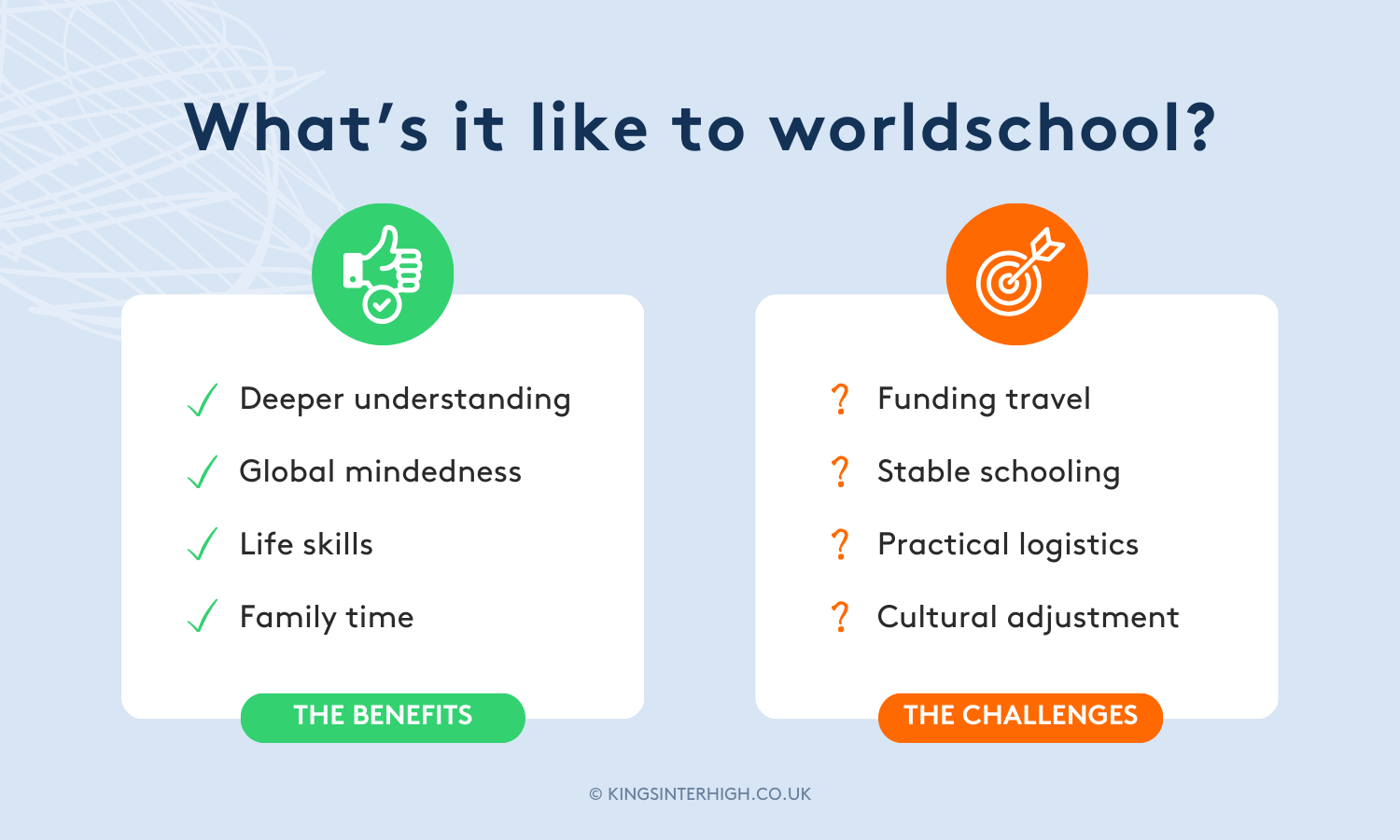
Deeper learning and understanding
As important as history textbooks and maths worksheets can be, many families find that worldschooling helps their children gain a deeper level of understanding. Visiting a medieval castle in Scotland, for example, could help students get a sense of how people really lived at the time; exploring rock formations in Iceland would allow students to make their own observations about geology based on what they know.
This can be a big help to students who learn best in a more practical, hands-on way. It’s part of the reason why we use virtual reality (VR) at King’s InterHigh, allowing all students to get that experiential, multi-sensory experience by visiting places around the world without leaving their desks.
International mindedness
Did you know that international mindedness is a trait that’s becoming increasingly sought after by top universities and employers. As many of today’s students and workers need to collaborate closely with people from all around the world, schools and businesses alike are looking for candidates with a strong sense of cultural understanding and global awareness.
What better way to gain that than by experiencing those cultures themselves? Interacting with new people and environments is a great way for children to learn how to communicate with international friends, understand different perspectives, and develop invaluable skills for our interconnected world.
Useful life skills
Many of the most important skills we need in life are honed outside the classroom. For example, while we focus on teaching students abilities like problem-solving and creative thinking alongside the standard curriculum at King’s InterHigh, putting those skills to use is a great way to cement them.
Worldschooled students will find lots of opportunities to apply and develop life skills while travelling, as each new culture will come with new experiences to adapt to. It’s a great chance to build a strong sense of independence and resilience, preparing your child to handle new situations with confidence in the future.
Precious time together
As with any form of travel, worldschooling is also an incredible way to spend more time with your child and grow closer to their education journey. Instead of rushing between school runs and after-school activities, worldschooling families have more time to share adventures, overcome challenges together, and build memories that last a lifetime.
Likewise, as a parent, you get more of an inside view of how your child is learning and growing. At King’s InterHigh, every parent and caregiver has access to their own Parent Hub with reports, grades, teacher feedback, and more — a great way for worldschooling families to keep up with their child’s academics and weave them into real-world situations.
What’s the impact on children?
One of the most common questions parents ask when considering worldschooling is whether it’s the right choice for their child’s education. Since there’s currently limited scientific research on the long-term outcomes of worldschooling, the best way to make the decision is to consider your child’s specific needs, preferences, and goals. Some children flourish with the excitement and flexibility of travelling alongside studying, while others may need more structure and concrete support.
If you want to ensure that your child will stay on track with their academic progress no matter where you travel, combining worldschooling with online school is the way to go. With online learning, you know your child always has the benefit of proven education methods, expert teachers, and a respected curriculum to complement your worldschooling efforts.
Tackling the challenges of worldschooling
As amazing as worldschooling can be, it’s not without its challenges. Thankfully, there are many worldschooling families out there who’ve come up with creative solutions to some of the issues that can arise. If you’re concerned about whether this approach could work for your family, let’s take a look at some of the most common difficulties and how families are overcoming them.
Budget
As most parents and caregivers know, even travelling just once a year can be pricey. However, remember that worldschooling is different from taking a holiday — when you’re not aiming for luxury in each new location, there are ways to bring down the cost.
Some families, for example, prefer slow travel for this exact reason. Spending a few months or more in each location allows you to live more like a local, taking advantage of local rent and living prices. You may also want to look into alternative approaches to accommodation, like home swaps and work exchanges.
Plus, with the freedom to travel anywhere in the world, you can opt for more budget-friendly destinations that fit your finances.
Affording your worldschooling journey
You don’t need unlimited funds to make worldschooling financially viable. Smart planning and creative thinking can go a long way in getting you started. You might want to begin by setting aside a designated portion of your income in a worldschooling savings account and exploring remote work opportunities that can travel with you. Many families also fund their adventures by renting out their home, minimising possessions, or finding entrepreneurial opportunities abroad. You might even want to consider exploring the possibility of becoming a travel influencer or starting your own blog!
Stability
You’re not alone if you’re worried about giving your child a sense of stability while travelling. Educational continuity is particularly important if you plan on returning home after a period of worldschooling, or if your child is approaching their crucial exam years. Likewise, while making friends in new places is incredibly enriching, children also benefit from having more constant friendships too.
In our experience, the best way to ensure stability while worldschooling is to combine it with a consistent education approach like online schooling. At King’s InterHigh, for example, our students can keep the same friends, curriculum, and teachers no matter where they are in the world.
Practicality
Day-to-day life on the road definitely requires thoughtful organisation, but it doesn’t have to be overwhelming. Families who have success with worldschooling typically create simple routines that work everywhere and focus on organisation as a top priority.
Using digital tools can help you keep track of important life admin, for example, without needing to cart paperwork from country to country. Packing light but smart, meanwhile, ensures that each new move doesn’t become a huge and costly slog.
It’s also important to be practical in the locations you choose. If, like many parents, you choose to work remotely to finance your worldschooling journey, you’ll want to stick to locations that fit your schedule. Similarly, if your child will be learning online, you’ll want to opt for less remote destinations where internet access is scarce.
Cultural adjustment
Don’t be too afraid of adjusting to new cultures. While it can be daunting at first to be in a new place, it shouldn’t deter you from pursuing worldschooling. For starters, embracing familiar routines in each country and keeping a few ‘home comforts’ on hand will help your child feel secure amidst all the change.
It’s also a good idea to spend some time preparing for each new destination before you arrive. Learning basic phrases in the local language and researching any cultural norms you’ll need to respect will go a long way in helping both you and your child adapt.
15+ top worldschooling destinations to consider
Naturally, choosing where to begin is one of the most exciting parts of worldschooling, but it can also feel somewhat overwhelming to have the whole globe to choose from! The reality is that there’s no right or wrong destination to start with, and every family will be looking for something different. If you’re not sure where to consider first, here are some top locations to look into.
For budget-friendly travel…
Depending on your starting budget, Southeast Asia can be a great place to start for families who want to make their money go further while seeing some of the most beautiful places in the world.
- Thailand offers a blend of affordability and infrastructure, with excellent internet connectivity and a thriving expat community in places like Chiang Mai.
- Vietnam combines reasonable living costs with fascinating history and gorgeous landscapes, particularly popular around Hoi An and Da Nang.
- Malaysia provides modern amenities at affordable prices, with the added benefit of English being widely spoken.
For historical education
These destinations offer immersive cultural experiences that bring history and humanities to life.
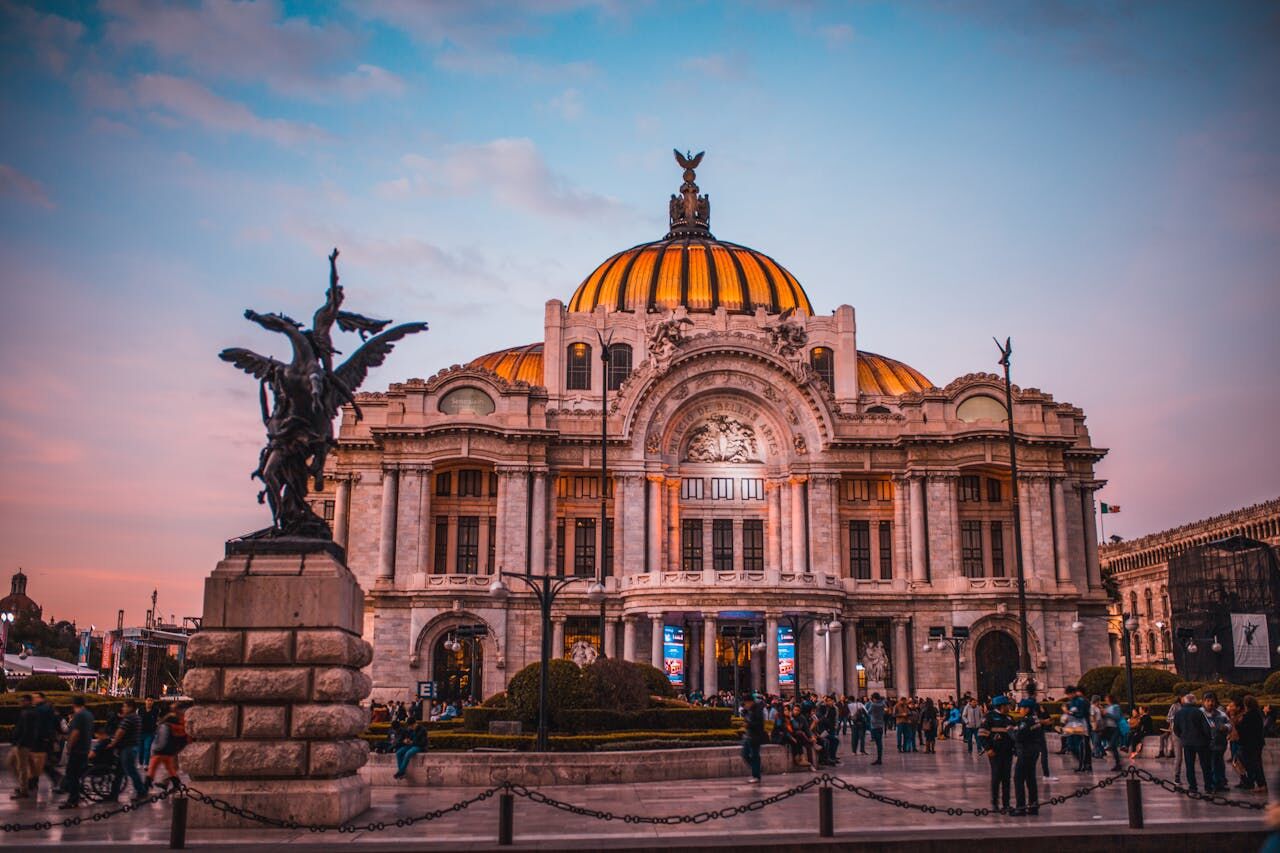
- Mexico mixes ancient Mayan ruins with colonial architecture and vibrant modern culture, particularly in areas like Merida.
- Greece turns history lessons into tangible experiences, with ancient sites and mythology coming alive in places like Athens and Crete.
- Japan offers an amazing blend of tradition and innovation, especially enriching in cultural hubs like Kyoto.
For scientific education
If your child loves hands-on science and nature studies, these locations are outstanding choices for real-world learning.
- Costa Rica is a great spot for living biology lessons through its rainforests and wildlife, especially around Manuel Antonio.
- Iceland offers incredible opportunities for geology lessons through its volcanoes and geothermal features, particularly along the Golden Circle.
- New Zealand combines diverse ecosystems with outdoor adventure, making it perfect for active learning (especially around Queenstown).
For year-round sunny weather
If you’re looking for a worldschooling spot that feels like a summer holiday, try a country known for warm weather. As a plus, you won’t need to worry about cold days impacting learning opportunities.
- Malta enjoys more than 300 days of sunshine a year with excellent historical sites to visit.
- The Canary Islands boast spring-like temperatures even in the winter months, with diverse landscapes for nature studies.
- Cyprus combines a Mediterranean climate with rich ancient history and good infrastructure.
For established worldschooling hubs
Feel like you need some support to get started? These locations already have strong worldschooling hubs where families can easily find community and resources.
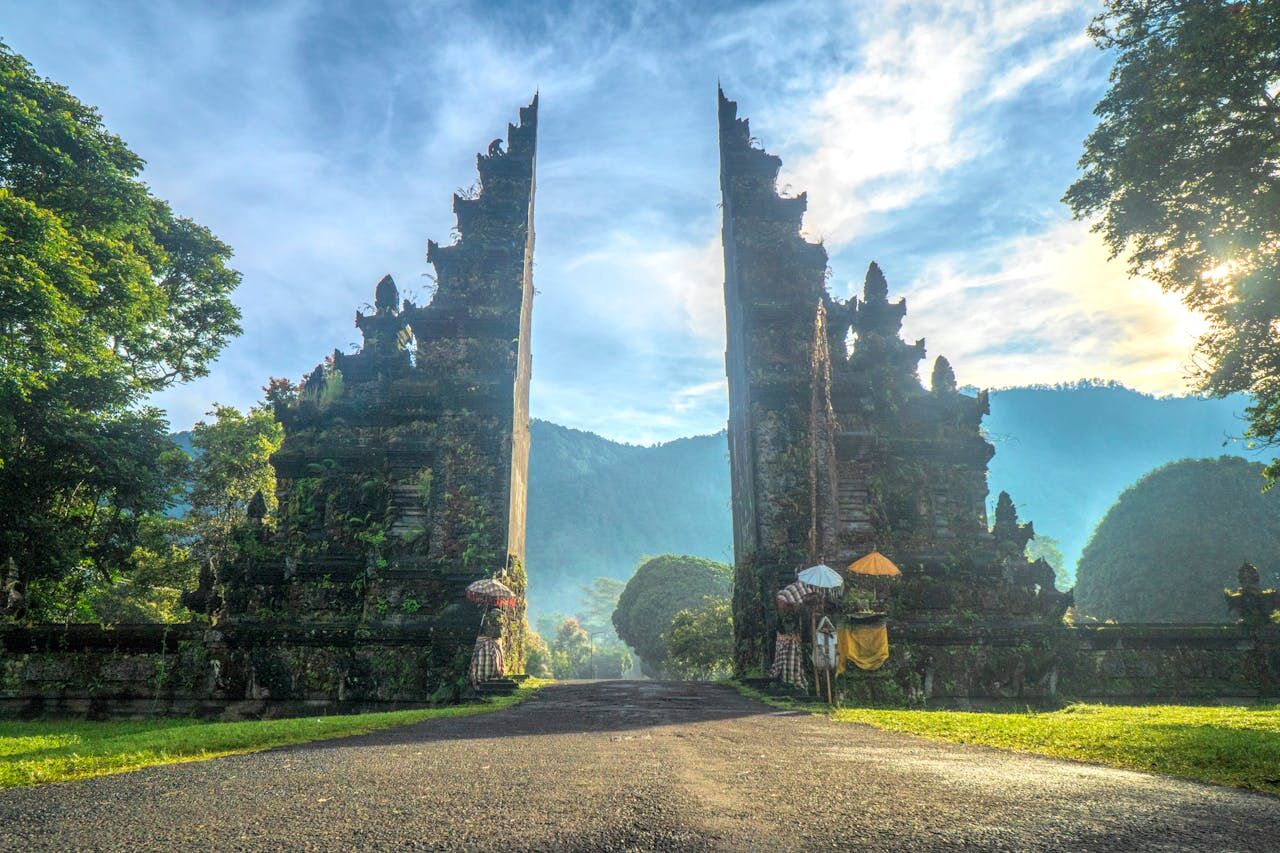
- Bali in Indonesia has a strong worldschooling community in place, with families distributed across various Balinese towns.
- The Algarve in Portugal is rapidly growing in popularity as a destination for digital nomads, many of whom are bringing their children along.
- Toronto in Canada has a popular homeschooling community in the nearby Manitoulin, and it’s a great choice for families who want to start slowly with an English-speaking destination.
Considering worldschooling?
The key to making worldschooling a success is adapting your journey to your family’s needs, finding the right balance of structure and freedom that works for you. Every child’s worldschooling experience will look different, and that’s part of the beauty of this approach to education.
If you’re thinking about combining worldschooling with online education, you don’t have to make the decision alone. Book a call with our helpful team to chat about how King’s InterHigh could support your travel plans and your child’s academic growth.
Share: