

Article December 12, 2024
Supporting your autistic child in mainstream school: What to know

Is your child happy, coping well, and achieving their best at school?
Supporting an autistic child in mainstream school can sometimes feel like an uphill battle for parents and caregivers. From accessing the right accommodations to managing sensory challenges, there are lots of components to consider.
Mainstream schools can be a great setting for numerous autistic children with solid supports in place, but it’s important that parents and teachers alike understand what makes the best environment for neurodivergent students.
Whether your child is gearing up to start school, you’re not happy with their current environment, or you’re simply looking to improve their experience, here’s everything you need to know to make sure your child can flourish.
SEN support for autistic children in mainstream schools
Every child with special educational needs and disabilities (SEND) has the right to appropriate and sufficient support in their education, including students with autism. In England, this is ensured through the SEND code of practice, which sets out clear guidelines schools should follow to identify, assess, and support students with additional needs.
At the heart of any great school support system, you’ll find the Special Educational Needs Coordinator (SENCO). SENCOs are specialist educators responsible for coordinating SEN provision across the school. As part of their role, they work closely with classroom teachers to assess students’ needs, plan appropriate support strategies, and ensure this support is implemented correctly and effectively. They also play a crucial role in working with both parents and external specialists when needed.
When an autistic child joins a school, or when an existing student is found to have autism, great schools implement what’s generally referred to as “SEN support.” This is an umbrella term with a huge range of variations, but this support typically involves a graduated approach that’s continuously adjusted as your child’s needs and progress change.
Ranging from small classroom adaptations to more comprehensive interventions, SEN support for autistic children may include things like:
- Structured routines and clear visual timetables
- Sensory adjustments to the classroom space
- Additional time during lessons or exams
- Social skills support or communication aids
- Access to specialist services when needed

Mainstream versus other schools for autistic students
Supporting an autistic child through their educational journey starts with finding the right school, arguably the most crucial decision of all. Many children who are neurodivergent thrive in mainstream schools with the right support, while others may benefit from a more specialist setting. The key to finding a school that can nurture your child’s unique strengths and support their individual needs is understanding your options and knowing what to look for.
Mainstream schools
In the UK alone, there are around 25,000 mainstream primary or secondary schools. Naturally, it goes without saying that each one is different. Some may lack the facilities, staff, or knowledge to give your child the best start in life, but that doesn’t mean it’s impossible to find a school with the right support systems.
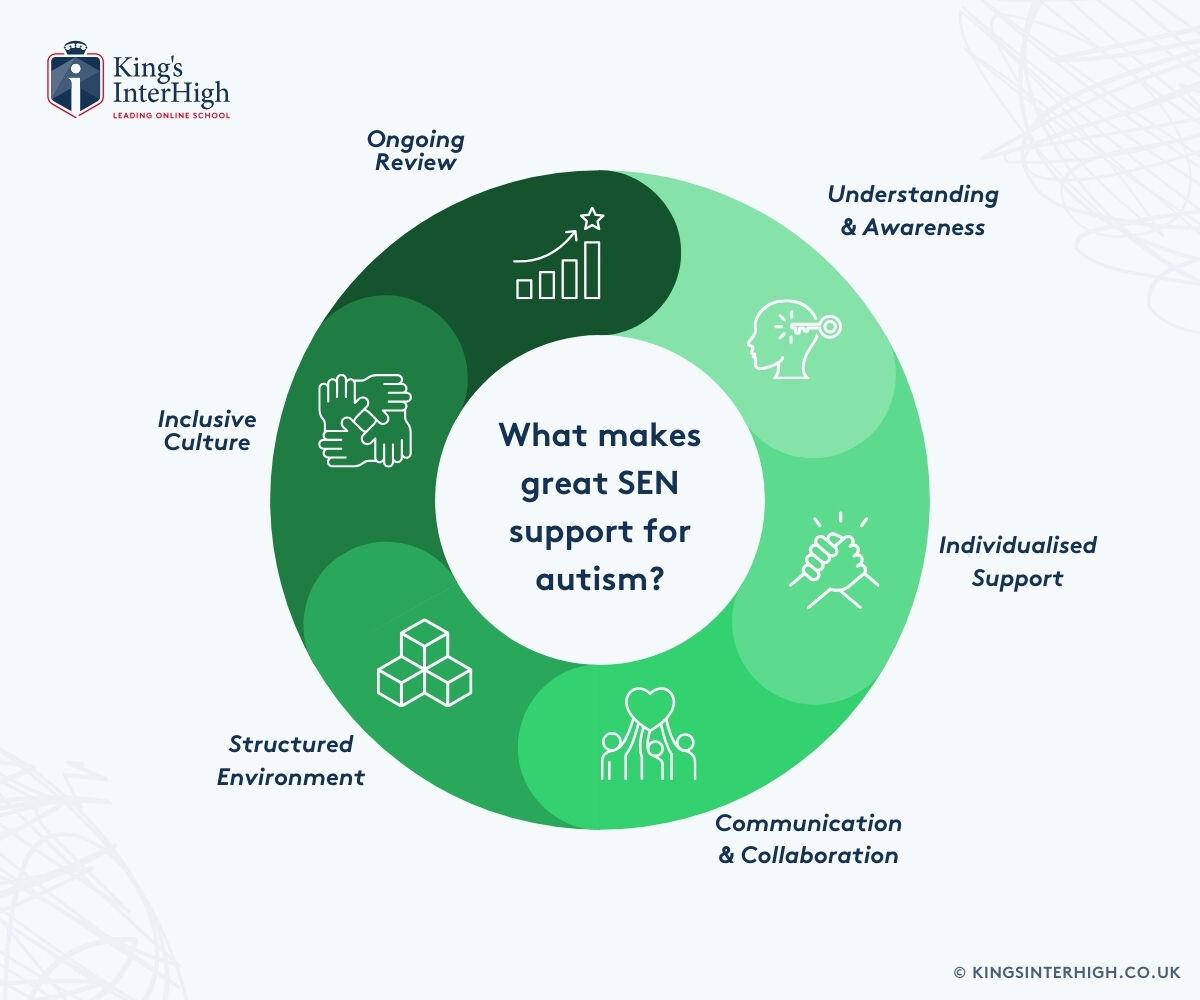
For autistic children with low to moderate support needs in particular, a mainstream school with the right supports can offer valuable opportunities for both academic progress and social development. Some of the things to look out for in the ideal school include:
- An experienced Special Educational Needs Coordinator (SENCO)
- Differentiated learning approaches, where the school is willing to adapt curriculum, teaching methods, and expectations to suit each child
- A genuinely inclusive school culture, whether that’s shown through diversity, peer support programmes, or other initiatives
When viewing schools, don’t hesitate to ask the senior leadership team about their experience with autistic students. A school with strong supports in place should be able to tell you about their track record, their approach to sensory challenges, their strategies for managing transitions, and more.
Special schools
If your child has higher support needs, you may want to explore special schools. There are more than 1,500 special schools across the nation, and many of them have been specially designed to provide an ideal learning environment for autistic children.
These schools typically offer smaller class sizes, specially trained staff, and classrooms optimised around sensory considerations. Some may cater to a broad range of needs, while others may specialise in autism. As part of the curriculum, alongside academic subjects, you may find lessons designed to build skills in communication, anxiety management, and more.
Special schools are great if your child would benefit most from intensive support, therapy services integrated into the school day, and specialist staff. However, places in these schools are often limited, and you may struggle to find schools suited to autistic children with lower support needs.
Online schools
Over the past decade or so, a growing number of families have also opted for online schools, an alternative path perfect for autistic children who find traditional classroom environments challenging and is causing anxiety.
With a virtual learning environment, students can control their sensory inputs, work more comfortably, and avoid many pressures that can make mainstream school feel overwhelming.
At King’s InterHigh, children also enjoy the benefit of live, interactive classes with experienced teachers, all with adaptations for special educational needs built in. For example, students can type to their teacher and classmates instead of talking aloud or rewatch their lesson recordings if they need more time to process the content.
Many of our own students say they find it easier to make friends at online school too, where they’re free from the usual social hierarchies of the playground.
Find out more about how online schooling at King’s InterHigh supports children with special educational needs like autism.
EHCPs for autistic children
If your child is learning in a mainstream school environment and the typical resources available aren’t enough to meet their needs, you may want to apply for an Education, Health and Care Plan (EHCP).
What is an EHCP?
An EHCP is a legal document that outlines your child’s needs and ensures they receive the right support in school (as well as in health and social care). Much more involved than baseline SEN support, your child’s EHC plan will set out exactly what provisions their school must follow to meet the needs of their autism.
What’s great about an EHCP is that it’s completely customised to your child’s requirements. It may cover needs across learning, communication, socialising, mental health, and sensory or physical differences. It will also have several sections for comprehensive coverage, including sections on:
- You and your child’s views, interests, and aspirations
- Your child’s specific needs relating to their autism (and any other conditions)
- The outcomes your child is aiming for
- The provision required to meet their special educational needs
Provision could include anything from speech and language therapy to a one-to-one support aide in the classroom, all depending on what your child would benefit from most.
At King’s InterHigh, we have our own innovative, specially designed support initiative: Inclusive Teaching Plans (ITPs). Set up from the moment your child joins our school, these constantly adjustable plans make sure they get all the support, adjustments, and aids they need to thrive at online school.
Getting an EHCP for autism
Your child’s school may suggest an Education, Health and Care Plan, but you don’t have to wait for them to. As a parent, you also have the right to request an assessment directly from your local education authority. During this assessment, evidence will be gathered from various professionals who work with your child (such as doctors), and you and your child will also get the chance to share your views where possible.
The plan will then be regularly reviewed to ensure it continues to meet your child’s evolving needs, giving you the opportunity to discuss progress and request changes if needed.
While the process of obtaining an EHCP can seem daunting, remember that support is available. Organisations like the Independent Provider of Special Education Advice (IPSEA) can provide guidance throughout the process.
Managing school stressors in autism
You’re not alone if your autistic child has experienced stress and anxiety in mainstream school. This can happen for several reasons, and they may not all be within the school’s control.
For example, even if your child’s school offers strong and nurturing support for your child’s specific needs, the environment itself can still be overwhelming. From unpredictable changes in routine (like having a supply teacher) to the noise of busy corridors, there are lots of everyday occurrences in school that can be nerve-racking for students who are neurodivergent. Your child might also be anxious about making friends, especially if they’ve experienced bullying.
For some autistic children, these anxieties can even lead to school avoidance. So, understanding (and proactively addressing) these challenges is crucial to making sure your child is happy in the classroom and getting the most out of their education.

3 steps to getting on top of anxiety
Step 1:
The best way to start managing these stressors is to talk to your child and find out why they’re feeling anxious. Remember, autistic children sometimes struggle to express themselves through neurotypical means like deep conversations; your child may feel more comfortable drawing their feelings, acting them out with toys, or writing them down.
Step 2:
Once you know what’s causing the stress, you can work with your child’s school to find a solution. For example, if your child struggles with loud noises, determine whether they can wear noise-cancelling headphones in class. If the bright lights are overpowering, they may benefit from sitting in the darkest part of the classroom.
Step 3:
If you cannot address your child’s stressors in school, your family might also find success with anxiety management techniques. For example, social stories can help younger children prepare for changes that might happen, like moving to a new year group. Meanwhile, Mindfulness, meditation, and deep breathing can be useful for older children.
In some cases, you may also find that your child could simply benefit from a change in environment. This could mean looking at alternative mainstream schools in your area, special schools, private schools, or online school. Numerous families have joined King’s InterHigh because it offers a calmer, more comfortable, nurturing environment where autistic children can excel with confidence.
Working with your autistic child’s school
Often, the key to making sure your child gets the best possible support will be working closely with the school itself. A strong partnership between you will help you effectively communicate and advocate for your child’s needs throughout their journey.
Building effective communication
Open, honest, and regular communication with your child’s SENCO and teachers will form the foundation of this partnership. It’s important to set your expectations from the outset: make sure the school knows they should consult you about any support strategies or interventions they’re considering for your child. They should also keep you regularly informed about your child’s progress, whether they’re excelling or need more attention.
Don’t hesitate to request a meeting with the school staff if you have any concerns — as a parent, your insights will be invaluable to the team. When you are discussing your child’s needs and progress, it’s often helpful to:
- Keep detailed records of communication
- Share successes you’ve seen at home
- Ask questions when you’re unsure about an approach

Advocating for more support
You are your child’s best advocate, so if you feel like they need additional or different support, you have the right to raise these concerns. This could include requesting an EHCP, asking whether outside specialists can be brought in, or suggesting specific supports you think your child needs.
For the best chance of advocating successfully, make sure you prepare for any meetings in advance by gathering evidence of your child’s current struggles, collating any research you’ve done on support strategies, and writing down your key points or questions beforehand.
Resolving disagreements
Occasionally, you might disagree with decisions your child’s school has made about their supports. If this happens, there are several steps you can take to resolve the problem:
- Request a meeting with your child’s SENCO and be honest about why you disagree with the choice.
- Ask for a formal review of the supports they’re putting in place if needed.
- Consider requesting an EHC needs assessment if your child hasn’t had one already or an update to their current plan.
- If an EHCP assessment is refused, you have the right to appeal the decision.
Remember, teachers in mainstream schools typically want the best for your child ,too, so the best way forward is often to work collaboratively to find a solution. Most disagreements can be resolved through open dialogue and a shared commitment to supporting your child.

Supporting your child to flourish
With the right knowledge and advocacy, it’s possible for mainstream schools to become places where autistic children can thrive — academically, socially, and personally. Trust your instincts, stay connected with your child’s experiences, and don’t be afraid to speak up when things aren’t working. Your child’s education journey may look different to their neurotypical peers, but they’ll be supported to achieve remarkable things.
Let’s talk
If you think your child could benefit from a school environment better suited to their way of learning, we’re here to help you make the decision. Book a personalised discovery call or contact us online to find out how online school could suit your child’s autism needs.
Frequently asked questions (FAQs)
What challenges might a child with autism face in mainstream school?
Every child is different, but some of the most common challenges autistic students face in mainstream school are sensory: sensitivity to noise, lights, or crowded spaces, for example. Autistic children may also struggle with changes to routine, making friends, or communicating their needs.
Is mainstream school good for autism?
Mainstream schools can be a great place for many autistic children to learn, as long as the appropriate support systems are in place. A student’s success and happiness in mainstream school will depend on the school’s understanding of autism, how willing they are to make accommodations, and the level of support they can provide.
Do all autistic children get an EHCP?
Not all autistic children necessarily need an Education, Health and Care Plan (EHCP). EHCPs are usually only issued if your child's needs can’t be met through their school’s ordinary resources or SEN support. Parents and caregivers have the right to request an EHCP assessment if they believe their child needs more comprehensive support.
What kind of school is best for an autistic child?
There's no single "best" type of school for autistic children, as each child has unique needs and strengths. Your child’s perfect school environment will all depend on their learning style, support needs, and personal preferences. Alongside mainstream school, options include special schools, independent (private) schools, and online school, as well as homeschooling for autism.
Share: