

Article January 31, 2025
What to do if your child won’t go to school because of anxiety in the UK

When you have a child who’s struggling with anxiety, hearing the words “I can’t go to school today” can stir up a flurry of emotions. Seeing your child upset, worried, or distressed can be heart-wrenching for any parent or caregiver, but knowing they still need to get their education can make the struggle even harder to manage.
If you’re based in the UK and your child won’t go to school because of anxiety, our guide is here to help you move forward. Keep reading for clear and practical advice based on real experiences from our King’s InterHigh families, proven strategies from mental health experts, and more. We’ll explore everything from recognising the underlying causes of school anxiety to considering alternative education options when things aren’t working out.
Understanding anxiety when your child won’t attend
If your child has been finding it difficult to attend school for a while now, you might have already heard the term ‘school refusal’ to describe the problem. While it’s a common phrase, you’re not alone if you don’t feel like it reflects what’s really happening.
In fact, many families, schools, and local authorities alike now prefer terms like EBSA (emotionally-based school avoidance) to better explain the heart of the issue. It’s not that your child is simply choosing or refusing to attend — it’s about genuine emotional distress that can make school feel like an impossible feat.
Just like we wouldn’t expect a child to go to school when they’re too physically unwell, it’s important to recognise that mental health needs like anxiety can be just as challenging. Your child isn’t misbehaving, and you haven’t done anything wrong as a parent or caregiver; what you both need is understanding, support, and a clear path forward.
To learn more about school avoidance, take a look at our explainer and top tips.
How can you tell if it’s anxiety?
Every child experiences anxiety differently, especially across age groups and special educational needs, but there are some common signs that might help you understand what’s going on:
- Behaviour changes at home, like spending more time in their room, avoiding talking about school, or changes in eating and sleeping habits
- Struggles at school, from a decline in grades to lack of focus to friendship breakdowns
- Physical symptoms that might feel very real, including headaches, stomach aches, and feeling sick — particularly in the morning before school

What’s behind the anxiety?
One of the tricky things about school-related anxiety is that it can have a huge range of causes, each of which will influence the support your child needs. Some of the most common include:
- Academic anxiety: This might stem from missed school time, unexpected poor test results, upcoming GCSEs or A Levels, or peer comparisons.
- Social struggles: Bullying, making and keeping friends, first relationships and breakups, and interacting with teachers can all be a source of stress for children.
- Sensory overwhelm: For children with autism, ADHD, and sensory sensitivities in particular, the school environment (from its busy corridors to its many daily transitions) can be overwhelming.
- Unmet learning needs: Sometimes, children might have undiagnosed or inadequately supported special educational needs that make school increasingly challenging and anxiety-inducing.
- Home situation: Major life changes like moving house, family illness, bereavement, and family breakdown can all make it difficult to feel settled at school.
Understanding these underlying factors is the first step in finding solutions that will work for your child. While some causes might have straightforward solutions, others may need more time and support — and that’s perfectly normal. Thankfully, there are always ways to help your child access education in a way that feels manageable for them.
What does the law say?
The law in the UK says every child has the right to an education, even if they cannot go to school due to mental or physical health needs. This means that your local authority has a legal obligation to support your child’s learning, whether that means helping them back into school (through an EHCP, for example) or making alternative educational arrangements (such as alternative provision, known as AP).
What can you do to help?
As a parent or caregiver, helping a child with school anxiety can often feel stressful and overwhelming. You might find yourself torn between understanding your child’s genuine distress and knowing they need an education, all on top of the usual responsibilities of parental life.
The good news, however, is that there are lots of things you can do at home as a mum, dad, or guardian to help your child tackle their anxiety and rebuild their confidence. In turn, the work you do at home can create a sense of calm and self-assurance about getting back to school. Let’s take a look at some of the most effective strategies we’ve seen.
1. Work through worries together
Even as an adult, having someone to talk to can make a world of difference. The same is true for children and teenagers — often even more so, as they’re still learning to navigate big feelings.
Communication is key, but don’t be surprised or worried if your child is a bit reluctant to open up about what’s troubling them. Some children may prefer different ways to get the point across (like drawing, writing a diary, or acting things out), while others might need a more relaxed setting to open up, such as during a walk or a calm activity.
2. Use proven anxiety tools
Thankfully, you don’t have to reinvent the wheel to tackle your child’s anxiety. There are already lots of established and effective methods out there to help children cope with anxious thoughts.
For example, ‘worry monsters’ have become a popular tool with younger children. These are stuffed toys that children can “feed” their worries to as a way of overcoming them. Teenagers, meanwhile, might benefit from a ‘worry tree’: a visual decision tree tool that helps them sort their concerns into unavoidable and manageable, equipping them with the problem-solving skills to handle each anxious thought.
3. Practice calming techniques
Simple relaxation techniques can also make a surprisingly big difference when anxiety feels overwhelming. One of the most popular techniques is deep breathing, which activates the body’s relaxation response to counter anxiety. Other popular calming techniques recommended by the charity Mind include listening to your child’s favourite music, taking a break outside in the fresh air, active relaxation exercises like yoga, and guided meditation.
4. Set up a morning routine
A rushed and unpredictable morning can make anxiety feel much worse, so many families find success with setting up a more calm, proactive morning routine. Yours might include:
- Getting up earlier so there’s plenty of time for each step of getting ready
- Moments for managing anxiety, such as breathing exercises or running through a checklist
- Ways to make the atmosphere calmer, like playing music
Supporting yourself as a parent
It’s natural to want to focus all your energy on helping your child, but remember that looking after your own wellbeing is crucial too. Alongside making sure you feel calm and well, supporting yourself will help ensure you have the emotional resources to support your child to the fullest too. So, remember to:
- Accept help from family and friends who offer it
- Join local or online parent support groups
- Take breaks to recharge when you can
- Consider flexible working or parental leave if you need it
- Seek your own mental health support if things feel overwhelming
Don’t feel guilty about taking care of yourself — managing school anxiety is often a journey for the whole family.
What can your child’s school do to help?
Starting your child’s anxiety recovery journey at home is often a more comfortable and secure first step, and it also gives you great insights into the challenges and potential solutions you’ll want to raise with your child’s school.
If you’ve already raised concerns with your child’s school and you don’t feel like you’re making any headway, try not to feel discouraged. While schools want to support their students, it sometimes takes a while to get things off the ground, so persistence often pays off.
Whether you’re stuck looking for next steps or you haven’t started the process of working with your child’s school yet, the following steps are a good rough guide to follow.
Step 1: Start a discussion
The first step to making progress is to open a dialogue with your child’s school. Depending on the difficulties at hand, the best member of staff to set up a meeting with first may be the SENCO, your child’s tutor group or class teacher, or the pastoral lead.
These conversations tend to work best as a true, two-sided dialogue. So, alongside sharing your insights, try to get the school’s observations too for the clearest understanding of the support your child needs to get back into school.

Step 2: Devise strategies together
If you’ve already been working through your child’s anxiety with them, don’t hesitate to share any ideas you’ve come up with for support that the school could put in place. Your insights will be incredibly valuable in developing a support plan, even if they’re not all possible. The school may also have their own ideas from past experiences with other students who’ve been through similar experiences.
The best strategies will be highly dependent on your child and what’s causing their anxiety, but some popular approaches include:
- An earlier or later arrival time for a calmer start to the school day
- A safe space to go to, along with a ‘time-out’ card your child can use to quietly leave class without having to convince their teachers
- Buddy systems to help students navigate the school building or communicate with confidence
- Different ways of sharing information to suit your child’s needs, such as visual timetables with pictures or verbal cues from teachers
Step 3: Review progress regularly
Once you’ve agreed on strategies, make sure your child’s school lets you know when they’ll be implemented and sets up a meeting to review progress in a few weeks or months. Keeping notes of your meetings and getting written confirmation of planned support is a top tip for making sure everyone stays on the same page.
Remember that managing school anxiety often takes time, and even small improvements are worth celebrating. If the support strategies in place don’t help as much as you hoped, however, it’s always a good idea to try out other approaches.
That being said, if you think things haven’t improved because your child’s school hasn’t done enough to action the support, don’t hesitate to request another meeting or escalate things to a higher level — whether that’s the headteacher, board of governors, or local educational authority.
EHCPs and IEPs
If your child has special educational needs, they may benefit from having their support needs formally documented. An EHCP (education, health and care plan) is a legal document that your local authority must follow, outlining the specific support your child needs. If your child already has one, you can request updates to include anxiety support strategies.
Alternatively, your child's school may create an IEP (individual education plan). While not legally binding like an EHCP, IEPs are available to all students and can still help ensure everyone understands and follows the agreed support strategies.
What can professionals do to help?
It’s normal to have anxious thoughts sometimes, but more severe anxiety is a genuine mental health condition that can have knock-on effects on a child’s wellbeing. If you think your child needs additional help beyond the support you and their school are providing, you may want to look into professional support avenues.
If you’re considering professional help, your child’s GP will often be the best place to start. GPs can:
- Assess your child’s overall wellbeing
- Make referrals to specialist services when appropriate
- Provide documentation about your child’s anxiety if you need it
- Connect you with local support services
Your GP may also recommend a referral to CAMHS (Child and Adolescent Mental Health Services), which brings together various mental health professionals in each area around the UK to provide specialist support like counselling.
If you’d like to do some more research yourself, we recommend the following resources:
- The NHS website, which offers reliable and proven information about childhood anxiety (along with evidence-based strategies to try)
- Young Minds, an NHS-recommended charity which provides extensive guidance for families supporting children with anxiety
What are the alternatives?
Sometimes, despite everyone’s best efforts, it may seem like the traditional school environment isn’t the best suited to your child. You might feel like this is the case if your child’s anxiety stems from aspects of school that can’t be easily changed, such as busy corridors or social demands.
If you’re finding yourself in the same situation, it’s worth knowing that there are other pathways to education that might work better for your child. Many families have found that a different approach to learning can make a remarkable difference to their child’s anxiety levels, getting them back on track with learning in no time.
Alternative provision
Also known as AP, alternative provision is education that local authorities can arrange and fund for students who cannot attend mainstream school. AP settings can include anything from PRUs (pupil referral units, which are small school settings with specialist staff) to therapeutic schools, vocational schools, and outdoor learning centres.
Your authority may suggest AP for your child, but you can also broach the topic with them directly.
Online schooling
Online education has also become an increasingly popular choice for families dealing with anxiety and attendance struggles. In a virtual school environment, many of the typical triggers for anxiety are naturally removed, helping children become happy, confident, and enthusiastic learners again.
At King’s InterHigh, we bring students with anxiety the best of both worlds: live and interactive lessons, experienced expert teachers, and cutting-edge learning approaches, all with the flexibility to learn in a way that suits their needs. Children can use a chat box to participate in lessons if they don’t feel comfortable speaking aloud, for example, or watch their lessons as recordings at any time if they need to miss school for a counselling appointment. Plus, we bring every student pastoral support (including our popular Managing Worry workshops) and ways to make friends comfortably, like virtual clubs.
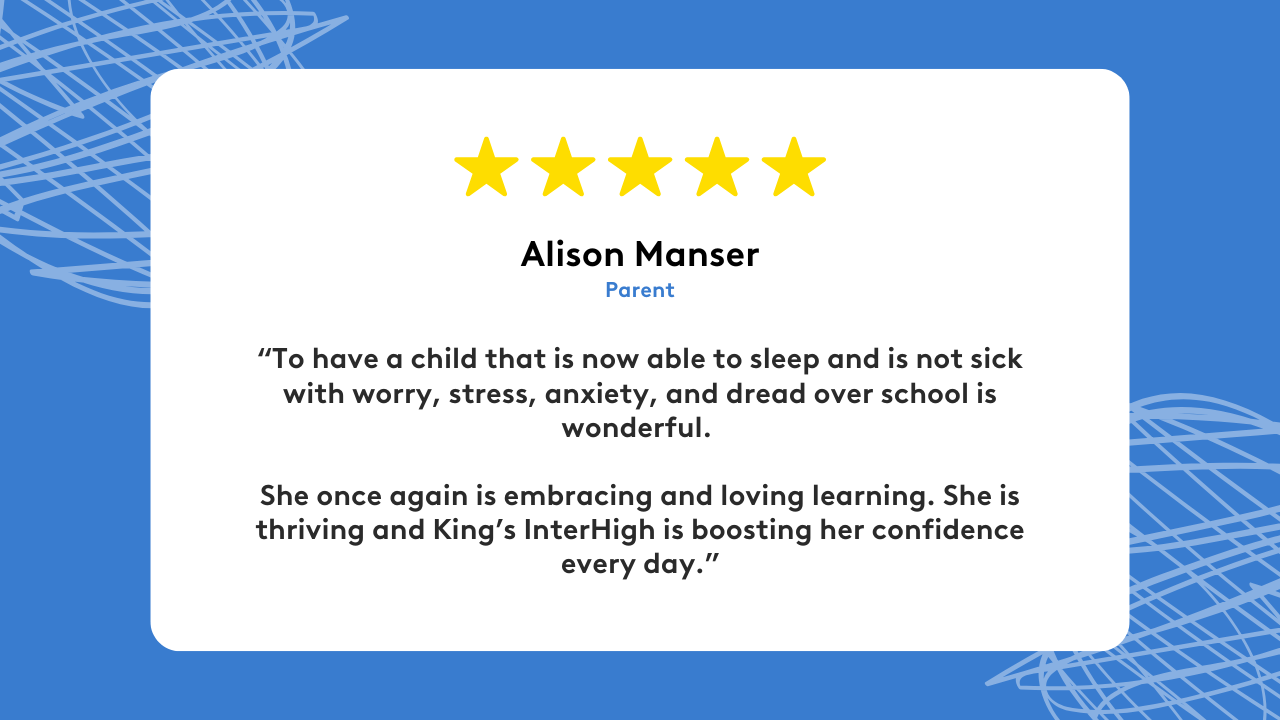
If your child is still struggling to go to school because of anxiety, finding the right environment can be instrumental in helping them feel ready to learn again.
Your next steps
Remember that helping your child overcome school anxiety will likely be a multi-step journey, and there’s no single “right” path forward. What matters most is finding an approach that works for your family, whether that means implementing new strategies at their current school, exploring professional support, or considering alternative education options.
Most importantly, know that you’re not doing this alone. There are always people and resources available to support both you and your child in finding a way back to comfortable, confident learning.
Share: