
Article September 25, 2025
How we celebrate languages and cultural diversity at King’s InterHigh
In celebration of World Languages Day this week, King’s InterHigh’s Head of Modern Foreign Languages Louise Graham shares more about how we uplift the vast range of cultures and languages in our school community.
At King’s InterHigh school, the classroom is never just a room; it’s a window onto the world.
Every online lesson is enriched by the voices, experiences, and cultural knowledge that our students and teachers bring from across continents. We’re proud to say our community spans over 120 countries, and our students speak more than 60 native languages alongside English.
In many ways, we are more than a British international school: we are a truly global community where cultural diversity is not an occasional theme or event but a living, daily reality.
With that in mind, I’d like to share more with you about how we celebrate languages and cultural diversity in our education at King’s InterHigh.
A truly multilingual classroom
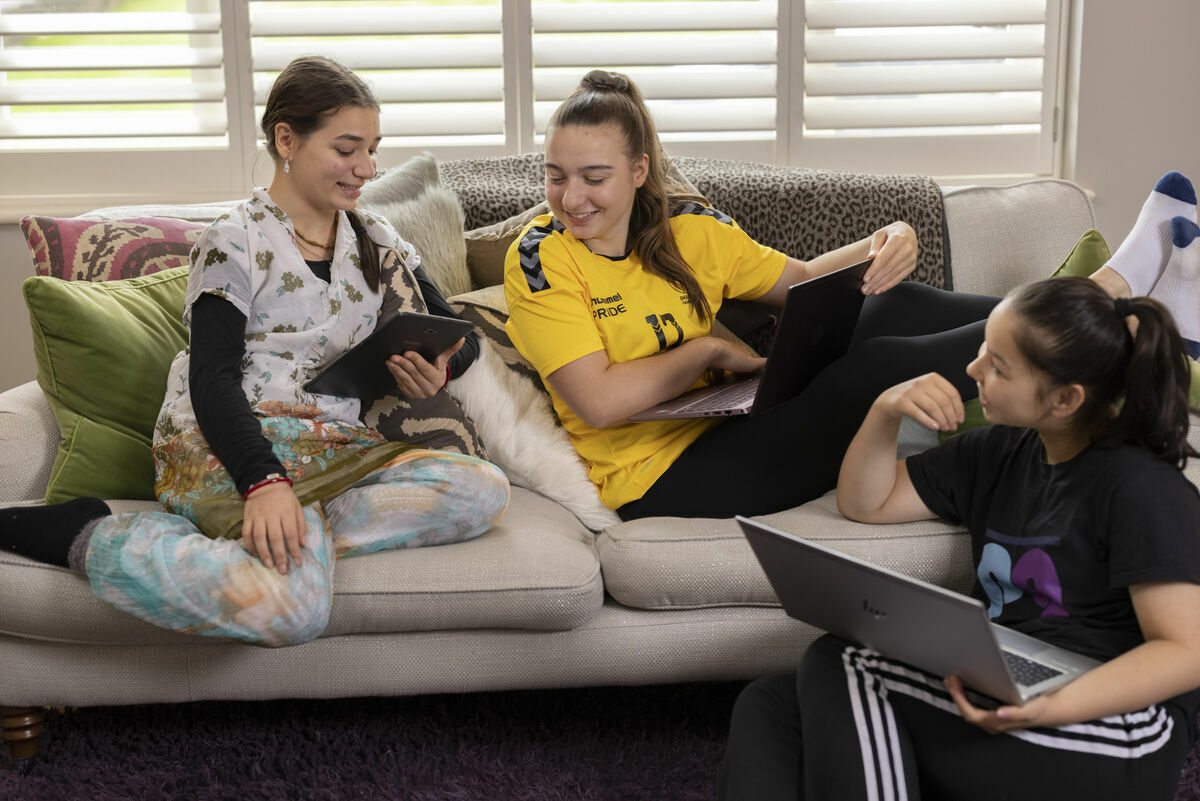
What makes our environment distinctive is the way languages weave themselves into the fabric of daily teaching and learning. Unlike many schools, where the language of instruction is relatively uniform, our classrooms are filled with students who speak two, three, or sometimes even four languages. English may be the common medium of study, but it is rarely the only one our students use at home, with friends, or in their communities.
This multilingualism isn’t a side note; it’s a powerful educational tool, especially in our language subjects. When a French-speaking student shares how an idiom doesn’t translate neatly into English, or when a Spanish-speaking classmate compares grammatical structures across languages, it makes language learning authentic. Rather than simply learning from textbooks, our students also get to learn from one another’s lived experiences.
Teachers who bring the world into the classroom
Our teachers, too, reflect this cultural richness. All of our educators are British and internationally qualified, and many have lived, worked, or studied in multiple countries — not just the United Kingdom. As a result, they bring with them a wealth of perspectives.
The diversity of our teaching team means students are regularly exposed to different insights, traditions, and ways of seeing the world. For students, this sends an important message: language and culture are not abstract subjects, but dynamic forces that shape how we communicate, connect, and think.
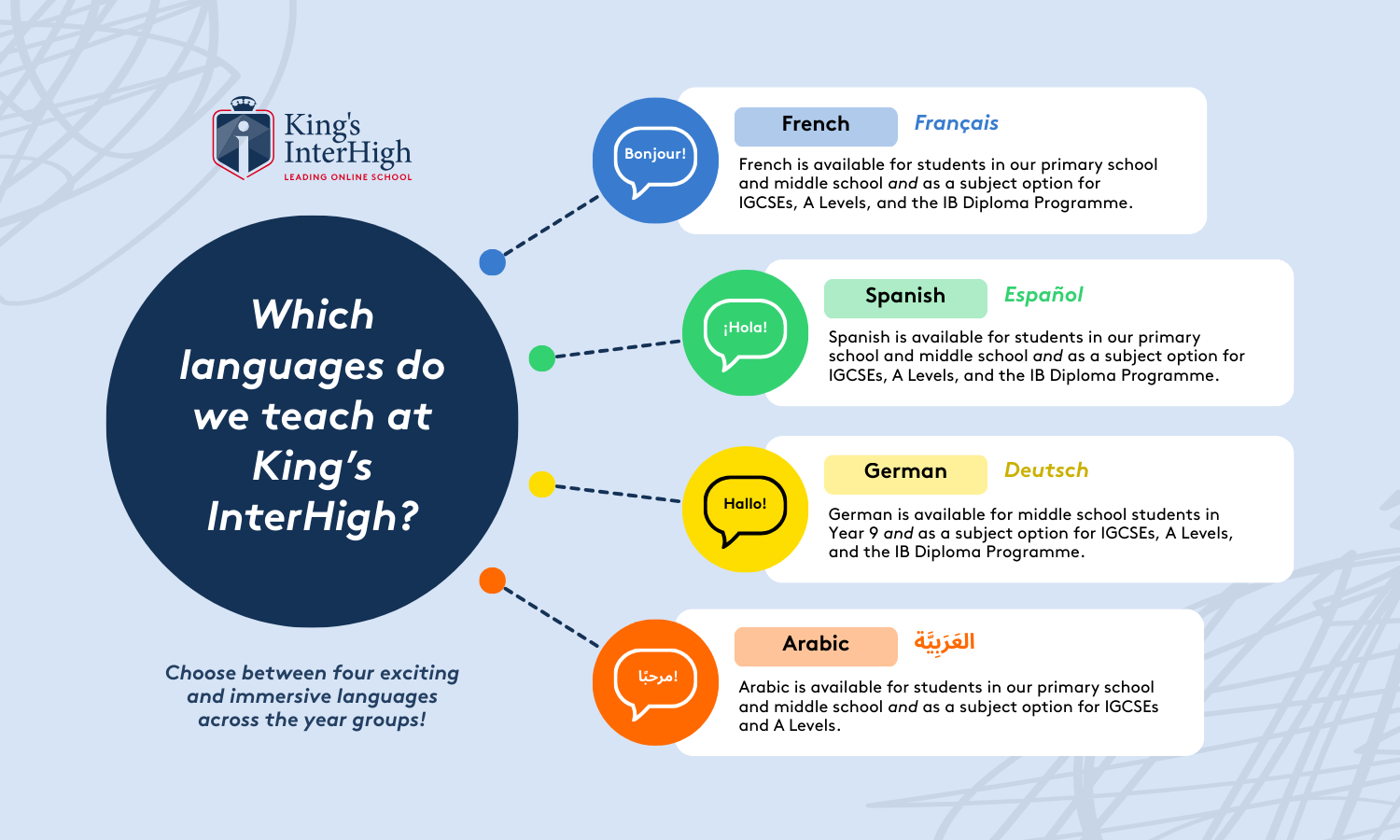
Teaching four languages as standard throughout our curriculum is another example of how we place linguistic diversity at the heart of education. Depending on their choice of time zone, our students can choose between French, Spanish, and Arabic in primary school and middle school. From Year 9 onwards, we also offer German through IGCSEs and A Levels, with all three European languages also available on our online IB Diploma.
What makes our model exceptional is that often, these languages are being studied by students for whom English is not their first language. It’s an extraordinary feat: to study Spanish through English when neither is your native tongue. This level of linguistic agility is testament to the resilience, creativity, and open-mindedness of our students.
Celebrating cultural exchange every day
Cultural diversity is not something we reserve for a “World Languages Day” or a one-off festival (though we enjoy those too). It comes alive in the everyday moments of school life. When a student in Asia explains Lunar New Year traditions to classmates in Europe, or when a student in the Middle East draws on their background to enrich an Arabic lesson, cultural exchange becomes a natural part of learning.
These conversations matter. They help students appreciate both the uniqueness and the commonality of human experience. A recipe, a song, a proverb, or a gesture shared across borders can become a bridge, reminding us that while our languages and customs differ, the desire to connect and understand is universal.
Building global citizens
Our role as educators is not just to teach grammar or vocabulary, but to nurture global citizens-young people who are empathetic, curious, and adaptable. In our interconnected world, these qualities are just as vital as academic achievement. Employers, universities, and communities alike are looking for individuals who can communicate across cultures and navigate difference with respect.
By engaging daily with peers who think, speak, and celebrate differently, our students are developing exactly these skills. They are not only preparing for exams – they are preparing for life in a world where collaboration across cultures is the norm.
Language as empowerment
There is also a profound element of empowerment in what we do. For many students, speaking their home language in class validates their identity. It tells them that who they are and where they come from matters. For others, learning a new language is a step into new possibilities: the chance to study abroad, to work internationally, or simply to connect with family heritage.
We encourage students to see themselves as ambassadors of their languages and cultures. When they share a greeting in their mother tongue or explain a cultural practice, they take on the role of teacher for a moment, strengthening both confidence and community.
The bigger picture
In celebrating languages and cultural diversity, we also model inclusivity. We remind students that difference is not a barrier but a resource. This mindset has ripple effects well beyond the classroom. It fosters tolerance, dismantles stereotypes, and cultivates respect.
At a time when global challenges-from climate change to migration-require cross-border cooperation, the ability to listen, learn, and communicate across cultures is more critical than ever. By embedding cultural and linguistic diversity into the core of our education, we are equipping students not only to succeed academically, but also to contribute positively to the world.
Looking ahead
As our school continues to grow, so too will the diversity of our community. Each new student and teacher brings another layer of richness to our collective story. We will continue to celebrate this diversity not only as an asset to learning but as one of our greatest strengths as a school.
Languages open doors, and culture gives meaning to the world we step into through those doors. Together, they allow us to understand others more deeply and to be understood more fully. That is what makes our school extraordinary: here, cultural diversity is not just acknowledged, it is lived, celebrated, and shared every single day.
Share: