

Article May 8, 2025
Bullying at school: How to help your child when bullying doesn’t stop

The realisation that your child is experiencing bullying at school can be undeniably heartbreaking. Naturally, as a parent or guardian, your first instinct is to protect your child from any harm that may come their way. So, when bullying persists unchecked, you’re not alone if you feel powerless.
Lucy had only recently started secondary school when she first experienced bullying. It began when she was unexpectedly ostracised by her friends in Year 7, and the bullying soon escalated to social media, where they would send her “horrid messages.” Though Lucy was moved to another part of her school in hope of fixing things, the bullying simply followed her there.
Sadly, stories like Lucy’s are all too common. The National Bullying Helpline reports that every day, parents contact them for help with months-long bullying that hasn’t been dealt with.
No child should have to suffer through bullying. If you’re struggling to support your child through this difficult time or having trouble getting the school to take action, keep reading for more strategies and solutions that help parents like you.
Is your child being bullied?
Sometimes children readily open up to their parents about being bullied. In other cases, you may notice subtle changes in your child’s behaviour before you find out the problem, and catching these early warning signs can help you address the situation before it gets worse.
Common signs of bullying
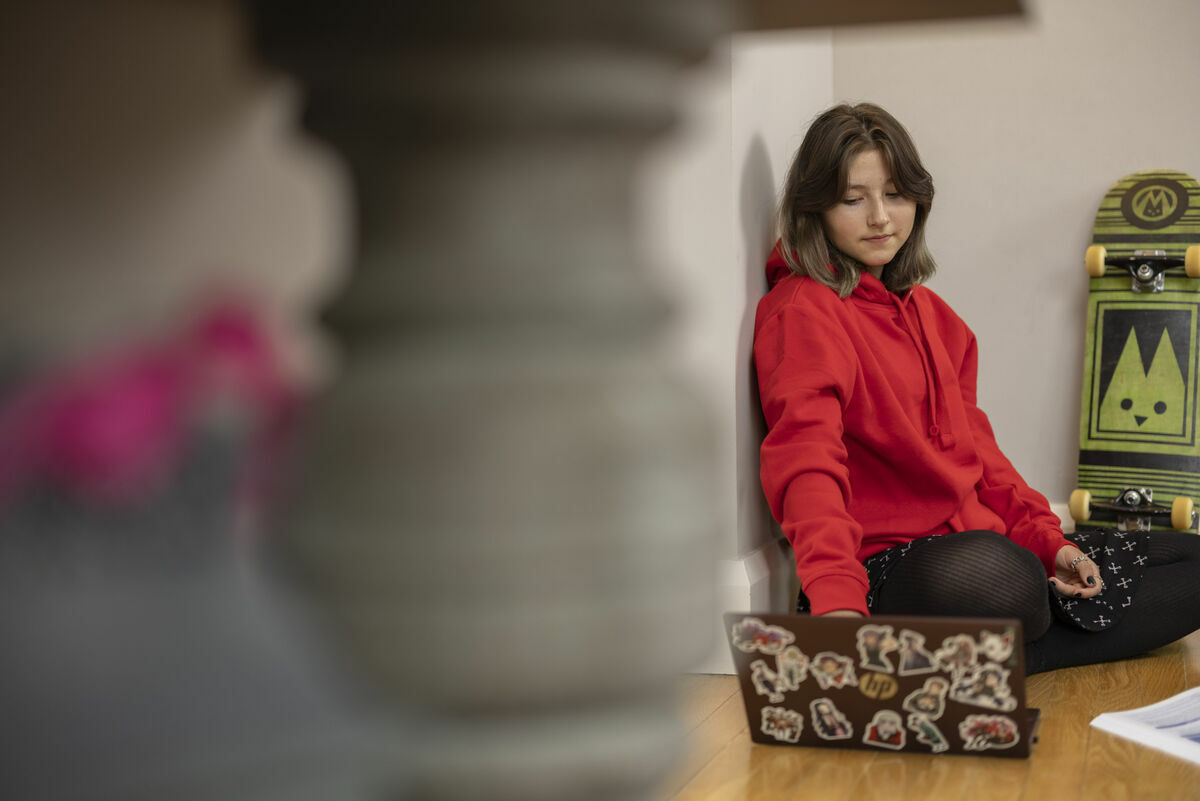
Your child may be being bullied or otherwise struggling at school if you notice the following signs:
- Withdrawing from family and friends
- Losing interest in school, activities, hobbies
- A drop in academic performance
- Anxiety around school or the journey to school
- Trouble sleeping or eating
- Unexplained stomach aches or headaches
- Changes in mood (such as anger, sadness, tearfulness)
- Lost or damaged possessions
Is it really bullying? Understanding the difference
In some cases, it can be hard for students, parents, and schools alike to work out which incidents actually constitute bullying to begin with. Unfortunately, the line between bullying and teasing can be blurry. A comment that one child laughs off as a harmless joke could be deeply hurtful to another.
To complicate matters, teachers don’t always witness these interactions, especially when they happen in the playground, online, or through text messages. If you find yourself needing to make the case that your child is being bullied, bullying often has one or more of these four characteristics that set it apart from harmless playground friction:
- The perpetrator is intentionally doing it to cause hurt or harm to your child
- Your child feels hurt or harmed by the behaviour, even if the bully brushes it off
- The bullying is repeated, happening regularly or often
- There’s a power imbalance between the perpetrator and the victim (for example, strength, popularity, or the number of people bullying)
Teasing, on the other hand, typically isn’t meant to be malicious and may happen as a one-off or between friends. As an example, joking about a friend’s missed goal in PE is probably harmless teasing. Making degrading remarks about their body or athletic ability in every PE lesson, on the other hand, can be seen as bullying.
Who gets bullied at school?
Any child can experience bullying at school, regardless of their background, appearance, or personality. Even children seen as “popular” can become targets. Take our alumnus, Ben Larg, for example — a champion surfing star who was bullied at school before joining King's InterHigh.
However, it’s also important to note that some young people may be at a higher risk for bullying. Students who are LGBTQ+ or have special educational needs and disabilities, for example, often more commonly targeted.
Bullying at school: What to do when it doesn’t stop
In the best-case scenarios, bullying can be addressed quickly. If your child feels confident enough to tell someone to stop, or if you mention an incident to a responsive teacher who takes immediate action, the problem might be resolved swiftly. Sometimes a simple conversation with the child doing the bullying is enough, especially if they didn’t realise the impact of their actions.
But for many families, the reality is more complicated. The usual approaches — encouraging your child to stand up for themselves, talking to teachers, or following the school’s reporting process — don’t always lead to resolution.
Why hasn’t your child’s school dealt with the bullying?
Schools have a duty to provide a safe learning environment for all students, so the usual first response to finding out your child is being bullied is to turn to their teachers for help. Schools are bound by anti-bullying policies, and educators generally care deeply about the wellbeing of their students. So, in many cases, bullying is tackled at the first complaint.
However, if you’ve already reported bullying at school and you’re feeling disappointed by the response, you’re not alone. Like many parents, you may feel like they’re not looking into the matter quickly enough, they’re dismissive of your worries, or they haven’t imposed good enough solutions. All the while, both you and your child may be left feeling anxious, frustrated, and worried about future incidents.
There are many reasons why bullying may not be dealt with immediately in schools, including:
- Difficulty identifying the bully or determining whether the incident constitutes bullying, especially if staff haven’t seen the full story
- The time it takes to investigate, as schools often need to gather information from multiple sources to make a fair judgement
- Limited resources that make it difficult for schools to juggle various behavioural reports, particularly when they need to prioritise more serious safety concerns
- Privacy constraints, as the school may not be able to share all the disciplinary action taken against another student
That being said, understanding these challenges doesn’t mean you need to accept inaction. Every child deserves to feel safe at school, and persistent bullying requires a strong, coordinated response from both families and educators. If you feel your child’s school isn’t doing enough to stop the bullying, don’t give up.
Cyberbullying: What to do when it happens online?
Cyberbullying (bullying which takes place online) is just as harmful as in-person bullying. In fact, it can feel especially distressing because it follows children home.
If your child experiences cyberbullying from their classmates online, it is important to involve the school, but there are also other ways to tackle the problem at home. Teach your child about blocking and reporting features on all platforms they use. Remember that improving privacy settings can help prevent many issues. Depending on your child’s age, you may also want to restrict their internet or phone usage.
Encourage them to also keep a diary of incidents and take screenshots as evidence. More serious incidents of cyberbullying may need to be escalated to the authorities. To help you, sites like Report Harmful Content offer specific guidance for identifying types of online harm and how to report them.
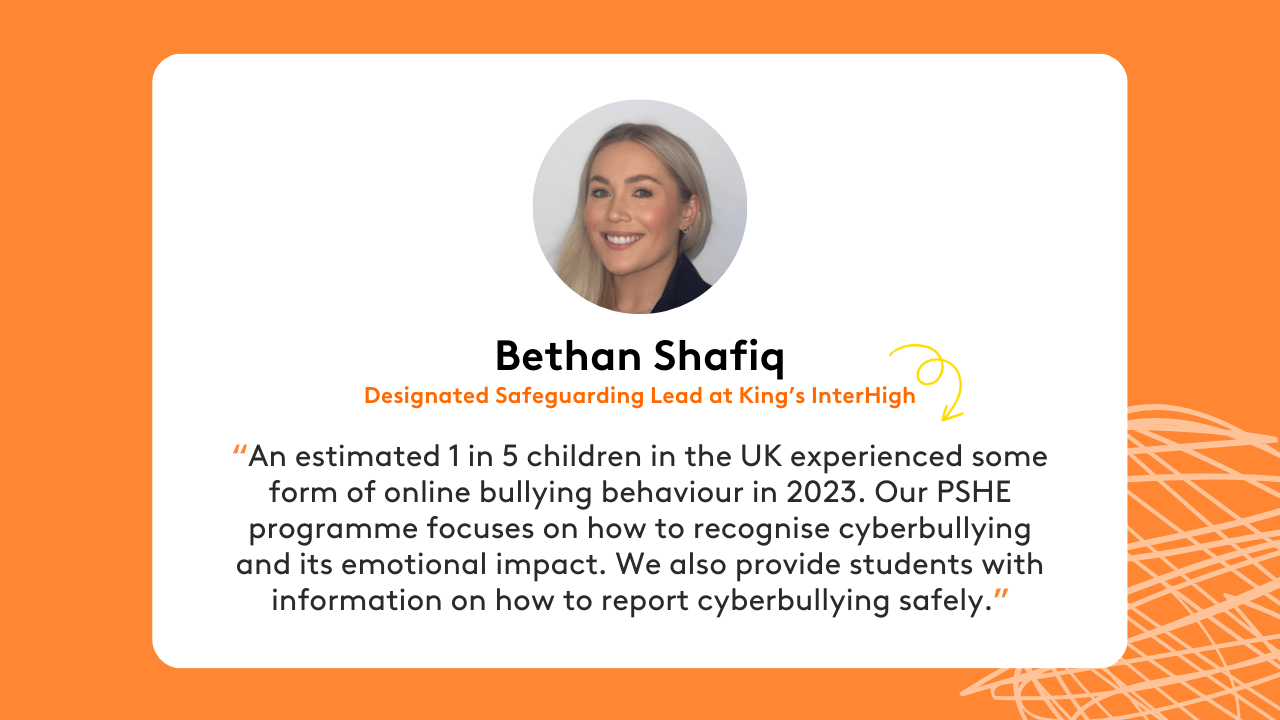
Learn more about how we protect children from cyberbullying and other harmful content online at King’s InterHigh from our Designated Safeguarding Lead, Bethan Shafiq.
5 strategies for working with your child’s school to stop bullying
With bullying at school, the fastest path to resolution typically comes from working together with their school. Most schools want to help, but you may still need to take clear, strong, repeated action to get the problem sorted.
Know your rights: What schools must do
Addressing bullying isn’t optional for schools. Under the Equality Act 2010 and Human Rights Act, all schools have a statutory duty to prevent and address bullying — particularly when it involves discrimination against protected characteristics like race or disability. Your local authority can also step in to help enforce the school’s duty. The law is clear: every child deserves protection.
If you’ve been struggling to make headway with your child’s school, take a look at these key strategies and try some of the ones you haven’t used yet.
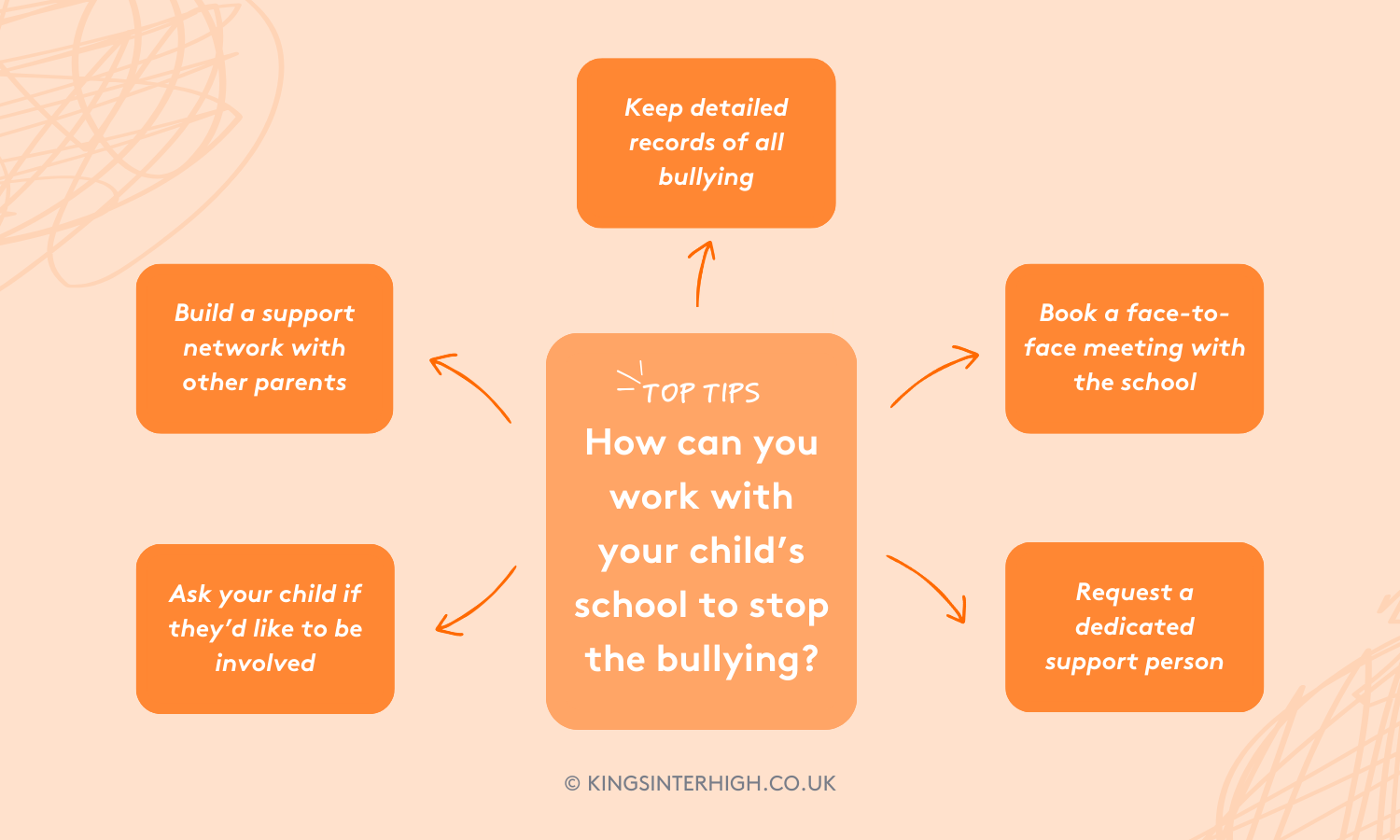
1. Keep detailed records
Documenting every bullying incident in detail can help you make a strong case for your child’s safety and happiness. This includes noting the dates, times, locations, what happened, who was involved, and how your child felt afterwards. You may want to give your child a journal to record things themselves, or you may want to write down everything they tell you.
If the bullying happens online, save screenshots. If possessions are damaged, photograph them. If your child has received any threatening or unpleasant notes, keep them safe. A clear pattern of bullying is harder for schools to dismiss, and keeping records can help staff understand the severity of the situation.
2. Meet face-to-face
If attempts to resolve bullying through email or over the phone haven’t been successful, you can request a face-to-face meeting with your child’s school. Emails are great for keeping a record of your reports, but in-person talks can be helpful in getting your points across.
Come prepared to your meeting with:
- Any documentation or records you’ve kept about the bullying
- Specific examples of how the bullying is affecting your child
- Any questions you have about the school’s anti-bullying policy and behaviour policy
- Your clear expectations about next steps and timeframes
After each meeting, send a follow-up email summarising what was discussed and agreed upon to ensure accountability.
3. Consider involving your child
A child’s voice should always be represented when they’re being bullied. While you can be your child’s advocate, some children may want to be involved themselves depending on their age and comfort level.
Your child may want to write down their feelings for you to take to meetings with the school, for example. In other cases, they may want to attend those meetings with you. Alongside validating your child’s experiences, this can help give school staff valuable first-hand insights on what’s happening.
4. Request a dedicated support person
If you feel like you’re getting passed from one person to another and that’s affecting your ability to make headway, you can ask your child’s school to assign a specific staff member as your family’s consistent point of contact. This should be someone your child trusts and can easily approach themselves in school — for example, their class teacher, a pastoral lead or safeguarding officer, or a SENCO (special educational needs coordinator).
5. Build a support network
If your child says that other classmates are being bullied by the same person or people, you may find success in connecting with the parents of the fellow victims. Together, you can amplify your voice. Plus, talking to other parents can also be a great source of emotional support on what can be an exhausting process for you.
3 clear steps to take when bullying carries on
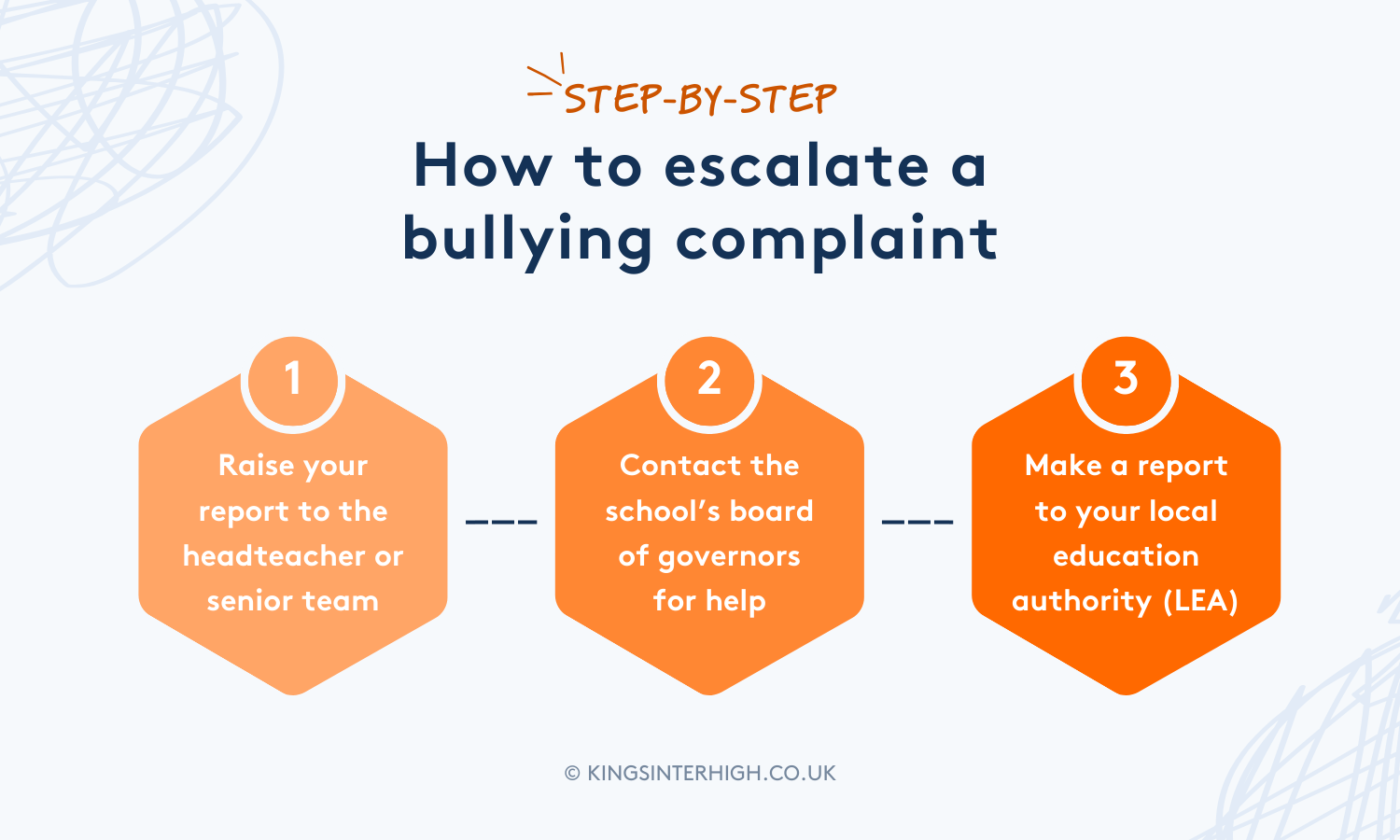
If your initial efforts haven’t resolved the issue and you feel like you’re running out of new paths to pursue, you don’t need to feel stuck or hopeless. Remember that you have a right to escalate the issue. Here are the three steps we recommend taking to ensure that your case is heard.
1. Talk to the headteacher
If you’re not making much headway with your child’s teachers or pastoral staff, you can request a meeting with the school’s headteacher. Explain your concerns to them as clearly as possible and provide any supporting evidence you have. If you have a paper trail of communications with other staff members, remember to bring this with you.
2. Talk to the governors
If you need to go beyond the headteacher, a good next step for UK-based families is to contact the school governors. Governors often have the power to expedite a bullying investigation, so this can be a big help in finally getting the problem solved.
The administrative team at your child’s school should be able to pass on their contact details. When you get in touch with the governors, you’ll want to explain the bullying situation in full and let them know about your attempts to resolve the issue. This is where any communication records from your meetings with the teacher and headteacher will come in handy.
3. Talk to your LEA
Finally, if the school and its bodies still fail to take appropriate action, you have the right to make an official complaint to your Local Education Authority (LEA) if you’re in the UK.
Part of the LEA’s role is to foster good relationships between families and schools. They’ll be able to make an objective investigation into the issues you’re having and help facilitate the best solution for everyone. They’ll be able to prompt the school to comply with their anti-bullying policies if they’re not doing so already, ensuring the school meets their obligation to keep your child safe.
If your child goes to a free school, an academy, or a private school, note that you won’t be able to make a complaint to the LEA. Instead, check the UK government website for more help.
How to support a child who’s being bullied
If your child is being bullied, they may need your emotional support as a parent just as much as your practical support in getting the problem stopped. It can be difficult to know how to best support your child as every young person reacts differently to being bullied, but here are some ways you can create a crucial support system.
Creating space for ongoing open conversations
Even after your child first talks to you about being bullied, it’s important to create regular opportunities for your child to share their feelings. Simple questions like “What was one good thing and one tricky thing about today?” can help you determine whether things are getting better or worse at school.
Some children may also find it easier to talk while taking part in another activity (like an outdoor walk together) or to write or draw their feelings instead. Remember, children often worry that they’ll upset their parents by talking about bullying, so it’s a good idea to reassure your child that you’re not upset with them even though you feel sad about what’s happening.
Build a safety toolkit together
You can also work with your child to develop personalised coping strategies they can use at school and home. Some parents have found success with ‘worry boxes’, for example, where children can leave notes about their feelings to help them process difficult emotions. At school, you may want to encourage your child to respond assertively to bullies, avoid making eye contact, or walk away from bullying incidents depending on the situation.
Help your child build resilience
While children shouldn’t have to be resilient in the face of bullying, developing a strong sense of self can help your child defend themselves against the emotional impact of bullying while the resolution is ongoing.
How you help your child build resilience will likely depend on how the bullying is making them feel. For example, if your teen is experiencing negative thoughts about their body image, you may find success with introducing them to resources like Dove’s Self-Esteem Project. If you have a young child who takes the bullies’ words to heart, you may want to introduce them to motivational affirmations they can say to remind themselves of their many wonderful qualities.
Know when to seek additional help
Sleep disturbances, changes in appetite, withdrawing from hobbies, or complaints of physical pain and illness can all be signs that bullying is having a greater impact on your child’s mental health. If you think this is the case for your child, it is important to seek professional, medical help. Your GP will likely be your first port of call, and the NHS Children and Adolescent Mental Health Services has various resources and therapies available to help young people who need them.
Finding help outside the system
If you’re at the point where conversations within the school aren’t working, you may also want to look to external organisations that can support your family. Seeking external help can be a good idea when your child’s emotional wellbeing is seriously affected, school interventions haven’t worked after a reasonable time, and you need specialized guidance for particular circumstances.
- For immediate emotional support, try contacting helplines like the NSPCC. They have trained child protection specialists who can talk through your urgent concerns. Childline can also provide emotional support directly to your child.
- For ongoing advocacy, try the Anti-Bullying Alliance. They provide comprehensive resources and can guide you through navigating complex school situations.
- For legal or formal complaints, your local council and authority may offer guidance and templates that can help you.
Before contacting any organisation, remember to gather all relevant information about the bullying incidents and write down specific questions you need answered. Some services can offer step-by-step support through the entire process, from initial reporting to resolution. Others can help with specialised issues, like resolving bullying when your child is disabled.
Considering alternative schooling
In most cases, escalating your child’s case through these channels will eventually result in the action you need to get your child feeling happy and confident in school again. Of course, the process can still be lengthy, and you’re not alone if you don’t want to wait any longer.
Whether your child has become anxious, is struggling to focus in class, or is generally feeling upset and detached, bullying at school may leave you considering an alternative schooling option. Another local school may be a good choice, and some families turn to temporary or full-time homeschooling instead. Others, meanwhile, make the move to online schools like King’s InterHigh.

Online schooling for children who’ve been bullied
At King’s InterHigh, we provide a safe, calm, and nurturing online learning environment where children can thrive without the worries of bullying. After struggling through bullying in Year 7, Lucy says that “King’s InterHigh is the best thing that has ever happened to me.”
For children who have dealt with bullying, there can be numerous benefits to learning online, including:
- Flexibility to learn at their pace and catch up with any schooling they may have missed while they were being bullied
- Small class size with lots of attention from teachers
- Tight-knit community where students feel welcomed from the start of their induction
- Social activities like clubs and events where your child can bond with others who share their interests
- SEND accommodations for students who have developed anxiety, including ways to communicate in class without speaking
- Wellbeing support throughout their time with us, from workshops to tutor sessions.
“All the kids are amazing, kind and friendly. The teachers are so loving and kind, the lessons are stress-free. They bought all my confidence back.”
King’s InterHigh student
We also have a comprehensive anti-bullying policy, which outlines our exhaustive process for preventing, recording, reporting, and responding to any incidents of bullying. Our aim is to create an inclusive learning environment where every student feels welcomed, so we work hard to make sure your child feels protected and supported.
If your child is being bullied and you’re considering online school, book a discovery call with us or send a message online to discuss how King’s InterHigh can support your family.
Share: