
Article May 1, 2025
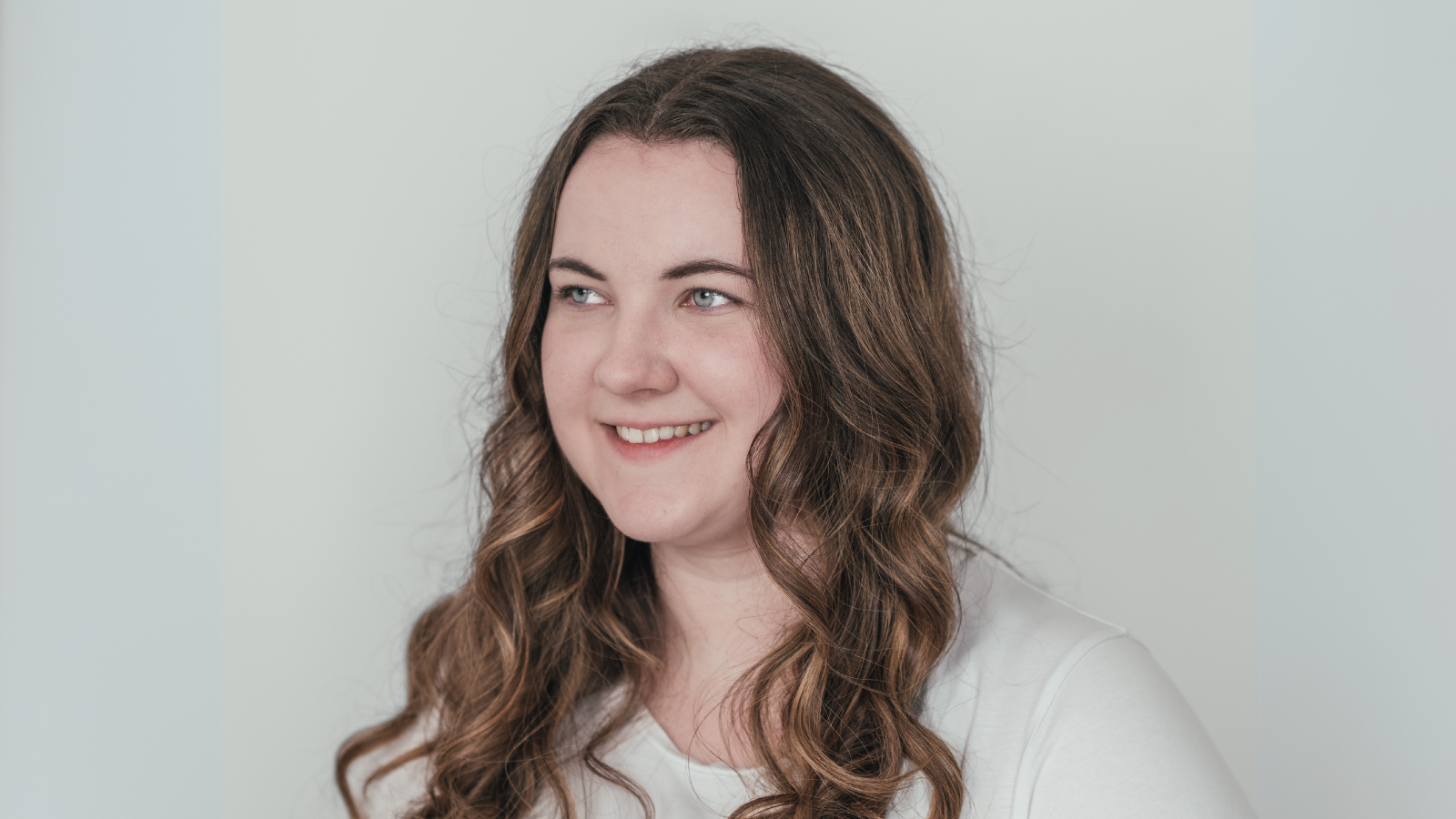
Alumnus and award-nominee Lucy Eggleston inspires others to find hope against the odds
When Lucy Eggleston woke up one morning as a child, something had fundamentally changed. Overnight, Lucy’s behaviour became almost unrecognisable to her family — but it would take several years and countless medical appointments before they would understand why.
Now 19 years old, Lucy has finally been diagnosed with PANDAS, Tourette’s syndrome, and autism. After transforming her challenging road into a platform for awareness and support online, she’s also been nominated for a much-deserved National Diversity Award (you can vote for her here)!
While some know Lucy for her content on social media, we know her best as one of our former King’s InterHigh students. It was at online school that Lucy found an environment which changed her outlook, and we’re proud to have been part of her journey.
We caught up with Lucy to share her story, from her difficult experiences in mainstream school to becoming a voice that tells people like her that they’re not alone.
A rough road to diagnosis
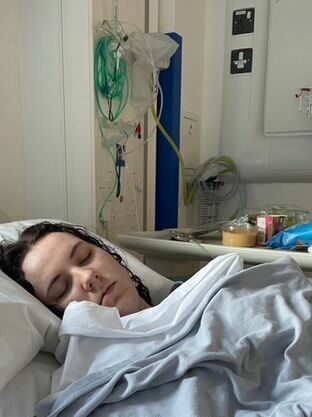
For six long years, Lucy Eggleston lived with medical mysteries that were majorly disrupting her life without explanation. While she first began experiencing symptoms around the time she started secondary school, she didn’t receive her first diagnosis until she was 17.
At first, doctors told Lucy that nothing serious was happening and she’d soon grow out of her condition, but both Lucy and her family knew that wasn’t the case. In fact, her mother says that she went from a “perfect child” to someone entirely different overnight. What followed was a carousel of doctors’ appointments, all of which failed to identify the true cause of her struggles. From tics to debilitating migraines so bad that Lucy would lose vision in her eye, she was living with numerous health problems that had no explanation.
Now, Lucy finally has the answers that make sense of her experience. Her first diagnosis was PANDAS, an autoimmune condition where antibodies meant to fight illnesses attack and inflame the brain instead. Over the years, Lucy’s tics had intensified severely, which later led her to a diagnosis of Tourette’s syndrome. And, shortly after, she received her autism diagnosis — the least surprising of all, as autism runs in her family.
PANDAS (Paediatric Autoimmune Neuropsychiatric Disorders Associated with Streptococcal Infections) is a rare condition which is still being researched and understood by doctors. Today’s medical experts say PANDAS is caused when strep throat triggers an immune response that mistakenly attacks the brain, causing sudden behavioural changes and neurological symptoms. PANDAS often develops abruptly, with children as young as three experiencing symptoms that significantly impact their lives.
Naturally, going through childhood without the right diagnoses had a huge impact on Lucy’s education.
A difficult start to secondary school
Lucy’s health challenges began at the same time as one of her biggest life transitions: starting secondary school. While she had a great time at primary school, everything changed when she moved up to Year 7 and her PANDAS symptoms first appeared.
“I’d gone to sleep a happy child and woken up completely different,” says Lucy, describing the then-bewildering nature of her condition. Previously a happy child, Lucy found herself struggling with dark thoughts, trouble with food and eating, mild tics, and more.
On top of having to contend with unexplained symptoms at such a young age, the situation completely uprooted her social life. Alongside losing friends, she began to face bullying from other children at school.
“I lost all my friends because I was acting out, because I didn’t know what was going on. People thought I wasn’t being very nice, even though I was just reacting to not feeling very well.”
King's InterHigh alumnus
Though she remarkably managed to persist through the first year of secondary school, the combination of her health and school environment proved to be overwhelming. That’s when Lucy’s mum found King’s InterHigh, which Lucy says is “the best thing that ever happened to me.”
The King’s InterHigh difference
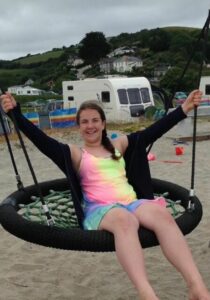 After struggling in an environment that couldn’t accommodate her unique needs, Lucy found an educational home in King’s InterHigh that could meet her where she was — not where a typical school might expect her to be.
Joining us around the start of Year 8, Lucy found that the flexibility of online school was exactly what she needed. “I really, really struggled learning in a mainstream setting,” she explains, but she learned “really well from home.”
Being able to rewatch her lessons at any time, for example, was particularly valuable. As she processes information differently to others, lesson recordings allowed her to study at her own pace, revisiting material as much as needed to fully absorb it. Likewise, if she found herself suffering a migraine in the middle of a lesson, she could simply leave class to rest and come back to the recording later.
Academically, she was able to thrive, even moving up a year group in English. For Lucy, the combination of engaging lessons, flexibility, and supportive teaching was “such a great atmosphere” that helped her rebuild her academic confidence.
“I hated my first secondary school so much, and I felt like I was completely incapable of learning. King’s InterHigh changed my outlook on learning. It was amazing — I loved it so much.”
King's InterHigh alumnus
And, after struggling with her friendships in her previous school, Lucy was able to find a real, inclusive community at King’s InterHigh. “I had a great group of friends,” she recalls, explaining how around 40 of her classmates would gather online for Friday study sessions. It was a social environment where she could engage on her own terms, without any fear of judgment.
While Lucy had to return to traditional education after her time with King’s InterHigh, she was able to do so armed with strategies she’d learned at online school. “Even though I was going to the classes in mainstream school,” she explains, “I would come home and have to pretty much teach myself everything.” However, Lucy says that’s something she “wouldn’t have been able to do nearly as well” if she hadn’t been taught independent learning skills by her King’s InterHigh teachers.
“In total, I went to about six secondary schools, and King’s InterHigh was the only one I could succeed at.”
King's InterHigh alumnus
The National Diversity Awards: “Making a positive change”
Established in 2012, the National Diversity Awards shine a light on Britain’s unsung heroes and community organisations working to enhance people’s lives across the country. When Lucy received an unexpected email announcing her nomination for a 2025 National Diversity Award, she was both genuinely surprised and pleased to know she’s truly making a difference.
Of course, given Lucy’s unwavering journey with online advocacy, it’s no shock that she’s been recognised for her dedication. Her path to content creation first began on social media as a teenager. While she initially joined platforms as a way of making friends, her engaging and genuine personality soon led her to opportunities with major brands like Maybelline New York.
Over the course of three years, she built an impressive following. However, her work took a turn when her Tourette’s symptoms began to intensify. Soon, she was experiencing so many tics that she was unable to edit them out of her videos. This led to challenging times for Lucy in the unpredictable social media landscape, with some viewers responding negatively or sceptically to her condition.
Tourette’s syndrome is a neurological condition that causes repetitive, involuntary movements and speech. These are known as tics. While Tourette’s syndrome is commonly associated with vocal tics, there are many different types of tics that can vary in severity and change over time.
 Unfortunately, for her wellbeing, Lucy had to step away from the following of 60,000 that she’d built. However, that didn’t stop her from later making the courageous decision to return to content creation — this time, to document her symptoms and experiences.
It was a decision that proved life-changing, unexpectedly leading Lucy to the health breakthrough she’d been looking for. Through her content, she connected with another person experiencing identical symptoms who suggested PANDAS as a possible cause.
Though Lucy’s doctor initially dismissed the possibility, even laughing at her for suggesting it, that didn’t stop her from persevering. Eventually, after making the decision to consult expert doctors privately, her diagnosis of PANDAS was finally confirmed.
Today, Lucy is using her own platform to raise awareness, help others find answers, and support people who previously felt alone. As PANDAS mimics so many other conditions, she explains, many children aren’t diagnosed for a long time. Her content has already helped at least one person, now one of Lucy’s close friends, receive a diagnosis.
In her National Diversity Awards bio, Lucy summarises her mission perfectly: “I want to be part of changing the way people see disability. There are so many assumptions out there, and I try to challenge them by just showing up as myself.”
“I wanted to show other people on social media that they’re not alone.”
King's InterHigh alumnus
Hopeful for the future
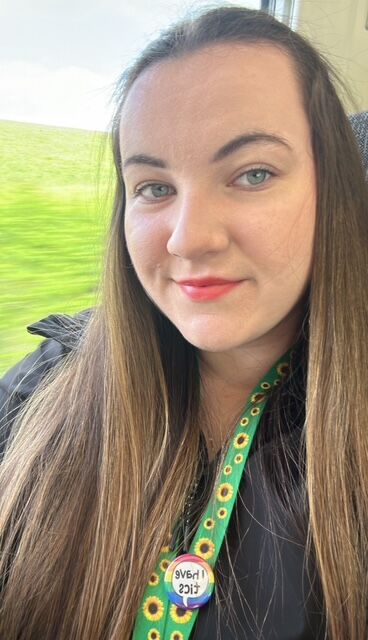 Despite the significant challenges Lucy faces, which mean she cannot work safely and needs her mother to be her full-time carer, the 19-year-old has a remarkably positive outlook on her future.
“My mental health is in a much better place than it has been before, and I think that’s mainly because I have answers now and feel a sense of validation,” she shares. While flare-ups still take an emotional toll on Lucy when she compares her situation to others living conventional lives, having a sense of understanding for her conditions has been crucial to her wellbeing.
Drawing strength from her personal faith, Lucy believes her experience serves a great purpose — that she’s meant to use her journey to help others. With so little information available about PANDAS and similar conditions, this mission feels especially important to her.
On top of her advocacy journey, she also has a dream career in mind for the future: acting. Having recently appeared as an extra in the upcoming feature film A Bad Day at the Office, she’s become passionate about acting and hopes to take formal lessons when her health allows. “I think it’d be quite difficult at the moment,” she says, “but I have hopes for the future.”
While her school years are now behind her, Lucy has fond memories of her time with King’s InterHigh and how she thrived with online learning. For other students considering online education, she shares her heartfelt perspective: “It’s not like ‘normal’ school; it’s not like mainstream. You can just be yourself, and no one judges you.”
To those facing similar health challenges, meanwhile, Lucy emphasises the importance of persistence. “Don’t give up,” she insists. “If you know there’s something else going on, just keep going to your doctor and keep pushing through.” And, above all else, Lucy says to be positive. While she used to initially dismiss the advice, now she’s a firm advocate for not forgetting to smile.
“It makes a big difference. It does make you feel better if you just smile.”
King's InterHigh alumnus
Voting for the 2025 National Diversity Awards closes on 14th May 2025. You can vote for Lucy Eggleston on the awards website.
Share: