
Article October 16, 2025
Is ADHD a learning disability (and what does that mean for your child)?

Is ADHD a learning disability? The answer can be crucial to families navigating a new diagnosis or seeking out more support. Understanding exactly what ADHD is (and isn’t) is crucial, whether you’re advocating for accommodations or simply explaining your child’s struggles to family members.
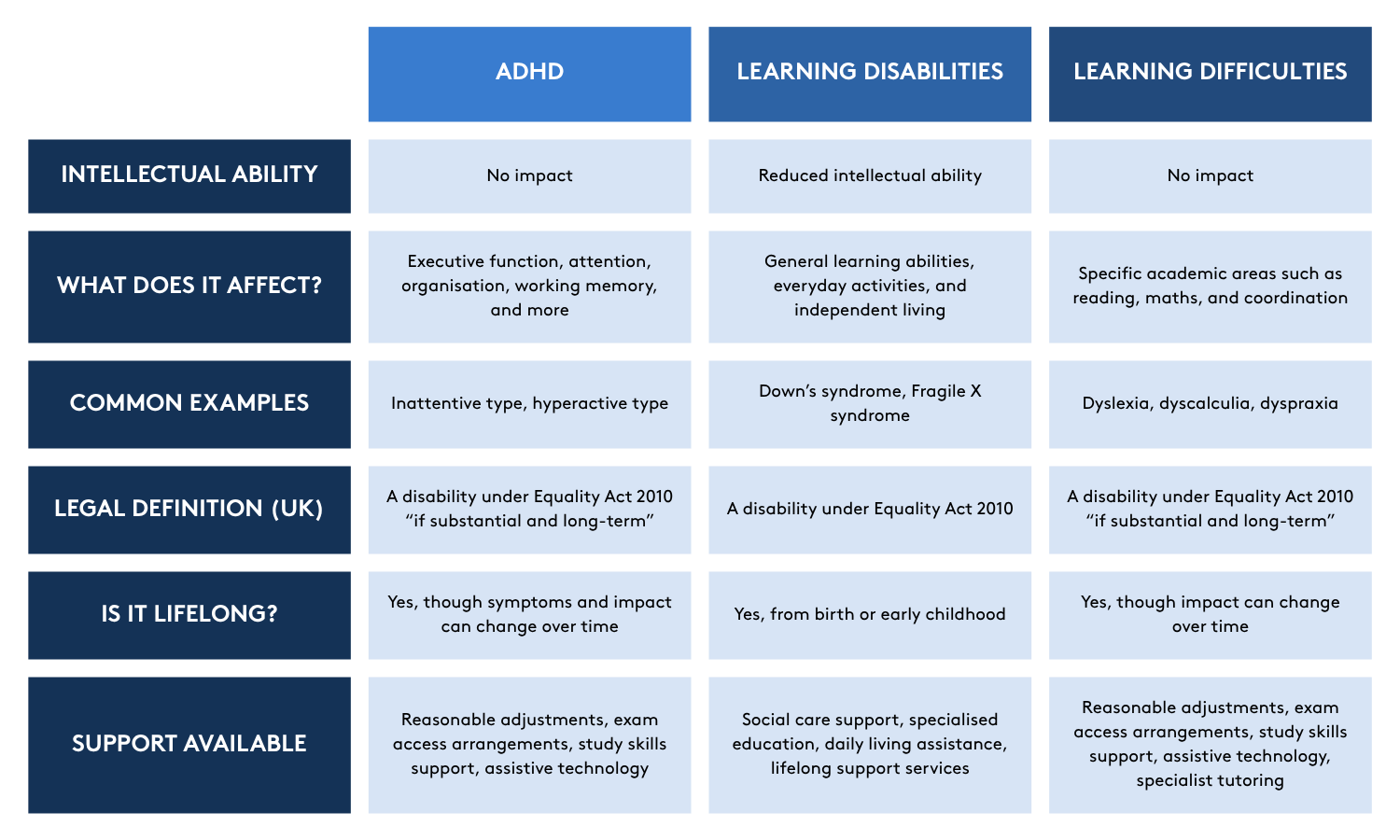
So, what’s the short answer? ADHD isn’t a learning disability by UK definitions, but it absolutely affects learning (and yes, children can have both).
We’re here to break down the differences, explain why the distinction matters, and show you what it all means for getting your child the right support.
Understanding ADHD and learning disabilities
To understand where ADHD fits in the landscape of learning challenges, we need to start with clear definitions. Much of the confusion stems from inconsistent terminology and overlapping challenges, so here’s what each term really means.
What is ADHD?
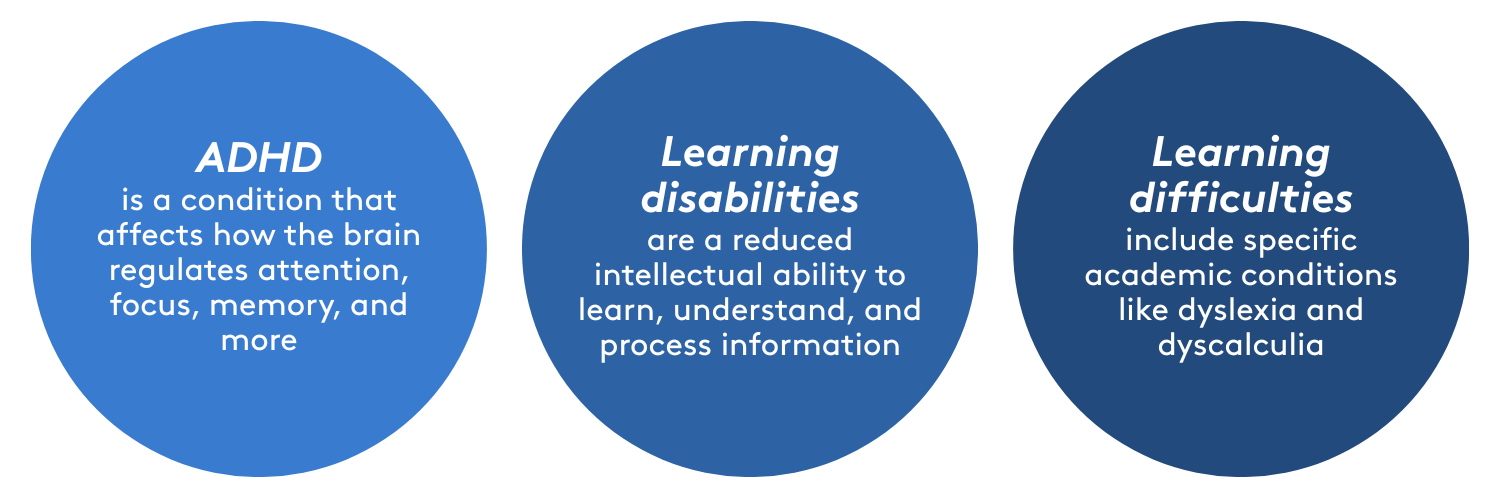
ADHD, which stands for attention deficit hyperactivity disorder, is a neurodevelopmental condition that affects how the brain regulates attention, impulse control, and activity levels. The most well-known sign of ADHD is difficulty sustaining attention, but people with ADHD may also act in hyperactive and impulsive ways.
When it comes to learning, children with ADHD might struggle to focus on tasks, sit still in class, and keep up with homework. Rather than stemming from intelligence or effort, these challenges are typically caused by the differences in how neurodivergent brains work (particularly in environments that aren’t designed for them).
This is because ADHD affects executive function, or the mental skills we use to plan, organise, and complete tasks. Your child might be a whiz at a certain subject in school, for example, but still struggle to get started on homework or remember what their teacher explained in class.
Unfortunately, ADHD is still widely misunderstood, but the science shows that it’s nothing to do with willpower, effort, or discipline at home; it’s a recognised condition with decades of research behind it.
What is a learning disability?
This is where the terminology can become tricky, with many similar terms that can mean different things. Use of these terms can also vary between countries and educational systems, which can add to the confusion.
According to the Department of Health and Social Care in the UK, someone with a ‘learning disability’ has a reduced ability to understand new information, process complicated information, learn new skills, and live independently. Learning disabilities are lifelong conditions that start in childhood or from birth, and they can be classed as mild, moderate, severe, or profound.
This, however, is different to a ‘learning difficulty.’ Learning difficulties include well-known neurodevelopmental conditions like dyslexia, dyscalculia, and dyspraxia. These difficulties affect learning and academic skills, but they don’t have any impact on a person’s intellectual level. In diagnostic systems like the DSM-5, used widely outside of the UK, these are referred to as ‘specific learning disorders.’

Is ADHD a learning disability?
According to the UK definition, ADHD is not a learning disability. This is because ADHD has no impact on intellectual ability and does not affect everyday life skills in the same way a learning disability does. That being said, while not a learning disability specifically, ADHD is considered a disability in the UK under the Equality Act 2010 if it has a substantial, long-term negative effect on your child’s day-to-day abilities, including school.
ADHD can also be classified as a learning difficulty, which the UK government defines as “a reduced ability for a specific form of learning.” Some organisations, including many local education authorities and universities, also consider ADHD part of the ‘specific learning difficulty’ (SpLD) category alongside dyslexia, dyspraxia, and dyscalculia. Other organisations, such as Skills for Health, don’t consider ADHD a learning difficulty at all, so keep in mind that terminology can always vary.
The key takeaway is that for the majority of children, without support, ADHD has a definite impact on school and learning. A child with ADHD can have average or above average intelligence and still struggle in school without support, because ADHD impacts the way they learn and study. Just as a learning difficulty like dyslexia specifically affects a child’s ability to read and write, ADHD affects how your child approaches educational tasks. When your child can’t focus on instructions, forgets materials, or speeds through homework too quickly, their academic performance is likely to suffer, even if they have a great grasp of the content.
Can you have both?
While ADHD isn’t a learning disability, you can have both, and it’s more common than you might think. In fact, research indicates that anywhere from 20 to 60% of children with ADHD also have a learning disability or another learning difficulty.
For children who have both, or multiple learning difficulties, the challenges can quickly mount up. A student with ADHD and dyslexia, for example, may struggle not only to decode words but also to keep their focus long enough to practice reading.
Beyond learning disabilities and difficulties, ADHD also commonly overlaps with other neurodevelopmental and mental health conditions. Autism spectrum disorder, anxiety, depression, obsessive-compulsive disorder, oppositional defiant disorder, and Tourette syndrome are all found more commonly in people with ADHD than in the general population. You may have already come across this overlap during your child’s ADHD diagnosis, as symptoms from one form of neurodivergence can mask or mimic another.
In practice, this means that children with intersecting needs often need even more targeted and tailored support to make the best progress in their learning.
ADHD and learning disabilities: A quick comparison table
How does ADHD impact learning?
You’re not alone if you’ve watched your child struggle in school, knowing that they’re more than capable of achieving. In 2019, a Swedish study of over 650,000 students found that ADHD can have a major negative impact on school performance, with further research showing that 75% of academic performance measures were lower in students with untreated ADHD compared to neurotypical learners.
But why? What is it about ADHD that has such a big impact on learning?
Poor working memory
Two of the biggest culprits are working memory and organisation. ‘Working memory’ is like your brain’s answer to sticky notes, holding information temporarily while you use it. Working memory doesn’t function as well in people with ADHD, on top of the difficulties they may already have with staying organised.
Your child might try their best to listen to the teacher’s instructions, for example, but forget them by the time they’re handed a worksheet. Shockingly, one study found that the impact of working memory and organisational skills combined may account for 100% of academic achievement difficulties in students with ADHD.
Attention and focus struggles
However, those aren’t the only challenges ADHD can cause. Naturally, attention itself can be a constant battle. In observational research, children with ADHD were found to lose focus on tasks more than their neurotypical peers, whether they were studying together as a group or doing individual work. These students aren’t choosing to fidget; the way their brains are wired can simply make it feel almost impossible to focus on tasks that aren’t immediately engaging.
This can create what is often referred to as the “invisible work” for children with ADHD. While other students settle into the lesson naturally, a learner with ADHD may be constantly fighting distractions, forcing themselves to refocus, and using up all their mental energy just to stay on task. By the end of the day, you might notice that your child feels exhausted just from the effort to stay engaged with their schoolwork.
Executive dysfunction
And, naturally, executive function plays a huge role. If working memory is your brain’s note-taking system, executive function is the project manager that plans, prioritises, and organises everything, then pushes your brain to follow through. Executive dysfunction is one of the biggest challenges for people with ADHD. Take the example of a child who knows they have an essay due but still hasn’t made a start; they may be struggling to break the task into manageable steps, get stuck switching between research and writing, or struggle to manage their time in the lead-up to the deadline.
Sadly, these difficulties don’t exist in isolation, and children who are repeatedly struggling despite their best efforts can easily become frustrated or disappointed in themselves. Many even start to believe they’re simply “not good at school,” leading to even more learning barriers like anxiety and avoidance.

What does this look like in practice?
Students with ADHD can face challenges across nearly every aspect of academic life, including:
- Following instructions (e.g. losing track of what to do halfway through a task)
- Starting tasks (e.g. feeling paralysed about where to begin)
- Finishing on time (e.g. underestimating how long tasks will take)
- Taking notes (e.g. getting distracted and missing key information)
- Reading comprehension (e.g. mind wandering in the middle of a paragraph)
- Organising essays (e.g. trouble deciding what information to include)
- Studying for exams (e.g. not knowing how to break revision into manageable chunks)
- Organising materials (e.g. losing worksheets or textbooks)
- Sitting still during lessons (e.g. fidgeting or feeling restless)
- Taking part (e.g. blurting out answers without raising their hand)
Getting support for students with ADHD
What’s crucial to remember, for both students and their families, is that ADHD doesn’t have to stop a child from achieving the very best. Many amazing people even credit their ADHD for remarkable creativity, unique way of solving problems, and ability to hyperfocus on what they love.
The key to your child’s success throughout school and beyond is an environment that plays to their strengths and supports them through their challenges. Most importantly, schools have a legal obligation (under the Equality Act 2010) to make reasonable adjustments for students with special educational needs like ADHD. Don’t forget that reasonable adjustments aren’t “special treatment.” They’re about levelling the playing field so your child can achieve their best.
What support can your child’s school offer?
With any ADHD support, the most important thing is personalisation. No two people with ADHD are exactly the same, and your child’s support and adjustments should be tailored to their individual needs. If you want to advocate to your child’s SENCO (Special Educational Needs Coordinator) for more support at school or you’re looking to get an EHCP (Education, Health and Care Plan) set up, some of the most common adjustments include:
- Modifications in class – Sitting near the front of the class to reduce distractions, getting access to worksheets in advance, or having instructions repeated in writing can all help mitigate the challenges of ADHD in lessons.
- Exam access arrangements – Extra time, rest breaks, use of a word processor, or a separate room for exams can be a huge help to GCSE and A Level students who struggle with time management, focus, or processing speed.
- Organisational support – This can include regular check-ins with a tutor, access to mentoring or study skills coaching, or help from a teaching assistant (for example, to break down large assignments into manageable steps).
- Assistive technology – If your child’s school uses laptops or tablets in lessons, ask about tools like speech-to-text software, digital planners, or apps that block distractions.

Alternative education pathways for ADHD
Sometimes, families decide that traditional schooling simply isn’t the best fit. If your child is still struggling even with reasonable adjustments in place, you may find yourself considering a different environment entirely.
One increasingly popular pathway is online schooling. Sometimes, traditional schools are built around structures that fundamentally clash with how ADHD brains work, like fixed timetables, back-to-back lessons with no downtime, and packed classrooms full of distractions. At King’s InterHigh, on the other hand, our online school is designed with flexibility and personalisation in mind.
Our son had struggled in mainstream school and had been thoroughly misunderstood and lost in the crowds following his ADHD diagnosis. Since joining Kings InterHigh, he has flourished and gone from strength to strength. The learning environment is focused, on point, and very effective. We couldn’t be more pleased and highly recommend King's InterHigh as an alternative to traditional schooling.
(via Trustpilot)
In our 20 years of online education, we’ve welcomed numerous students with ADHD to our global school community with an approach that truly helps them to succeed:
- Flexibility where it matters – While lessons are taught live at King’s InterHigh just as they would be in a physical school, every class is also recorded. If your child needs to go back and revisit a key part of their lesson or remember their teacher’s explanation, they can access a full recording of the class at any time, 24/7.
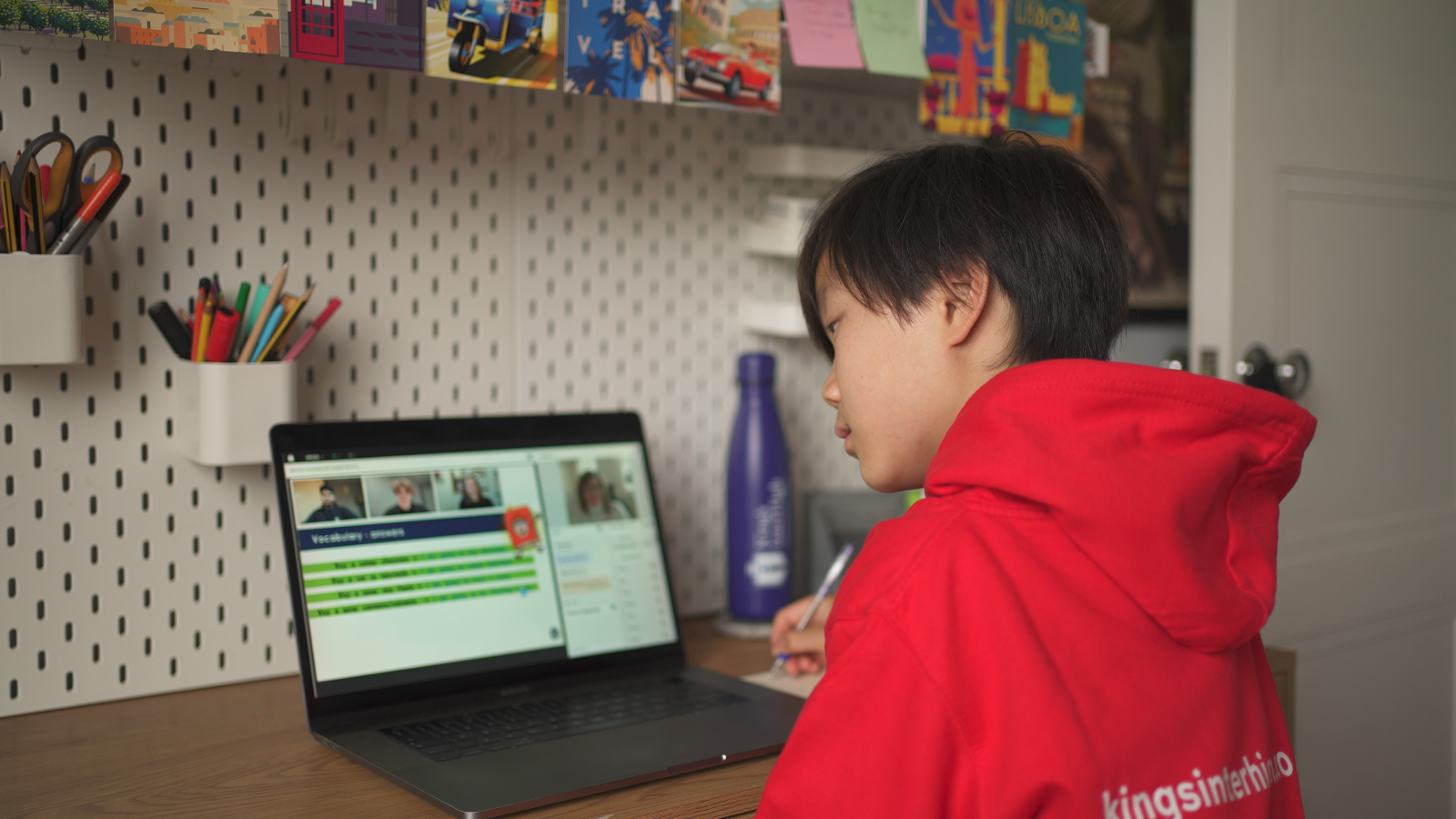
- A focused learning environment – Learning from home means that your child can stand, fidget, take breaks, or use sensory toys at any time with no attention or judgement. They get all the benefit of interactive learning with teachers and classmates with none of the usual distractions.
- Built-in support with technology – From the automatic to-do list in our Student Hubs to the assistive features built into our virtual classrooms, our school platforms are designed to accommodate all unique needs.
- Inclusive teaching approaches– We’re proud to be a truly inclusive school, where our teaching approach is designed to work for everyone. From the moment you join us, you can also set up an Inclusive Teaching Plan for your child, where you can choose from a broad range of in-class adjustments and support options.
The real impact
The distinction between ADHD and learning disabilities matters, from paperwork to legal protections to policies. But that shouldn’t distract from the bigger picture: your child deserves to get the support they need to learn.
ADHD will always shape how your child learns, but it should never define their potential. Whether you choose to insist on better accommodations for your child in their current school or explore different options for their education, the right support is out there to help your child thrive.
Wondering whether our approach could work for your family? Book a call with our admissions team.
We’ll talk through your child’s specific needs, answer your questions, and help you figure out if King’s InterHigh is the right path.
Share: