
Article June 9, 2025
Inside the future of learning: EdTech at King’s InterHigh

This week marks London Tech Week - a celebration of ground-breaking ideas, new possibilities, and the ever-evolving role of technology in our lives. To mark the occasion, we’re giving you an exclusive glimpse into what’s brewing behind the scenes at King’s InterHigh, where innovation is part of everyday learning.
At our school, students benefit from a truly forward-thinking educational experience. Our EdTech team is constantly trialling new ideas and pioneering activities to ensure our learners stay ahead of the curve; not just keeping up with technological change but leading it.
Some exciting technologies that are reshaping teaching and learning
Three of the most exciting and impactful areas in education technology today are virtual reality (VR), artificial intelligence (AI), and robotics. While VR has existed in some form since the 1970s, it’s only become truly accessible in recent years. With leading tech companies now racing to develop more affordable and flexible headsets, VR is fast becoming a powerful tool in digital learning, helping us create immersive, real-world scenarios for students to explore.
AI, meanwhile, has even deeper roots. From Alan Turing’s work in wartime codebreaking to today’s text, image, music, and video generation, AI has come a long way, offering everything from productivity boosts to personalised educational support. And robotics? It’s not just for science labs anymore. With the right approach, robotics can help students understand logic, engineering, and creative problem-solving in tangible, exciting ways.
All these technologies share the potential to transform learning when used thoughtfully. At King’s InterHigh, we leverage these tools to support real pedagogical goals, nurture curiosity, and enhance academic outcomes.
As Head of Educational Technology, I’m proud to say our work is about more than just keeping up with trends. It’s about asking: How can we make learning richer, more engaging, and more accessible for every student? And in that process, one thing remains key: critical thinking. No matter the tool or technology, our focus is always on what works best for learners.
How we use Virtual Reality for immersive learning
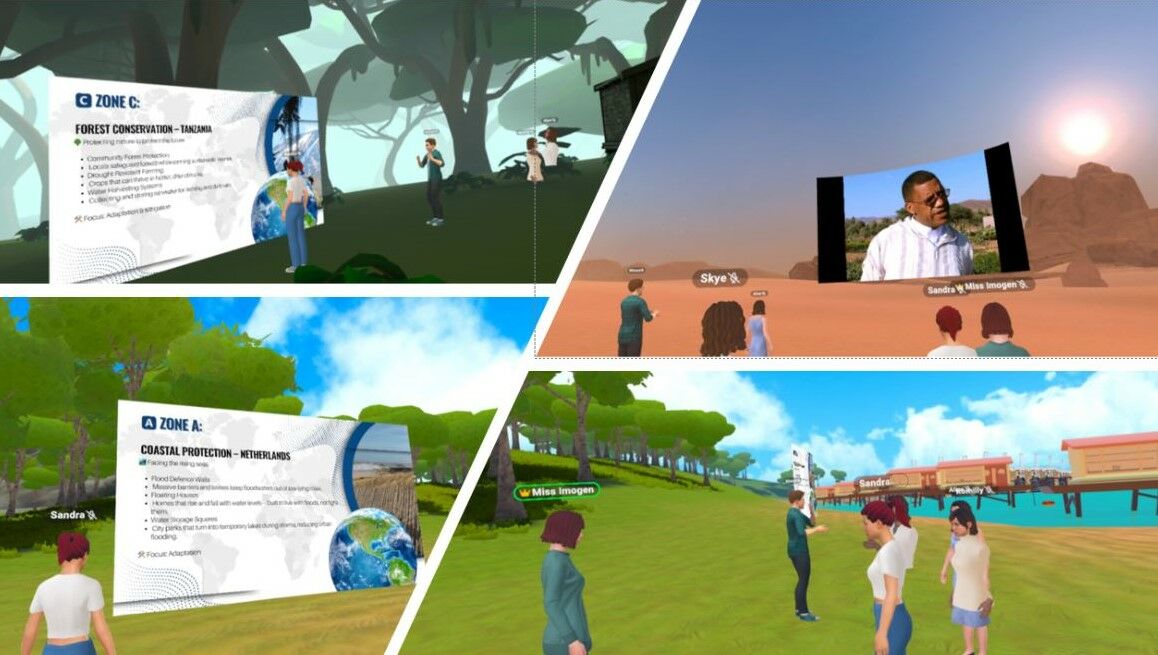
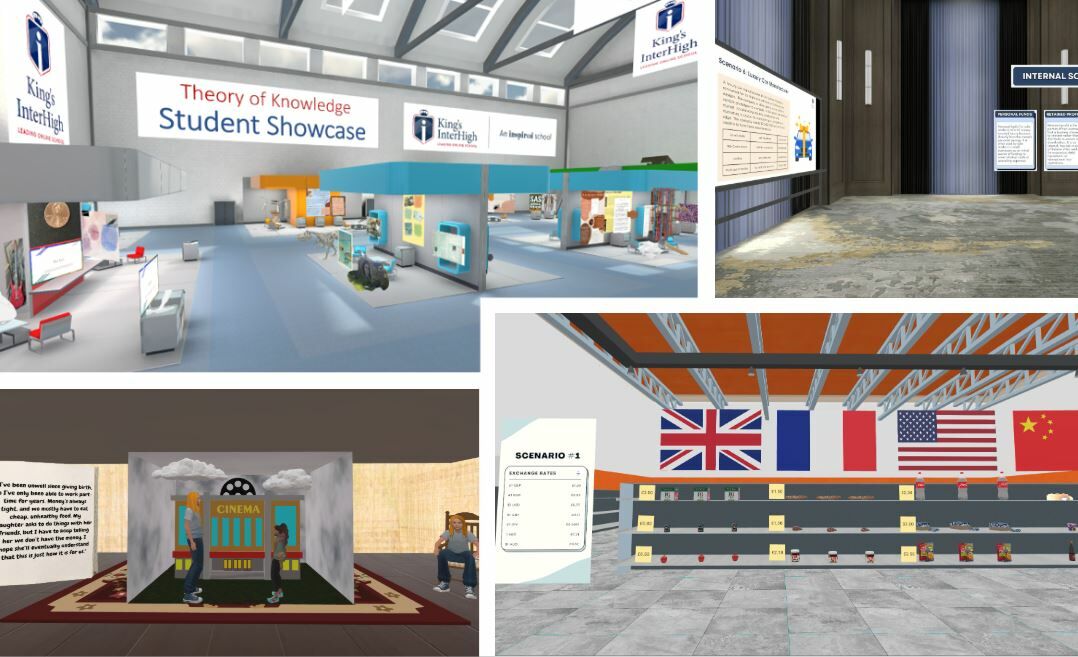
VR has been a game-changer in our educational approach. At King’s InterHigh, we pioneered a new method of integrating VR into our IB programme, where each subject features two lessons per term taught through VR headsets. This initiative has enhanced learning opportunities and positioned us as one of the first online schools globally to teach the IB curriculum with this technology. Since beginning our pilot, VR has been effectively used in 86 other Inspired Education schools worldwide. In doing so, all students can benefit from immersive learning.
For instance, students who struggled with visualising 3D shapes in mathematics reported a newfound understanding of concepts like vertices, edges, and faces. In biology, students could explore a biological cell and experience processes in real-time, fostering a deeper grasp of complex topics. These immersive experiences have transformed passive learning into active exploration, igniting students’ curiosity and motivation.
How we use Virtual Reality for social activities
Our commitment to innovation extends beyond the classroom lessons, including the all-important social development.
In the absence of physical social spaces, including playgrounds, prospective parents often ask, ‘How will my child socialise?’ This is a very valid question that we happily answered.
Acknowledging the importance of social time to foster student friendships and the all-important sense of student enjoyment whilst learning, technology has also supported this. We run weekly Key Stage 2 Playground Sessions, whereby all students can engage with each other in new and exciting scenarios we create each week.
VR technology has evolved to the extent that these sessions not only allow students from all over the world to play and have fun together but also allow us to create bespoke scenarios and environments based on student interests and imaginative ideas. Therefore, we can make absolutely anything, and one’s imagination is now the only limitation.
This is also an opportunity we offer students in Key Stage 3. Hundreds of students from our school collaborate and enjoy each other’s company weekly throughout the academic year. My team and I have created over 200 individual VR social VR spaces for several thousand students in the last three years. The scenarios included escaping Pharaoh’s tomb in Ancient Egypt to fixing broken satellites in outer space. As mentioned earlier, there is no limit to what can be created, which means students can never become disengaged either!
Collaboration is at the heart of our educational philosophy. As an Inspired School, we believe in bringing together students from around the world to work together from home, which would be impossible without the platforms we make available to our learners.

Weekly staff training
We prioritise weekly staff training sessions to ensure the successful integration of VR and other technologies. These sessions equip teachers with the skills and confidence to incorporate the most versatile technology into their teaching to enhance engagement and learning outcomes. We empower educators to embrace innovation and inspire their students by fostering a collaborative environment. As an online school, our staff can participate in the training synchronously and asynchronously, depending on their location worldwide.
Examples of exciting student projects we have developed
We run several student projects yearly to enhance concept understanding and nurture critical evaluation. Three recent initiatives included a five-week Year 7 Descriptive Writing project, a Year 9 STEM investigation into the efficacy of digital technology and Hooty World, a VR social space made by students, for students!
The Year 7 project required students to enter a specifically designed fictitious VR world called Terranovalis. Students explored and problem-solved together to discover, practise, and finally produce a descriptive essay based on an alien creature they had designed themselves.
Last term, the Year 9 STEM investigation required students to explore various digital solutions we offer to determine their effectiveness in enhancing learning outcomes. Through two different lenses, the experiential and critical analysis, both scenarios resulted in positive academic results and exposed the learners to a holistic understanding of the content.
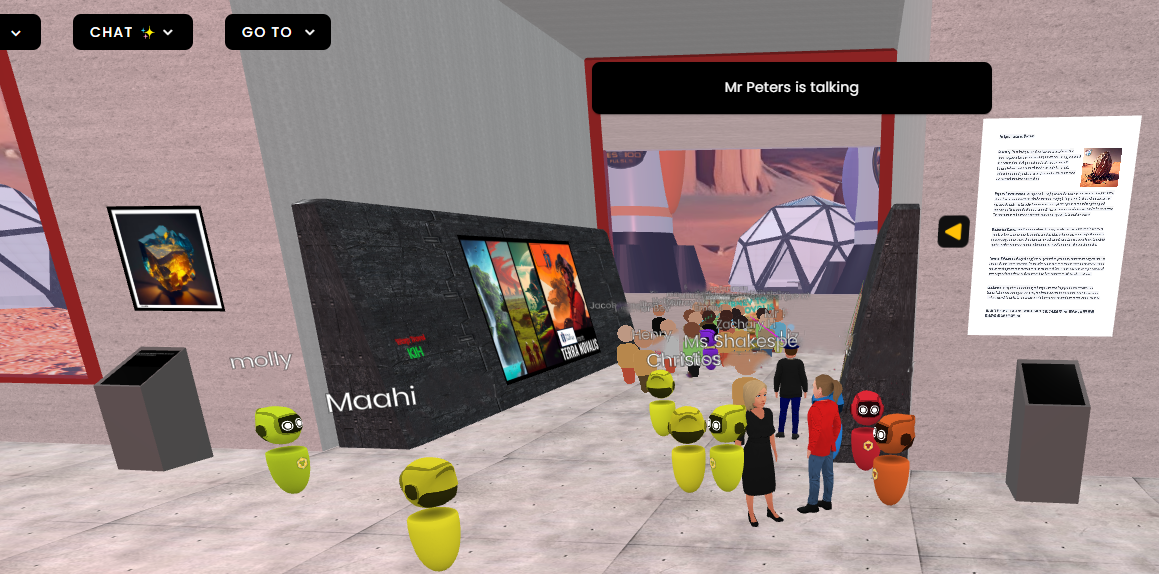
Hooty McCluety is our endeared school mascot, loved across Key Stage 2 in particular. We went further by training some of our 7 – 10-year-old students how to plan, design and then create Hooty Land for a social space to be enjoyed by hundreds of students every week. This initiative is currently ‘live’, and the building has begun! A project such as this further exemplifies that when learners are challenged with something they’re interested in, even young learners can be equipped with technical skills desired in the creative technology industry.

How we use Artificial Intelligence
AI is another powerful technology we take advantage of. At King’s InterHigh, we utilise AI to personalise learning experiences and support differentiated instruction. Inspired AI offers bite-sized content and tasks tailored to each student’s strengths and weaknesses. This approach has led to significant improvements in student attainment and engagement and has improved the accessibility to learning, based on which it supports filling the gaps in student knowledge.
AI also plays a crucial role for the staff. Automating administrative tasks frees up valuable time for teachers to focus on what truly matters – teaching. By embracing AI, we empower educators to create dynamic and interactive lessons that captivate students’ attention and foster critical thinking while being controlled and vetted by our subject specialist teachers.
How we navigate through obstacles and set new standards
Implementing new technologies is not without its challenges. One of our biggest obstacles was creating the infrastructure and training necessary for widespread adoption. Through a phased training programme and ongoing support, we confidently equipped our teachers with the skills to navigate VR, AI and other technologies. This collaborative approach has fostered a community of educators passionate about innovation and eager to share their successes.
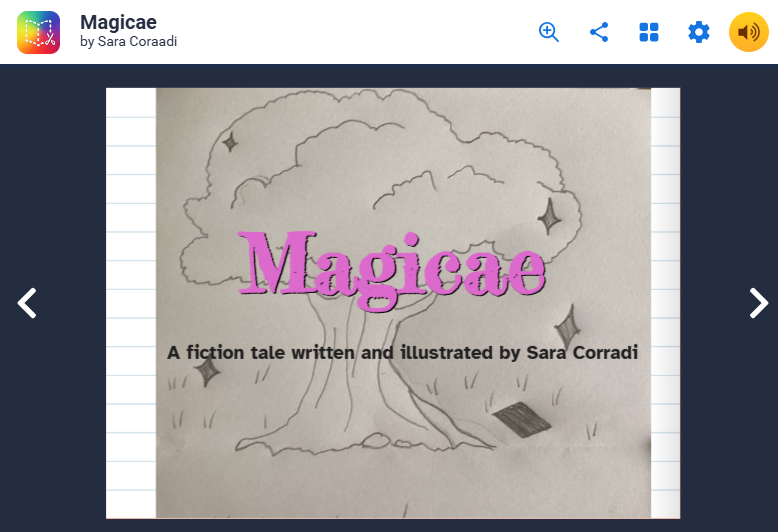
Although not one of our priorities, staff and student dedication to innovation has not gone unnoticed. King’s InterHigh has received numerous awards, including Best Use of Technology from Talk Education for Innovation in Education in 2024. More recently, our student Sara Corradi achieved Second Place in the world in a global story writing competition. These accolades reflect our commitment to providing a world-class education that prepares students for success in an ever-changing world.
Looking ahead, our vision for education is clear. We aim to create an online learning experience that is not only academically rigorous but also personalised, inclusive, and engaging. By leveraging technology, we can break down barriers and provide students with the tools they need to thrive in a rapidly changing world.
We believe that education should be an exciting journey of discovery. Through the innovative use of technology, we are redefining what is possible in online learning and not simply offering a ‘level alternative’ but in many ways a superior one, which affords students the freedom to learn in ways that suit their homelife and learning styles. From curriculum-aligned interactive animations to virtual reality and artificial intelligence, our commitment to innovation ensures that every student has the opportunity to succeed and achieve their dreams.

Share: