

Article March 13, 2025
What is independent learning and how can you encourage it?
A child’s success in school (and in their future) depends on more than the facts they learn in the classroom.
To thrive through life, your child needs to develop the confidence to tackle new challenges, the resilience to learn from setbacks, and the drive to keep growing. That’s where independent learning comes in.
This approach guides students to build the skills they need to thrive in education and beyond. Whether your child is naturally self-motivated or needs a bit more support to trust their strengths, here’s all you need to know about independent learning and how to encourage it.
What is independent learning?
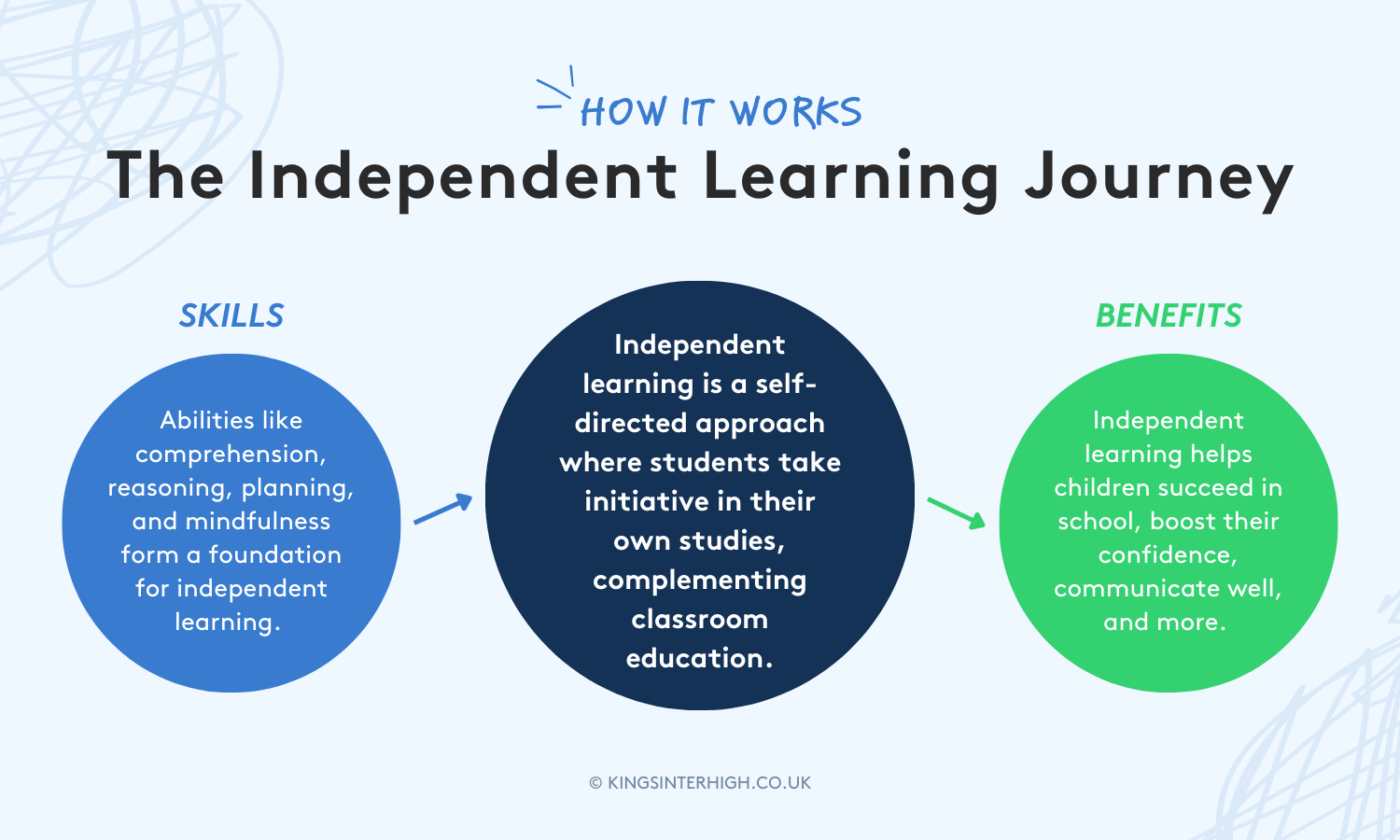
Independent learning is a more self-directed approach to education, where students take initiative in their own learning process.
Your child’s path to academic success is about how they learn just as much as what they learn. These days, great schools and parents alike are employing lots of different, proven methods to help students learn in the most effective ways.
One such method is independent learning, which puts your child in the driver’s seat of their own studies. At the core, learning independently means taking ownership of your own academic journey. Rather than passively receiving all the information they need to know, independent learners play a part in actively managing their education.
This may include setting their own knowledge goals, seeking out their own learning resources, and evaluating their own academic progress. Think of it as the difference between being given directions to a new location versus learning to read a map yourself.
Naturally, not all learning should be wholly independent, as students of all ages still benefit greatly from the input of experts. As part of an overall educational model, however, independent learning is a great way to set children up for success.
Students who know how to learn independently are able to take initiative, know how to plan their studies, manage their time well, and have the drive to stay motivated — even when things get difficult. Independent learning also builds crucial self-awareness, helping children understand how they learn best.
And, despite the “independent” name, the most successful independent learners aren’t the ones who work completely alone. Instead, they’re the children and teens who know when each method of learning works best, from consulting teachers to collaborating with classmates.
Why is independent learning so important?
Independent learning can be a very useful tool during the school year, but its greatest importance lies in how it prepares students for the future. Today’s world is becoming increasingly fast-paced. To score the best opportunities (from internships to university places), young people need to know how to position themselves as strong candidates.
Independent learning builds a highly useful suite of skills that will impress any admissions officer, employer, or ‘gatekeeper’ your child may come across on their journey.
People who know how to direct their own learning also know how to think critically and solve problems, manage themselves and others, and continuously grow with and without help. During their school years, they’ll also have enjoyed greater opportunities to discover their interests and pursue their true passions, making them truly dedicated to their goals.

The benefits of independent learning
The positive effects of independent learning ripple through every aspect of a child’s education, with numerous short- and long-term benefits. Let’s take a look at some of the strongest.
Foundations for academic success
Independent learning is one of the many approaches that can support students to achieve strong grades and exam outcomes (like flipped learning, for example). Since students who can take initiative know how to evaluate their progress and find the best path forward, they’re often able to spot their weaker areas more easily. As they’re also comfortable with asking questions and know when to seek extra support and resources from their teachers, independent learners are then able to fill in those knowledge gaps to get the best results.
Better creative and critical thinking
Part of learning how to drive your own education is learning how to think outside the book. Rather than following a rigid set of steps solely set out by a teacher, independent learners can veer off the path to connect ideas or find innovative ways to solve problems. This comes in incredibly handy during the later stages of education, like sixth form and university, when students often have to go beyond their textbooks to get the best grades.
Improved confidence and resilience
Developing resilience isn’t easy as a child still figuring out the world, but independent learning can help students on their way. As part of the independent approach, these children are encouraged to see their mistakes as valuable learning experiences and opportunities for growth rather than failures. In turn, this mindset isn’t just helpful in school; it also helps to build strong emotional wellbeing.
Enhanced communication skills
Contrary to what you might expect, independent learning is actually a great way to boost communication skills. Independent learning doesn’t necessarily mean studying alone; it often means working with a group of peers at the same level, all leading their studies together. As part of this group work, children learn how to work effectively with others, give and receive feedback constructively, and lead a team.
4 essential skills for independent learning
Becoming an effective independent learner isn’t something that happens overnight. While this approach builds skills, it also requires skills to work well. The following abilities are some of the key ones we start nurturing in the primary school years at King’s InterHigh. That way, when our students are old enough to get the most benefit out of starting to learn independently, they’re already equipped to succeed.
- Cognitive skills: These are the fundamental thinking skills that power independent learning, like reading comprehension, logical reasoning, and maintaining focus. Learning how to break down complex problems into manageable parts and work through them one by one is invaluable during the independent learning process.
- Metacognitive skills: Think of metacognition as your child’s ‘learning radar.’ Metacognitive skills are about understanding how you learn best, like knowing how to plan your study approach, monitor your progress, and adjust your strategy.
- Emotional skills: It’s only natural that independent learning feels challenging sometimes. To avoid feelings of stress and overwhelm, it’s great for children to learn how to manage big emotions first — like staying enthusiastic and knowing how to be calm under pressure.
- Communication skills: Before children can build the higher-level communication skills they’ll develop while learning independently, they need to grow their foundational communication skills. This includes knowing how to ask useful questions, share their ideas, and explain what’s on their mind.
How to support your child’s independent learning journey
As a parent, you can play a crucial role in helping your child develop their independent learning skills. A great school will provide the framework, but your support at home can make all the difference in how confidently your child embraces the approach.
Create the right environment
The right environment doesn’t just mean a quiet study space — it’s about fostering an atmosphere where your child feels confident taking charge of their learning. As an online school, we frequently see how the right learning set-up can be a great help. When your child is guiding their own learning (during homework, for example), try to:
- Keep distractions to a minimum
- Help them organise their workspace
- Stick to a routine that balances work and rest
Encourage self-assessment
Learning how to evaluate your own progress is one of the best parts of independent learning because it provides the basis students need to continuously grow and improve. You can support your child to self-assess by:
- Asking them to explain what they’ve learned in their own words
- Helping them set realistic goals and targets
- Celebrating their efforts to learn rather than focusing on perfect results

Make learning fun
When you’re working on learning activities at home, remember that education doesn’t have to feel like a chore. There are lots of ways to make learning engaging, which in turn encourages children to keep studying on their own.
- Use ‘gamification’ methods like assigning points to progress
- Use technology, like online learning tools, thoughtfully
- Support your child to learn what they’re most interested in
Foster independence at home
Unsurprisingly, building independence in other areas of your child’s life will support them to be more self-directed in their academics too. Growing into an independent young person is a journey, not a destination, so you can foster these skills gradually through efforts like:
- Letting your child decide what time they’d like to do their homework
- Allowing your child to help with “grown-up” activities like cooking dinner
- Encouraging your child’s self-care and awareness, like knowing when to rest
Finding a school with independent learning
If you think your child could benefit from the freedom to take more initiative on their learning journey, what should you be looking for in a school?
First of all, the best schools create an environment from the ground up where independent learning can flourish. This approach should be part of an overall education model; to be successful, it can’t just be ‘tacked on’ without thought. So, rather than just looking for schools that talk about independent learning, look for the foundations that support it.
For example, one key indicator is how the school gathers and responds to student feedback. Look for schools that actively empower students to make their voices heard. At King’s InterHigh, for example, we have a student council where representatives from each year group can help shape their school experience.
While learning with teachers and peers in a classroom (whether in person or online) is crucial, you’ll also want to find a school with ways to learn beyond the classroom. Each King’s InterHigh student gets their own personalised learning pathway: an AI-powered tool that brings them content and activities tailored to their exact progress. Children can then complete these activities after classes to help bridge their weak areas and direct their own journey. Students can also drop into academic support clubs, message their teachers with questions at any time, and more — all crucial avenues for independent learners.
Another great sign is a broad curriculum offering. One of the main reasons we offer so many subjects from primary school to sixth form is to allow students to study the topics they’re most interested in. This is a huge support for independent learning because it encourages children to stay motivated and explore their studies even when they’re not in lessons.
At face value, independent learning may sound like another educational buzzword. But, when done right, it opens up a world for students to pave their own path, follow their own dreams, and understand anything they set their minds to.
That’s why nurturing these skills now, whether at home or at a forward-thinking school like King’s InterHigh, is one of the best ways to prepare your child for the best future opportunities that may come their way.
Learn more about how we teach at King’s InterHigh!
Share: