

Article October 10, 2024
A guide to home education for A Levels
A Levels are your child’s gateway to higher education and can open doors to exciting professional opportunities. At this stage, the world is their oyster, and the breadth of subjects and options available allows them to explore their passions and dive deeper into their favourite subject areas. This is also when they may start contemplating what their career will look like (along with many other questions about the future).
If your child has been homeschooled in previous years, you may already be familiar with the benefits of learning from home. If this is your first time considering online education, this post will cover everything you need to know – from what it means to do your A Levels at home to critical benefits and preparation tips.
What is home education for A Levels?
Home education for A Levels involves students, generally aged 16 to 18, pursuing their A Level qualifications from home rather than in a traditional school environment. Some A Levels students opt for self-study, which is when their learning is ultimately the responsibility of the parents and entirely dependent on textbooks, online resources, and other study materials (free or paid for). Some parents may act as their children’s tutors or get an external tutor to support them.
Online schools like King’s InterHigh can also facilitate home education. King’s InterHigh provides structured live lessons, 24/7 access to learning materials and class resources, and access to experienced, subject-expert teachers who can provide tailored support to each student.
A Levels, or Advanced Level qualifications, are one of the sixth form options typically studied over two years in the UK. They are internationally recognised for entry into higher education, particularly prestigious institutions such as Russell Group and Oxbridge universities. The British curriculum for A Levels is varied and rich, equipping students with in-depth subject knowledge essential for university-level studies.

Why choose home education for A Levels?
There are several reasons why families and students opt for home education at the A Level stage:
1. Flexibility
One of the main advantages of learning remotely is the flexibility it offers. Students would only typically be able to study for A Levels qualifications in the UK or British international schools. With home education, your child can obtain A Levels qualifications no matter where your family is located, without you having to relocate, face long commutes, or pay more than you would be comfortable with.
Aside from the flexibility with location, your child can also set their learning schedule, which means they can study at a pace that suits them. This is especially beneficial for students with a busy social life and multiple hobbies outside of school.
Additionally, home education allows students to tailor their study around their peak learning times, ensuring they’re studying when they feel most focused. Exam preparation is crucial in A Levels, and this flexibility can help them revise efficiently and minimize any exam anxieties that may creep up.
2. Individualised learning
In a traditional classroom, teachers must balance the needs of all students, often making it challenging to provide personalised attention. Home education allows for a more tailored learning experience, allowing students to focus on subjects and topics they find difficult while progressing more quickly through areas they excel in. To support individualised learning, King’s InterHigh leverages InspiredAI, a proprietary AI-based tool that analyses students’ strengths and potential gaps and uses this data to create unique learning pathways with tailored exercises.
3. University support
While home education requires your child to become more self-disciplined and take responsibility for their learning, it doesn’t mean they are left without guidance, especially if you enrol them in an online school.
At King’s InterHigh, our sixth form and dedicated Career Pathways coordinator are always on hand to support our A-level students with any queries or concerns about the future. We also offer career guidance and assistance with university or apprenticeship applications so our students feel supported and confident about their next steps.
4. Comfortable environment
For some students, traditional school settings can be overwhelming. For example, students with special educational needs, social anxiety, or other mental health challenges may find that their conventional school environment triggers their anxiety and leads to more distractions, making it difficult to maintain motivation and focus.
In these cases, home education can be a great alternative, enabling students to focus on their studies without any pressures or added stress from the outside world. Home education, mainly through an online school, offers a controlled, safe, and familiar environment where students can learn confidently. This may also be beneficial for students who simply thrive in quieter settings or prefer a more relaxed pace of study.
How to start home education for A Levels
If you’re considering home education for A Levels, here are some steps to consider:
1. Choose the subjects
A Levels offer a wide range of subjects, from traditional options like Mathematics and English to Psychology, Business Studies, or Art and Design. When selecting your subjects, it’s essential to consider your future academic or career goals. For instance, if your child is aiming to study medicine, A Levels in Biology, Chemistry, and Maths may be required by most universities. Similarly, subjects like History, English, or Politics might be beneficial if your child is interested in law.
King’s InterHigh offers over 20 A-Level subjects, following the same curriculum as other traditional sixth-form colleges in the UK. From Psychology to German, Business, Media Studies, and Further Mathematics, your child will surely find subjects that align with their passions and interests.
2. Decide on a learning approach
Once your child has chosen their subjects, the next step is deciding whether to self-study or enrol in an online school. While self-study allows complete independence, it requires high self-motivation, access to quality resources and a dedicated tutor who can monitor learning performance and ensure no educational gaps. Alternatively, enrolling in an online school like King’s InterHigh offers a structured learning environment, expert teaching, and regular assessments to track your child’s progress.
3. Organise a study schedule and resources
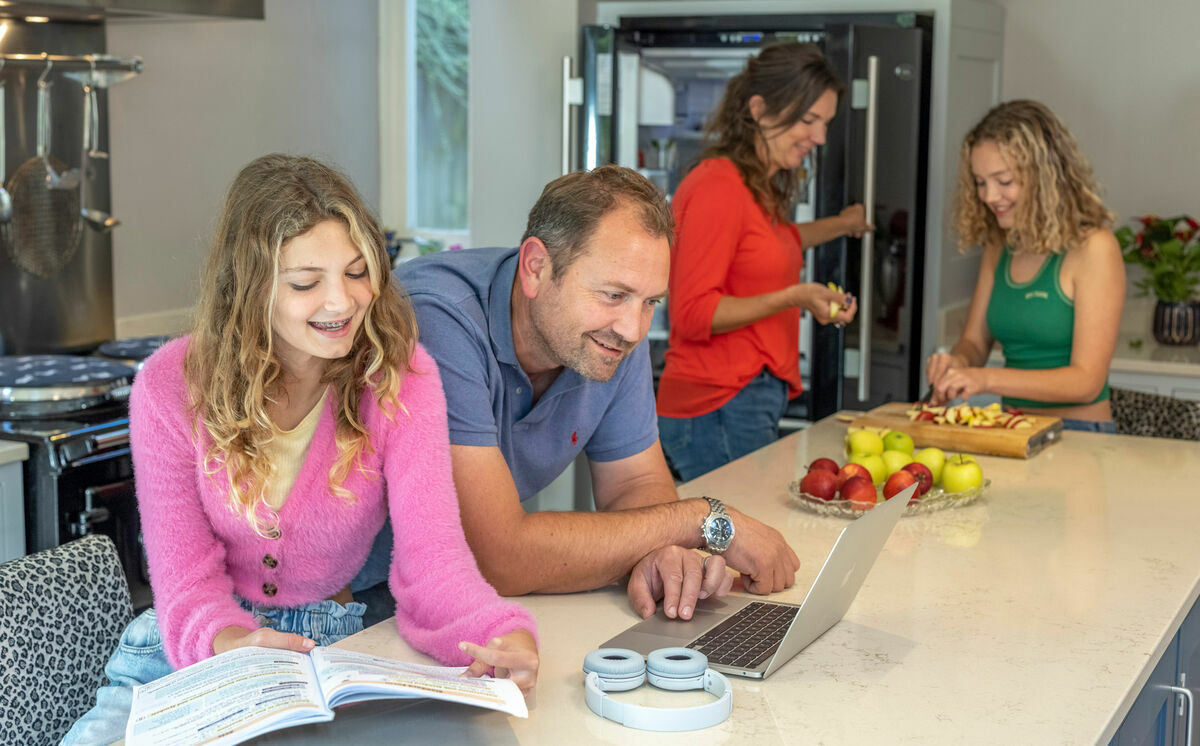
Your child may already be self-sufficient and motivated enough to organise their study schedule, but it’s always good to show your support. Ensure that your child feels prepared to study for their A Levels online and can create a daily schedule that enables consistent and efficient learning and revising. Because online schools like King’s InterHigh offer 24/7 access to class recordings, your child can make up a daily agenda based on when they learn best.
Ensure your child also has all the subject-specific resources they need to revise. This is particularly crucial if you don’t have the support of an online school or private tutor and need to find these self-study materials on your own.
4. Find an accredited exam centre
When home-educating for A Levels, one key consideration is where and how you’ll take your exams. A-Level exams must be taken at an accredited exam centre, which is typically offered by schools, colleges, or independent testing centres. Research your nearest exam centre and determine the requirements for registering as a private candidate. At King’s InterHigh, our exam officers are available to help students find and book the most suitable exam centre.
5. Preparing for exams
Exam preparation is a crucial aspect of studying A Levels from home. At King’s InterHigh, students are given ample opportunities to practice exam techniques, complete past papers, and receive feedback on their performance. Students participate in revision sessions and mock exams in the months leading up to exams, ensuring they feel confident and ready for the real deal. If you embark on self-study, ensure your child has an exam preparation schedule set up, along with the resources and extra support they need to revise and consolidate learnings.
Is home education for A Levels right for you?
Home education for A Levels is an excellent option for students seeking a flexible, personalised learning experience. With the right resources and support, students can obtain their best A Levels results and go on to study at their desired universities or pursue their dream careers. Just last year, 91% of King’s InterHigh students received their choice of university. Our flexibility also meant that British A Levels were achieved in 27 countries worldwide.
If you have any questions regarding studying for A Levels at home, how you can support your child, or how we teach at King’s InterHigh, visit our A Levels page or contact our lovely Admissions team below.
Share: