
Article April 1, 2022
What to study after GCSEs: A Levels to apprenticeships, online school to sixth form
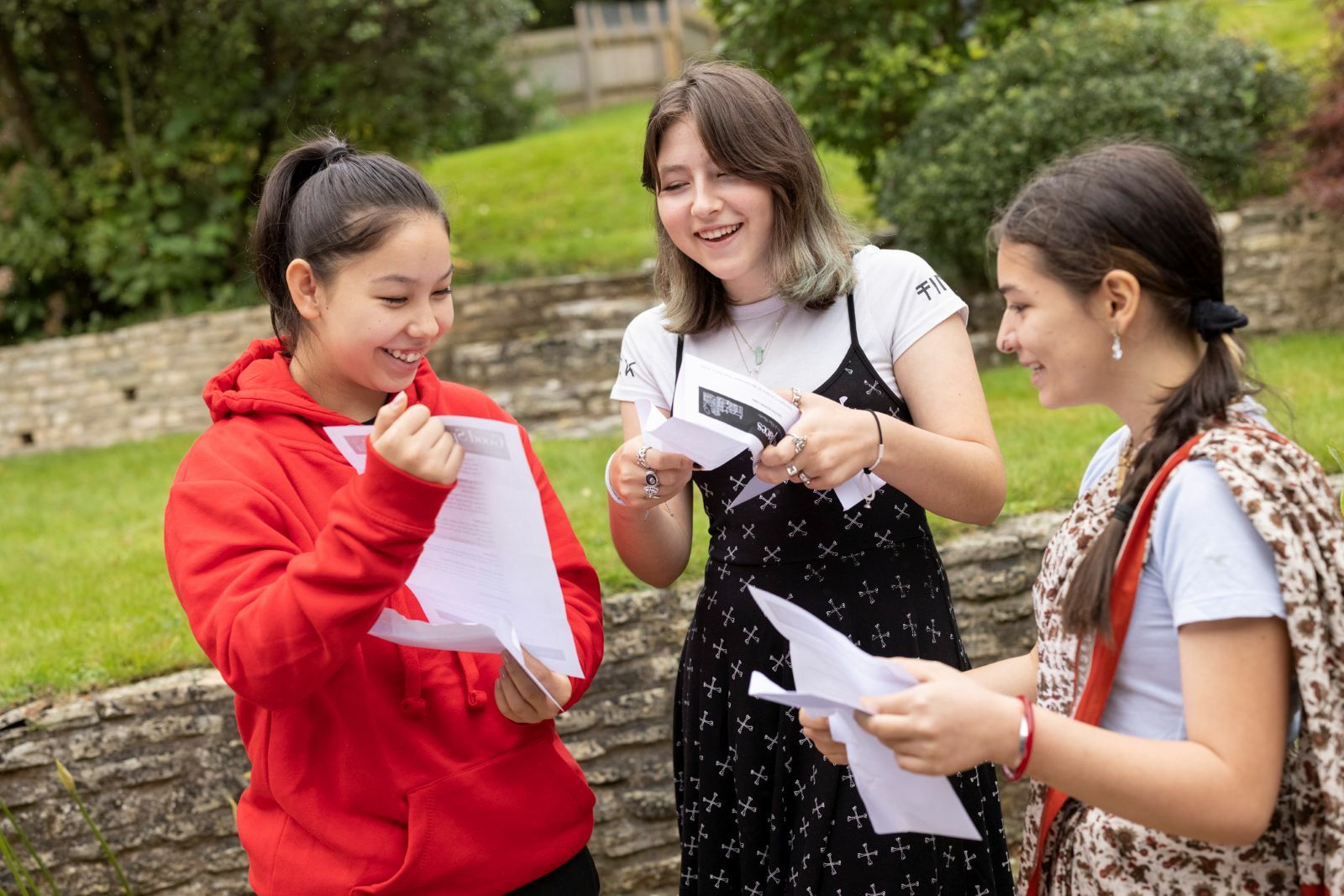
Whether they’ve studied at a traditional school or online, students who have completed their GCSEs or IGCSEs truly have a world of opportunities in front of them.
Whether they’ve studied at a traditional school or online, students who have completed their GCSEs or IGCSEs truly have a world of opportunities in front of them.
Not only have they gained an internationally recognised set of British qualifications, they’ve also learned highly valuable skills for the future — like independent learning and digital literacy, if they studied IGCSEs online.
Of course, while GCSEs are a major stepping stone, they’re not the final destination. In the UK and many other countries, teenagers must stay in some form of education until their 18. So, the next big decision is choosing what and where to study before heading out into the wider world.
Feeling overwhelmed with all the options? Here’s our guide to decide what to do after GCSEs.

How do GCSEs prepare for the future?
For children following a British education pathway, whether in the UK or overseas, GCSEs are an important part of preparing for the world beyond school.
For one, they arm students with a recognised qualification that shows colleges, universities, and employers their strengths and attributes. A student’s grades at GCSE are also often seen as a good indicator of how well they’ll do in further education, though non-selective schools like King’s InterHigh don’t have any mandatory grade requirements for students choosing A Levels.
When it comes to higher education, most UK universities require applicants to have a minimum of grade 4 or above (equivalent to a C) in GCSE or IGCSE Maths and English, though equivalent qualifications or entry tests are often accepted. Some specialised degrees and high-ranking universities may also want students to show at least five GCSE passing grades or higher. Remember: GCSE resits are always an option for students who want to improve their grades if needed.
With GCSEs in hand, teens will be well on their way to the future they aspire to. Whether a young person wants to become a doctor, go to drama school, work in a trade, or anything in between, GCSEs will serve them well on their journey.
Places to study after GCSEs
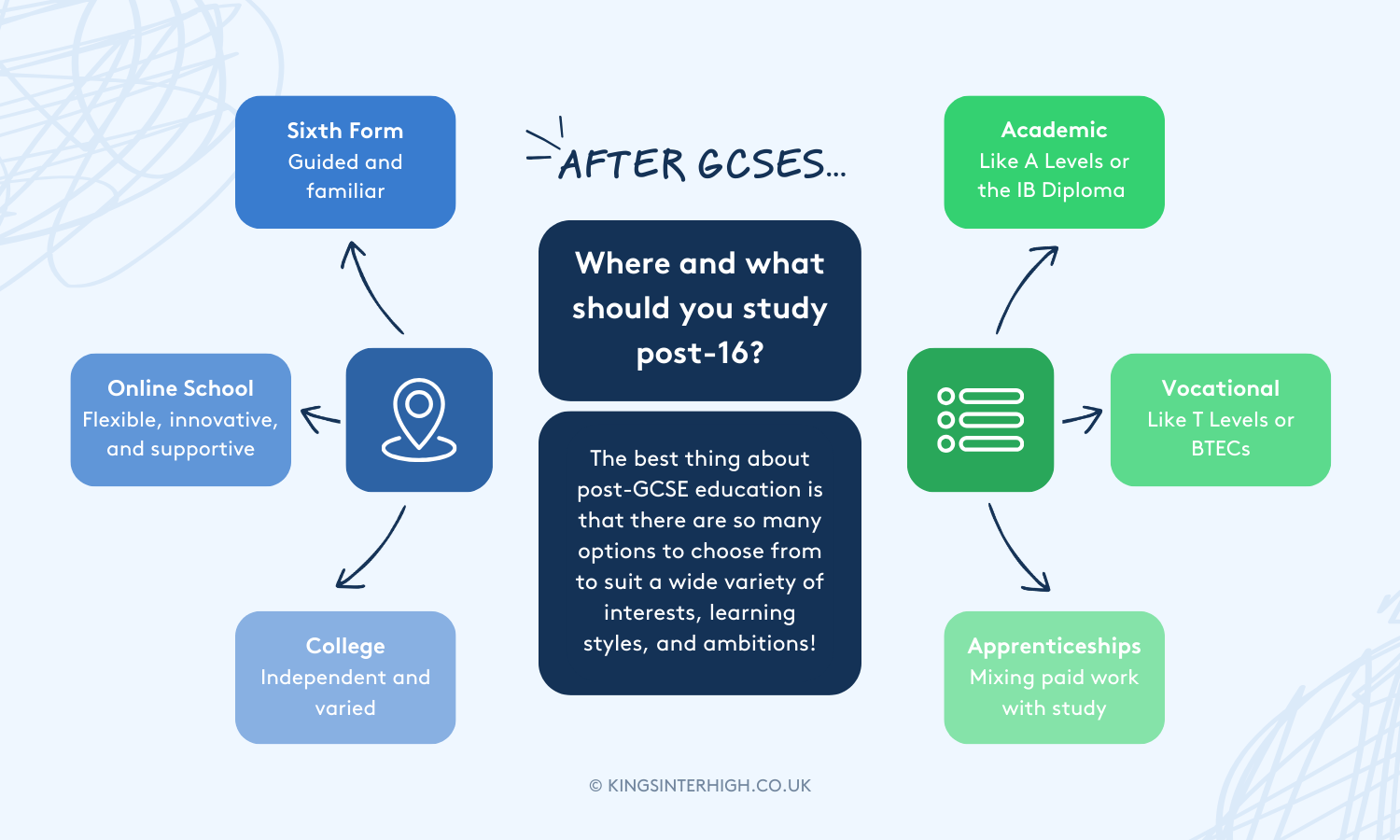
What’s great about post-GCSE education is that there are lots of pathways students can take, with each setting offering different benefits.
If you’re not sure how to make the decision, it can be helpful to make a list of all the important factors to consider. Some students, for example, will need to study at home or nearby due to health needs; others may prioritise the range of subjects available or school environment.
- Staying at sixth form: Some students choose to stay at their current school for sixth form, often because of factors like convenient location or familiarity with classmates and friends. While this is a perfectly valid option, it’s also a good idea to explore other paths before making a final decision.
- Choosing a different sixth form: If students aren’t happy with their current sixth form but still want a structured, school-like environment, there’s also the option of applying to sixth forms at other schools. Sixth form is often a great choice for students who want to study more traditional, academic qualifications like A Levels.
- Going to college: Further education colleges are also a popular choice for studying after GCSEs. Colleges often offer vocational and specialist courses alongside academic options, and the environment is usually more independent.
- Studying at online school: Online school is a great option to consider for students looking for more than they can get in the traditional sixth form environment — whether that’s flexible timetables, innovative teaching, a different curriculum, or better support for wellbeing and special educational needs. At King’s InterHigh, for example, students can choose between A Levels or the IB Diploma fully online, learning with global classmates and exciting technologies in an environment that fits different needs.
What’s the difference between sixth form and college?
The main difference between sixth form and college lies in their approach to education. Sixth forms are typically part of a larger secondary school environment, offering a more supportive and guided experience. They typically also focus on academic qualifications like A Levels or the IB Diploma. Students can attend sixth form in-person or go to an online sixth form like King’s InterHigh, with both offering the same recognised qualifications.
Colleges, on the other hand, may provide a broader range of academic and vocational qualifications. Since they typically accept students of any age, not just 16-year-olds, they often have a more independent atmosphere similar to university.
Attending open events is a great way to explore all the options available, and young people who already have a future goal in mind may want to consult with their school careers advisor too.
What to do after GCSEs: A guide for parents
Making the best decision for your child’s education after online or in-person GCSEs can seem a bit daunting, but remember: there’s no single ‘right’ path for everyone. The best option is the one that fits your child’s interests, learning style, and future goals.
In general, there are three broad options available: academic qualifications like A Levels and the IB Diploma, vocational qualifications like T Levels and NVQs, or combining paid work and study with an apprenticeship.
A Levels
British or international A Levels could be ideal for your teen if they:
- Prefer to study a few favourite subjects in greater depth
- Excel at academic subjects and do well with exam-based assessments
- Want to follow a more traditional route to university
A Levels are the most popular route for students finishing their education in the UK. These two-year qualifications let students deep-dive into their chosen subjects, with most students taking three to four A Levels in total. At King’s InterHigh, we offer more than 20 subjects to choose from so students can follow their passions and prepare for the future they aspire to.
A Levels are recognised by universities around the world, and your child can check which subjects they may need for their dream degree by looking at entry requirements on university websites. For young people who want to go straight into a career after sixth form, A Levels are also widely respected by employers in the UK.

IB Diploma
The International Baccalaureate® Diploma Programme (also known as the IBDP) could be ideal for your teen if they:
- Prefer to study a broad and balanced range of subjects
- Enjoy exploring how different subjects connect to each other
- Are interested in developing traits like international mindedness
While academic in nature like A Levels, the IB Diploma offers a different approach to post-16 education. Instead of specialising in just a few subjects, students choose one subject each from six different fields: languages, sciences, humanities, maths, English, and arts. On top of this, they also complete three unique core subjects — Theory of Knowledge, CAS (Creativity, Activity, Service), and an Extended Essay project.
As the world’s first school to offer the IB Diploma fully online, we’ve seen at King’s InterHigh how great this alternative is for students who want to continue with a broader education before university.
If your child wants to study online but they’re not sure whether to choose A Levels or the IB Diploma, check out our helpful guide!
T Levels
T Levels could be ideal for your teen if they:
- Want to combine classroom learning with hands-on work experience
- Learn best through practical and kinaesthetic approaches
- Have a specific industry in mind for their future career
Launched in 2020, T Levels are an exciting qualification designed to give students a blend of traditional classroom teaching and real workplace experience. Each T Level is equivalent to three A Levels; the key difference is that A Levels are more academic, while T Levels are more vocational.
T Levels are currently available in various fields, from business and digital technology to healthcare and engineering. Some university courses do accept T Levels in their entry requirements, but they’re also a great pathway to higher apprenticeships and direct career entry. Currently, T Levels are only available in England, so you’ll need to check local colleges for the course your child is interested in.

Vocational qualifications
A vocational qualification could be ideal for your teen if they:
- Prefer to focus on hands-on learning and practical assessments
- Want a direct pathway to a specific career or industry
- Learn better through ongoing coursework as opposed to end-of-year tests
While T Levels focus predominantly on classroom learning with about 20% of the time spent on a work placement, there are many other vocational qualifications with a stronger focus on hands-on learning. Sometimes known as VTQs (Vocational Technical Qualifications), they come in various forms: BTECs, Cambridge Nationals, NVQs, and more.
Vocational qualifications are typically assessed heavily by coursework and fieldwork (like practical projects and work experience) rather than exams. Vocational qualifications in subjects like business and computing are accepted by some universities in lieu of A Levels, while courses like plumbing and electricals prime students to jump straight into a career.
Which pathway is right for university?
If your child wants to go to university, you’ll need to think about the entry requirements for their chosen course before choosing a post-GCSE pathway. For example, while universities in the UK and worldwide typically all accept A Level or IB Diploma qualifications, not all courses will accept a purely vocational pathway. Some subjects, like medicine and engineering, require specific subjects, while others are more flexible. For students with non-traditional qualifications, many university courses also offer alternative routes like access courses and foundation years.
The best way to get all the information in advance is to visit the UCAS website or specific university websites to check their entry requirements.
Apprenticeships
An apprenticeship may be perfect for your teen if they:
- Want to start working right away while gaining a qualification
- Learn best by doing the task at hand
- Have a clear idea of their chosen career path
Students in England who are eager to join the workforce become eligible for apprenticeships after taking their GCSEs, as long as they’re 16 or over by the end of the summer holidays. If your child chooses an apprenticeship, they’ll spend most of their time learning on the job with their employer, alongside some part-time study to earn a recognised qualification.
Apprentices are paid the minimum wage, so they’re a great way to learn while you earn. While apprenticeships at some companies like Google and the BBC require teens to be at least 18 years old, 16-year-olds can find apprenticeships in a wide variety of fields (like banking, healthcare, law, and more).
Making the right decision
Whether your teen chooses A Levels, the IB, an apprenticeship, or a different route entirely, helping them consider all their options is the best way to set them up for success. If they’d thrive best with personalised learning at their pace, for example, or want the flexibility to start pursuing their future alongside studying, our online sixth form at King’s InterHigh could be the perfect option to nurture their potential. Ultimately, the best post-GCSE pathway for your child will be the one that suits their learning style, matches their passions and interests, and arms them with the qualifications or experience they need to take on their future ambitions.
If studying online for A Levels or the IB Diploma sounds right for your child, discover more about all the flexibility, support, and innovation we offer — watch our Sixth Form Online Open Event on demand or book a call with our helpful admissions team.
Share: